Quick answer: plywood is not automatically waterproof. Some plywood is manufactured with bonds and constructions suitable for higher-moisture or exterior conditions, but the correct product still has to be selected, detailed and protected for the job. Cut edges, drilled holes, joints and damaged coatings are common routes for water to enter.
If you need plywood outdoors, start with the required specification — not with the assumption that a thicker sheet or the word “hardwood” makes it waterproof.
What does moisture-resistant plywood actually mean?
For plywood bonding, BS EN 314-2 defines three classes:
| Bond class | Intended environment |
|---|---|
| Class 1 | Dry applications. |
| Class 2 | High-humidity environments. |
| Class 3 | Exterior conditions where moisture levels are significantly higher than Class 2. |
Timber Development UK publishes the same distinction in its constructional wood-based panels guidance.
This matters because “moisture resistant” and “waterproof” are not interchangeable. A Class 2 bond is designed for high-humidity conditions; it should not simply be relabelled as Class 3 exterior plywood.
Is Wern-Wood's structural hardwood plywood waterproof?
No. Our current Structural Hardwood WBP Plywood is declared as EN 314-2 Bonding Class 2 and EN 636.
Class 2 is the high-humidity bond class. We therefore do not describe this board as fully waterproof or as EN 314 Class 3 exterior plywood.
The older term “WBP plywood” is still common buying language, but it is not a substitute for checking the declared modern classification. Read What Is WBP Plywood? for the distinction.
Is marine plywood waterproof?
Not in the sense that you can leave an unfinished sheet permanently exposed and forget about it.
Our BS 1088 Marine Plywood is manufactured for demanding marine and moisture-prone applications. BS 1088 controls important aspects of marine-plywood manufacture and bond durability, but the finished job still needs the correct coating, edge protection, joints, drainage and maintenance.
We already cover that subject in detail in Is Marine Plywood Waterproof? BS 1088, Uses, Thicknesses and Sealing Guide.
Is phenolic plywood waterproof?
Our Anti-Slip Phenolic Birch Plywood has a hard-wearing film-faced surface that improves moisture resistance on the faces. That does not make every cut edge, drilled hole or fixing penetration waterproof.
When phenolic plywood is cut, the timber core is exposed. Seal and protect cut edges and penetrations as required by the application rather than assuming the film protects the whole finished component.
Can birch plywood be used outside?
Do not assume ordinary birch plywood is exterior plywood just because birch is a strong, high-quality material. Our Birch Plywood Sheets are sold primarily for furniture, cabinetry, joinery, shelving and interior fit-out.
If an outdoor job requires a stated exterior bond class or another performance declaration, choose a product with that declared specification.
Can general-purpose hardwood plywood be used outside?
Our General Purpose Hardwood Plywood is positioned for dry internal joinery and utility work. It should not be upgraded into “exterior plywood” simply because the search term has demand.
Why do plywood edges matter so much?
Cutting plywood exposes the veneer layers at the edge. Timber Development UK notes that cut exterior-use plywood edges can allow moisture ingress and that edge protection can help reduce the risk of delamination over time.
Edges, holes and joints deserve at least as much attention as the broad face of the sheet.
How do you waterproof plywood for an outdoor project?
There is no coating that turns the wrong plywood into the right specification. Start with the correct board, then protect the finished component.
- Choose plywood with the bond/use classification required by the job.
- Keep the board dry before installation. Do not begin with sheets already saturated or damaged.
- Make the cuts and drill holes before final coating where practical.
- Seal exposed edges, holes and penetrations. These are easy routes for water ingress.
- Use a compatible coating system suitable for the environment. Follow the coating manufacturer's preparation and coverage instructions.
- Detail the project to shed water. Avoid flat ledges, trapped water and exposed top edges where possible.
- Maintain the finish. Repair damaged coatings and opened joints before water reaches the plywood core.
What plywood should you use outside?
Use the product required by the exposure and project specification. If the job specifically calls for marine plywood, use marine plywood. If it calls for an EN 314 Class 3 exterior bond, use plywood with that declared Class 3 bond. Do not substitute our current Class 2 structural hardwood board and assume the old WBP wording makes it equivalent.
For a covered project with lower moisture exposure, another plywood may be acceptable if its product documentation and the finished protection system suit the job.
What about plywood for a shed roof?
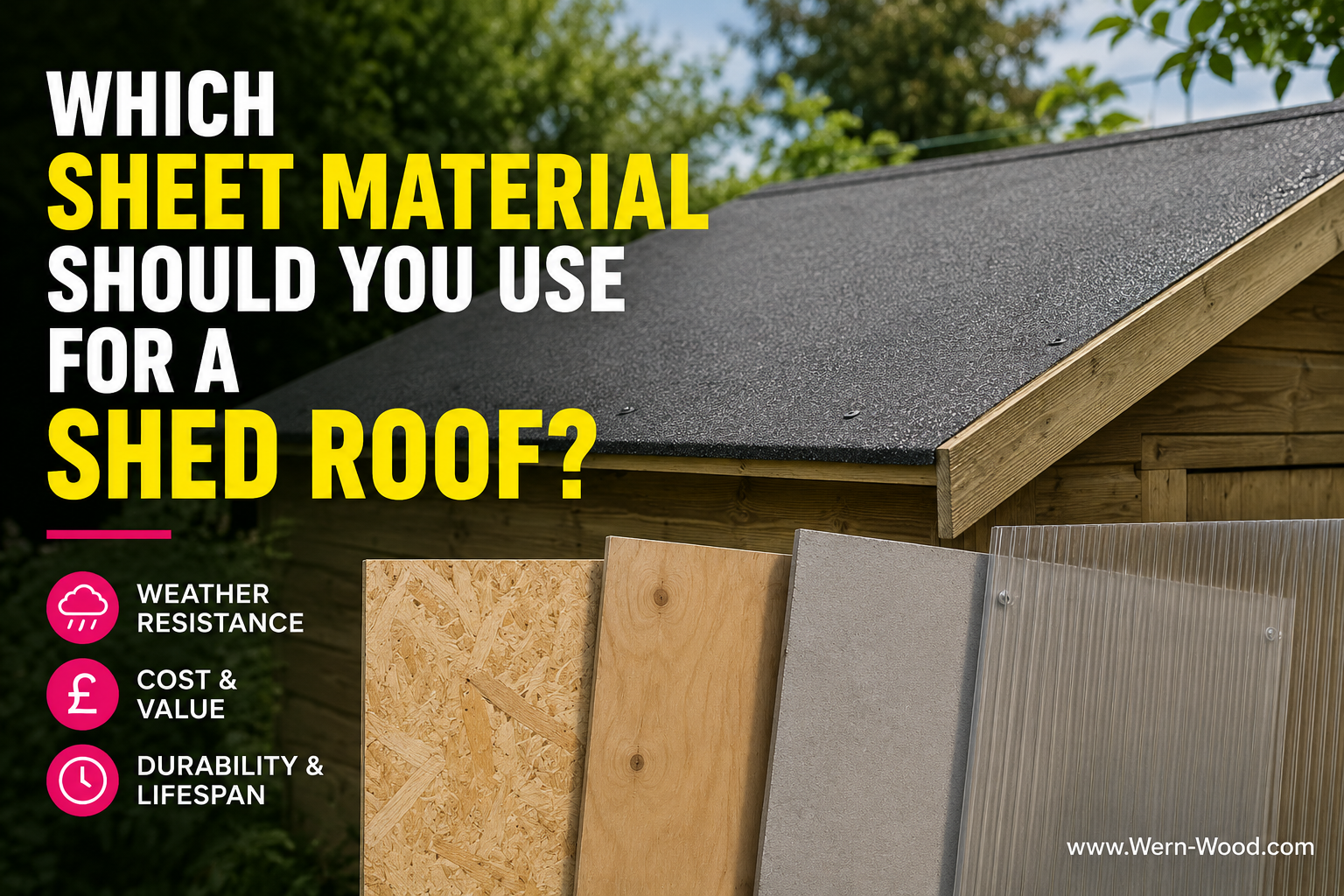
Plywood can be used in roof build-ups where the grade, thickness and support arrangement are suitable, but many ordinary shed roofs do not need a premium plywood. OSB3 is often the more practical roof-deck choice, with the felt, EPDM or other roof covering providing the weatherproof layer.
Read Which Sheet Material Should You Use for a Shed Roof? for that specific job.
The simple rule
“Plywood” is a material family, not a waterproof rating. Check the actual grade and declared bond/use class, protect edges and faces appropriately, and design the finished project so water does not sit against the board.
Browse our Plywood Sheets to compare the different types we currently stock.