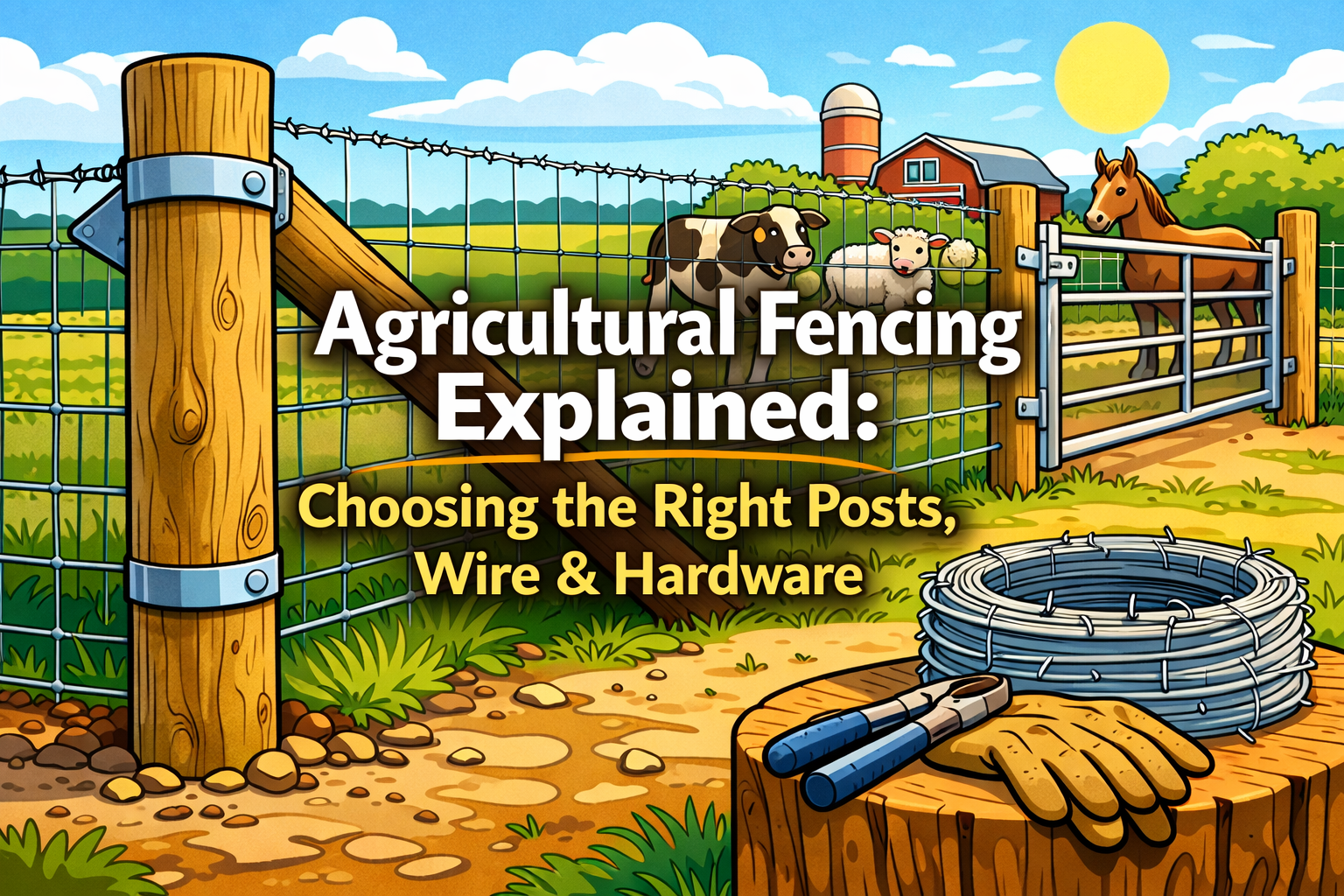
Agricultural Fencing Fails Where the Pressure Is — Not Where It Looks Neat
Agricultural fencing needs to be planned as a full system: strainer posts, intermediate posts, rails, stock wire, barbed wire where suitable, gates, staples, fixings and repair materials. The strongest-looking straight run is not usually where problems start. Most pressure is at ends, corners, gateways, dips, changes of direction and places where livestock lean, rub or push against the fence. Plan those stress points first, then build the rest of the fence around them.
Agricultural fencing is not domestic fencing with different scenery. It has to deal with livestock, wet ground, long runs, repeated repairs, machinery access, field boundaries, awkward gradients and weather that does not care how tidy the fence looked on day one.
That is why buying agricultural fencing by single items alone can cause problems. A few posts and a roll of wire might be enough for a small repair, but a proper boundary needs the whole system to work together.
The useful question is not just “what fencing do I need?” It is “where will this fence be under pressure, what is it keeping in or out, and what parts will need repairing first?”
What makes agricultural fencing different?
Agricultural fencing is built for practical control, not decoration. It needs to suit the land, the livestock, the access points and the way the fence will be maintained over time.
- Livestock pressure
- Soft or wet ground
- Long fence runs
- Wire tension
- Gateways and access
- Repairs and re-tensioning
- Weather exposure
- Machinery movement
A domestic garden fence can often be planned bay by bay. A farm or paddock fence needs the tension points planned before the intermediate posts make sense.
When someone prices a fencing job from the middle of the run outward, they often miss the expensive bits. Start with the corners, ends and gateways first. That is where the fence earns its keep.
The main parts of an agricultural fence
Most agricultural fencing jobs are a combination of structure, restraint and hardware. If one part is under-specified, the whole fence becomes harder to maintain.
| Part of the fence | What it does | Common mistake |
|---|---|---|
| Strainer posts | Take the tension at ends, corners, gateways and major changes of direction. | Using ordinary posts where a stronger straining point is needed. |
| Intermediate posts | Support the fence line between strainers. | Planning the run without accounting for terrain and wire type. |
| Rails | Add visible structure, guide livestock and strengthen post-and-rail sections. | Using rails where wire tension or livestock pressure is the real issue. |
| Stock wire | Creates the main livestock barrier across long runs. | Buying wire without planning strain points, gates and repair access. |
| Barbed wire | Can add deterrent and help reduce pressure on the main fence where appropriate. | Using it without considering livestock type, handling risk, public access or safety. |
| Gates and ironmongery | Control access and take repeated daily use. | Spending on the fence run but under-specifying hinges, latches and fixings. |
Start with the pressure points
The straight middle of the fence is often the easiest part to understand. The pressure points are where the thinking matters.
- Ends need to hold the pull of the wire and stop the run collapsing back on itself.
- Corners take load from more than one direction.
- Gateways take repeated use, knocks, twisting force and livestock pressure.
- Dips and hollows can change how wire sits against the ground.
- Changes of direction affect tension and may need stronger posts or bracing.
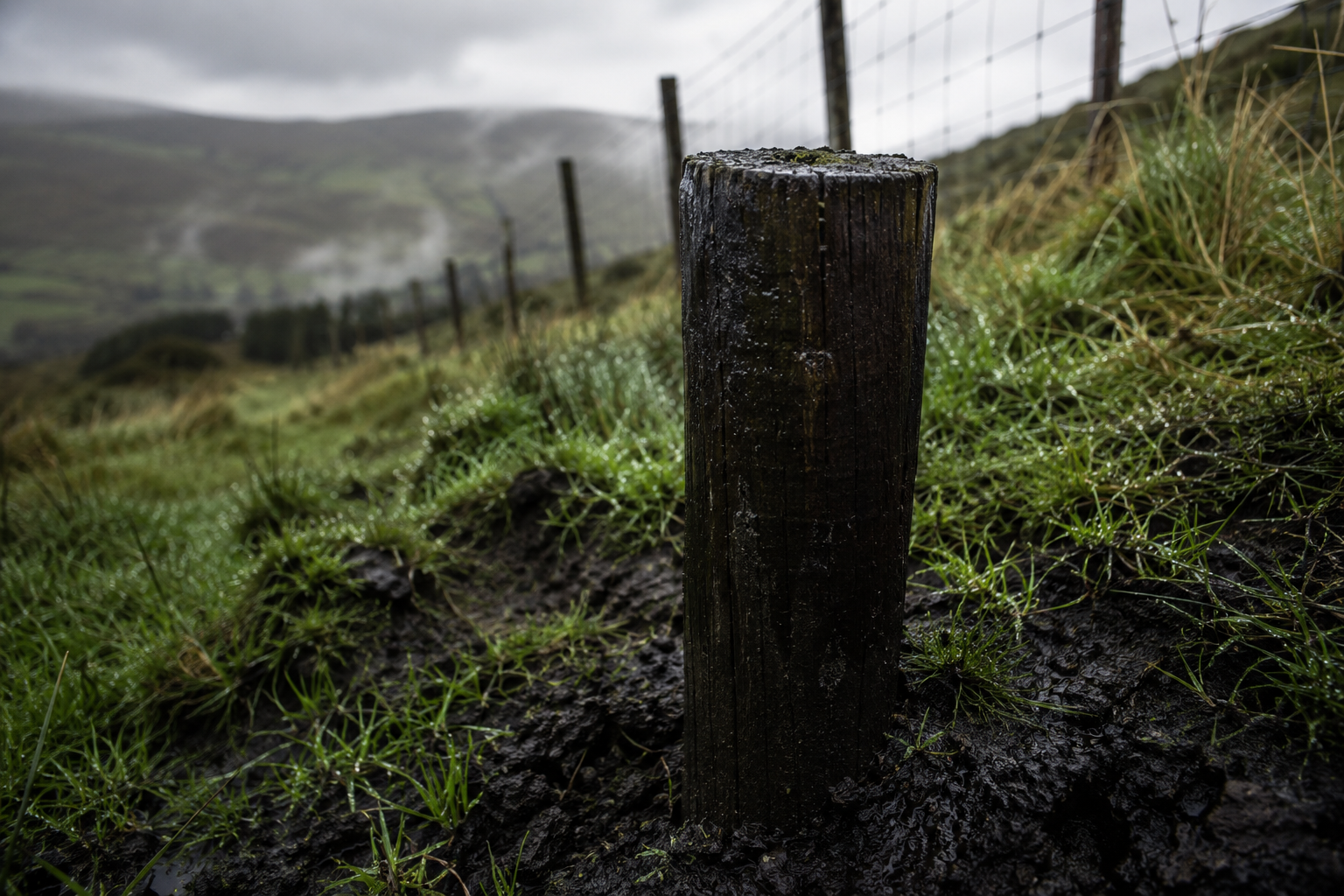
- Wet or soft ground can weaken post support over time.
If the fence is being used for livestock, do not treat it like a simple boundary marker. Animals lean, rub, push, test gaps and gather around gateways. The materials need to match the pressure.
Posts and rails: choosing the timber structure
Agricultural fencing timber needs to be chosen by job, not just by length. A post used to guide a line of wire is not doing the same job as a strainer post at a corner or gateway.
At Wern-Wood, the Agricultural Fencing range includes timber products used for rural, equestrian and agricultural fencing projects, including machined round fence posts, half round rails, cundy stakes and related agricultural fencing timbers.
| Timber item | Typical use | Buying point |
|---|---|---|
| Round fence posts | General agricultural fence lines, stock fencing and rural boundaries. | Match size and spacing to the fence type, livestock and ground conditions. |
| Strainer posts | Ends, corners, gateways and tension points. | Do not treat them like ordinary intermediate posts. |
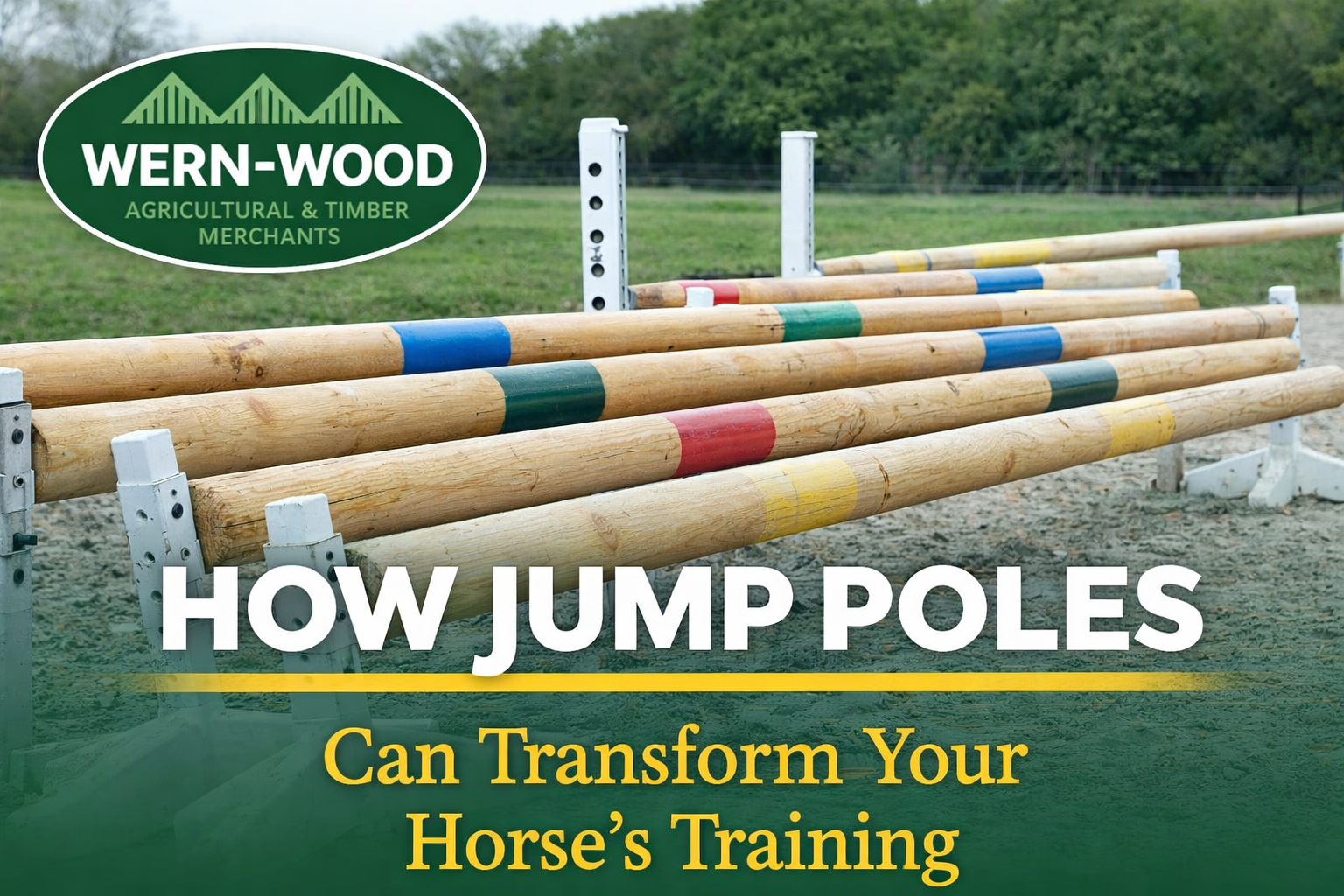
| Half round rails | Post-and-rail fencing, paddocks, equestrian boundaries and visible rural lines. | Useful where visibility, guidance and structure matter. |
| Cundy stakes | Wire fencing, boundary work and agricultural applications. | Plan the spacing and wire type together. |
| Gate posts | Access points, field entrances and gateways. | Gate weight, hinges, latch position and vehicle access all matter. |
Stock wire, plain wire and barbed wire
Wire choice depends on what the fence has to do. A boundary for sheep, cattle, horses, paddocks, general fields or temporary repairs may all need different thinking.
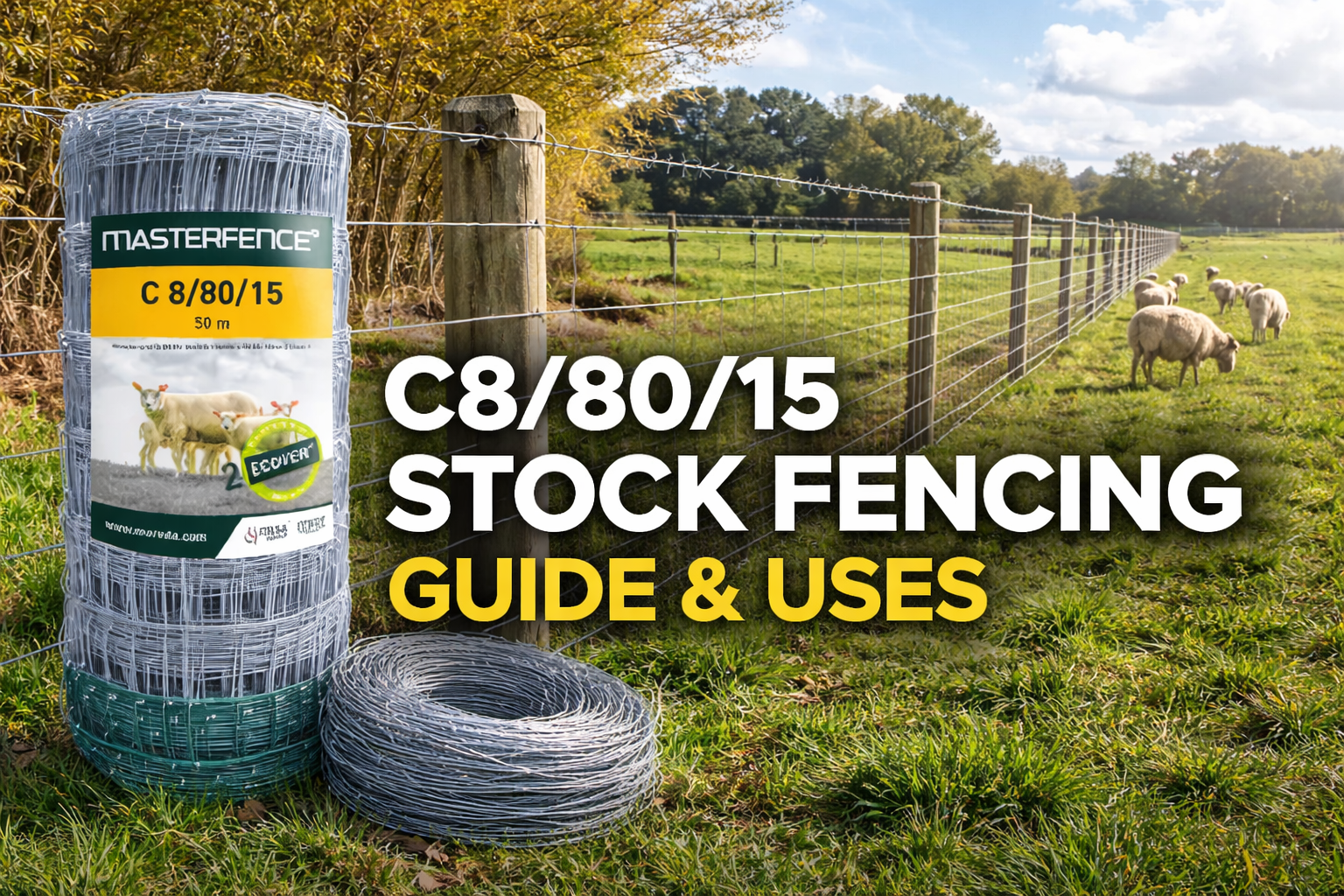
The Agricultural Wire & Barb range brings together common wire products used for livestock and agricultural fencing, including stock fencing and galvanised barbed wire.
- Stock wire is commonly used for livestock boundaries and long fence runs.
- Plain wire may be used for line support, tensioning and particular fencing setups.
- Barbed wire can be used where suitable as a deterrent or additional control line.
- Wire tension must be planned with the strainer posts, not added as an afterthought.
Barbed wire needs careful handling. Wear suitable gloves, keep wire controlled when dispensing, and watch for recoil or loose ends. Also consider livestock type, public access, neighbouring land and whether barbed wire is appropriate for the specific boundary.
Gates and access points
Gateways are one of the hardest-working parts of any agricultural fence. They deal with livestock flow, machinery access, repeated opening and closing, dragging, twisting, knocks and wet ground around entrances.
When planning gates, think beyond the gate itself:
- Gate size — will machinery, trailers or livestock handling equipment need access?
- Gate posts — are they strong enough for the gate weight and repeated movement?
- Hinges and latches — are they suitable for outdoor agricultural use?
- Ground conditions — will the gateway become wet, churned or uneven?
- Animal movement — will livestock gather, rub or push at the opening?
For gates, hinges, latches and fittings, browse Agricultural Ironmongery alongside the fencing timber and wire, rather than leaving hardware until the end.
Agricultural fencing setups: what to plan
There is no single farm fence that suits every job. Use the setup to build the shopping list.
| Fence setup | Main materials | Do not forget |
|---|---|---|
| Stock boundary fencing | Strainers, intermediate posts, stock wire and suitable fixings. | Plan corners, gateways and future re-tensioning before the run starts. |
| Paddock or equestrian fencing | Posts, rails, gates and suitable ironmongery. | Visibility, safe contact points, gate access and ongoing maintenance. |
| Field gateways | Gate posts, gates, hinges, latches and reinforced fence ends. | Gate swing, vehicle access, wet ground and repeated loading. |
| Quick repair jobs | Posts, wire, staples, fixings and repair hardware. | Keep common repair items ready before damage becomes urgent. |
| Long boundary runs | Strainers, intermediate posts, wire rolls, fixings and gate sections. | Measure properly, allow for changes of direction and think about access for maintenance. |
Ironmongery and fixings: the small parts that decide reliability
A fence can be well planned and still become annoying if the hardware is wrong. Hinges, latches, staples, brackets and fixings are the parts that take repeated movement, weather and repair work.
Under-specifying the ironmongery creates constant patch jobs. A gate that drops, a latch that will not hold, a staple that works loose or a fixing that corrodes can make the whole fence feel worse than it is.
Browse Agricultural Ironmongery for practical hardware used across farm gates, agricultural fencing and rural maintenance.
Common agricultural fencing mistakes
- Starting with the middle of the fence — the ends, corners and gateways matter first.
- Using ordinary posts at tension points — strainers and gate posts do harder work.
- Buying wire without planning tension — wire, strainers and fixings must work together.
- Ignoring ground conditions — soft or wet ground changes how posts perform.
- Under-specifying gateways — gates take repeated daily pressure.
- Leaving fixings until the end — staples, latches, hinges and fittings are not optional extras.
- Using barbed wire without thinking through safety — livestock, public access and handling all matter.
- Not keeping repair stock — small failures become urgent when no wire, staples or fixings are ready.
Before you order agricultural fencing
Before ordering, work out the fence as a complete run rather than a rough pile of materials.
- What animals is the fence for?
- Is it a boundary, paddock, gateway, repair or full replacement?
- Where are the ends, corners and changes of direction?
- Where will gates or access points be?
- Is the ground wet, soft, sloping or exposed?
- Will the fence need stock wire, barbed wire, rails or a mix?
- What fixings, staples, hinges, latches and repair parts are needed?
- How will the fence be maintained and re-tensioned later?
For a complete agricultural fencing order, start with Agricultural Fencing, add the right Agricultural Wire & Barb, then finish the job with suitable Agricultural Ironmongery.
FAQs
What is agricultural fencing?
Agricultural fencing is fencing designed for rural, farm, paddock, livestock and land-management use. It usually combines timber posts, strainer posts, wire, rails, gates and ironmongery depending on the job.
What is the most important part of a stock fence?
The straining points are usually the most important part: ends, corners, gateways and major changes of direction. These points take the wire tension and livestock pressure that keep the run working properly.
Do I need stock wire or post and rail fencing?
It depends on the job. Stock wire is commonly used for livestock control and long boundaries. Post and rail fencing is often used for paddocks, equestrian areas and visible rural boundaries. Many jobs use a combination.
When should I use barbed wire?
Barbed wire may be suitable where additional deterrent or control is needed, but it should be chosen carefully. Consider livestock type, public access, neighbouring land, handling safety and whether barbed wire is appropriate for that boundary.
What should I buy for a fencing repair?
For repairs, common items include replacement posts, stock wire or barbed wire, staples, hinges, latches and general agricultural ironmongery. Check the damaged section first so you know whether the failure is the post, wire, gate or fixing.
Are gateways different from the rest of the fence?
Yes. Gateways take repeated movement and pressure. Gate posts, hinges, latches and surrounding fence ends need to be chosen for the gate size, ground conditions, livestock and vehicle access.
Summary: build the fence around the pressure points
A good agricultural fence starts with the pressure points: strainers, corners, gateways, ground conditions and livestock pressure.
Once those are planned, the rest of the system becomes clearer: intermediate posts, rails, wire, barbed wire where suitable, gates, staples, fixings and repair stock.
Do not buy the middle of the fence and hope the ends work themselves out. Plan the hard-working parts first, then build the shopping list around them.
Planning an agricultural fencing job?
Start with the pressure points, then build the full materials list: posts, strainers, wire, gates, fixings and repair essentials. Browse our agricultural fencing range and plan the job properly before you start.
Shop Agricultural Fencing → Order online or collect from our Briton Ferry yard. Yes, we deliver.Sources checked: HSE/AFAG fencing safety guidance for barbed wire handling; Forestry Commission/Forest Research fencing guidance on tensioned wire and staples; North York Moors stockproof fencing specification for strainer use at ends, direction changes and gradients. This article is general agricultural fencing guidance only. Exact fence specification depends on livestock, terrain, exposure, access, safety requirements and local site conditions.