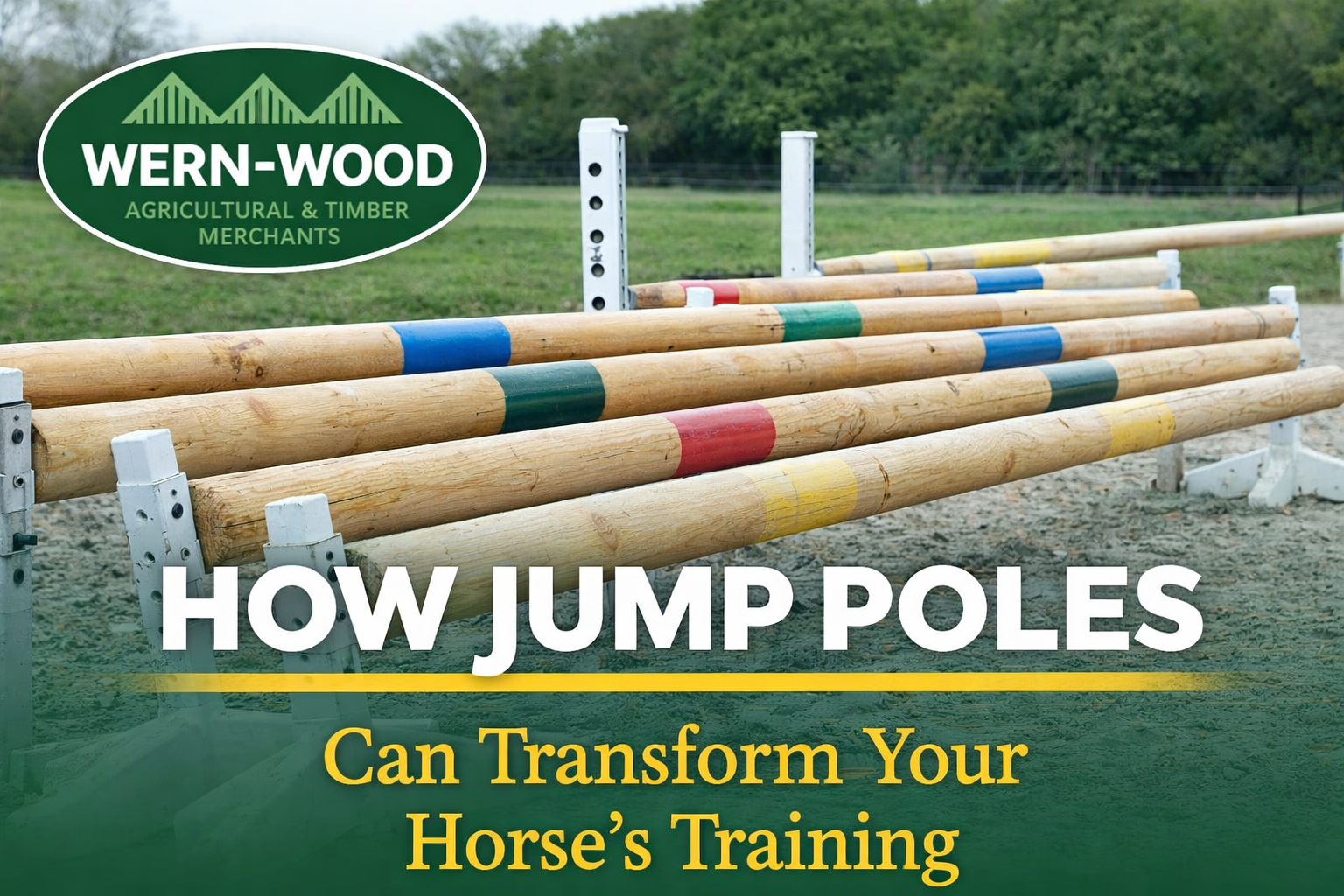
Jump Poles Are Not Just for Jumping — They Are One of the Best Schooling Tools in the Arena
Jump poles are useful for far more than building fences. Used flat, raised or in simple grids, they can help horses improve rhythm, coordination, balance, straightness, confidence and body awareness. For riders, pole work makes schooling more structured because it quickly shows whether the line, pace and approach are consistent. A set of solid 3.66m full round timber poles gives private yards, riding schools and equestrian centres a flexible way to build weekly training routines.
Jump poles are one of the simplest pieces of arena equipment you can own. They do not need electricity, moving parts, complicated setup or a full course of jumps to be useful.
Used well, they turn ordinary schooling into structured work. A straight line of poles can improve rhythm. Raised poles can ask for more lift. A simple grid can improve confidence before fences get bigger. Even walking over a few ground poles can help a horse think about where its feet are going.
That is the real value of jump poles. They are not only for riders who compete. They are for anyone who wants more useful schooling sessions.
Why pole work matters
Pole work gives horse and rider instant feedback. If the rhythm changes, the spacing feels wrong. If the horse drifts, the line becomes obvious. If the rider looks down or changes the pace, the poles quickly show it.
That makes poles useful for both flatwork and jumping. They create a clear job without immediately adding height or pressure.
- Rhythm
- Balance
- Straightness
- Coordination
- Confidence
- Focus
- Proprioception
- Progression
Equine training sources commonly describe ground poles as useful for proprioception, balance, joint flexibility and hoof-eye coordination. Raised poles can make the work more strength-based because the horse has to lift the limbs more actively.
The best thing about pole work is that you can make it easier or harder without changing the whole session. Start with one pole. Build to a line. Then add raised ends, curves or grids only when the horse is confident.
What are jump poles used for?
A good set of jump poles can be used in many different ways, depending on the rider, horse and training goal.
| Use | What it helps with | Good for |
|---|---|---|
| Single ground pole | Calm approach, straightness and confidence. | Young horses, nervous horses, rider accuracy and simple warm-ups. |
| Walk poles | Foot placement, coordination and body awareness. | Green horses, rehabilitation-style schooling where appropriate, and low-pressure sessions. |
| Trot poles | Rhythm, stride control and engagement. | Flatwork variety, schooling, rider position and tempo control. |
| Raised poles | Lift, focus, strength and more careful foot placement. | Progressive schooling once flat poles are easy and controlled. |
| Grid work | Approach, straightness, confidence and preparation for jumping. | Show jumping, riding school lessons and structured training. |
| Course layouts | Accuracy, turning lines, rhythm between fences and rider planning. | Competition preparation, private arenas and riding schools. |
Walk poles: the best place to start
Walk poles are often underrated because they look simple. That is exactly why they are useful.
Walking over poles gives the horse time to look, think and place each foot. This can be especially useful for young or green horses, horses coming back into structured work, or riders who want to build confidence without pressure.
Start with one pole on a straight line. Then use three or four poles once the horse is calm and consistent. Keep the rhythm slow, relaxed and straight before adding more difficulty.
Walk pole setup idea
- Start with one pole flat on safe, level ground.
- Approach in a straight line.
- Keep the horse calm and forward, not rushed.
- Add more poles only when the horse is relaxed.
- Adjust spacing to suit the horse rather than forcing the stride.
Trot poles: rhythm, focus and engagement
Trot poles are one of the most useful schooling exercises because they expose rhythm issues quickly. If the horse rushes, shortens, drifts or loses balance, the poles make it obvious.
Use a simple line of four or five poles and focus on keeping the approach consistent. The goal is not speed. The goal is an even tempo, straight line and controlled rhythm.
For riders, trot poles also help stop looking down. You have to plan the line, ride forward and keep the horse between the aids.
Raised poles: make the horse think harder
Raised poles increase the difficulty without turning the session into jumping. Raising alternate ends or lifting the whole pole encourages the horse to lift through the limbs and pay more attention to placement.
Do not rush to raised poles. They are more demanding than flat poles, especially for horses that are young, unfit, stiff, recovering, nervous or still learning the exercise.
Raised poles and grid work should be introduced gradually. If the horse trips, rushes, loses confidence or becomes tense, simplify the exercise and rebuild from flat poles.
Grid work: prepare for jumping without over-facing the horse
Grid work lets you build structure before height. Poles can be used as placing poles, guide poles, canter poles, cross-pole approaches and small gymnastic layouts.
This is helpful because it teaches both horse and rider to stay straight and organised. The rider learns to keep the line. The horse learns to read the question and keep the rhythm.
Keep grids simple at first. Too many poles, heights or distances can confuse the horse and create more problems than they solve.
Choosing the right jump poles
Not every round pole is a good jump pole. Arena poles need to be strong enough for regular use, visible enough for the horse to read, and manageable enough to move around the arena.
Wern-Wood’s 3.66m x 100mm Full Round Jump Poles are designed for equestrian arenas, training paddocks and show jumping courses. They are approximately 12ft long and 4 inches in diameter, with a full round profile suitable for show jumps, cross poles, grid training and arena schooling.
| Feature | Why it matters | Wern-Wood jump pole |
|---|---|---|
| Length | Longer poles give more flexibility for jumps, grids, oxers and wider schooling layouts. | 3.66m / approx 12ft. |
| Diameter | A proper round pole has presence in the arena and works on cups, wings or blocks. | 100mm / approx 4 inches. |
| Profile | Full round poles give a traditional jump-pole feel and consistent roll when knocked. | Full round softwood profile. |
| Use | Useful for flat poles, raised poles, cross poles, grids and show jump layouts. | Arena schooling, private yards, riding schools and equestrian centres. |
| Customising | Painted poles improve visibility and help riders build clear arena layouts. | Easy to paint and customise. |
How many jump poles do you need?
You do not need a full course to start useful pole work. A small number of poles can create a lot of training variety.
| Number of poles | What you can do | Best for |
|---|---|---|
| 1–2 poles | Single pole approaches, straightness work, transitions and confidence exercises. | Young horses, beginners, warm-ups and nervous horses. |
| 4 poles | Walk poles, trot poles, fan layouts and basic schooling patterns. | Most weekly flatwork sessions. |
| 6–8 poles | Raised pole layouts, simple grids, canter poles and course-building basics. | Private yards and riders schooling regularly. |
| 10+ poles | Fuller grid work, multiple exercises in one arena and small course layouts. | Riding schools, equestrian centres and competition-focused yards. |
If you are building a home arena setup, start with a small useful set and add more as the exercises become part of your weekly routine.
Setting up a safer pole work area
Pole work should be simple, but it still needs setting up properly.
- Use safe, level ground with suitable arena or paddock footing.
- Avoid slippery, rutted or uneven areas.
- Check poles before use for splits, sharp edges, damage or instability.
- Space poles for the individual horse rather than copying a fixed distance blindly.
- Introduce new exercises gradually.
- Use a coach or competent person if you are unsure about spacing, height or progression.
- Keep sessions short enough that the horse finishes confident, not tired or tense.
This article gives general schooling ideas, not veterinary, physiotherapy or coaching advice. If your horse is young, recovering from injury, stiff, unfit, anxious or unsound, get suitable professional guidance before adding demanding pole work.
Common jump pole mistakes
- Starting too complicated — one pole done well is better than a messy grid.
- Forcing the spacing — adjust distances to the horse, gait and exercise.
- Raising poles too soon — raised work is harder than it looks.
- Using damaged poles — splits, sharp edges or unstable poles should be removed.
- Schooling on poor footing — slippery or uneven ground increases risk.
- Making every session hard — pole work should build confidence, not create tension.
- Only using poles for jumping — flat pole work is valuable for everyday schooling.
- Not painting or marking poles — visible poles are easier for horse and rider to read.
Before you order jump poles
Before adding poles to the basket, think about the setup you want to build.
- How many poles do you need? Start with weekly exercises, not a fantasy course.
- Will you use them flat, raised or on jump cups?
- Do you need wings, blocks or stands as well?
- Where will the poles be stored? Keep them off wet ground where possible.
- Will you paint them for visibility?
- Is the arena or paddock surface suitable?
- Are they for private use, riding school use or a busier yard?
For equestrian and rural yard materials, you can also browse Agricultural Fencing, Agricultural Ironmongery and the wider Agricultural Merchants range.
FAQs
What are jump poles used for?
Jump poles are used for ground work, walk poles, trot poles, raised poles, grid work, cross poles, show jumps and arena schooling. They help create structure in training sessions.
Do pole exercises help horses?
Pole exercises can support rhythm, balance, coordination, straightness, focus and body awareness when introduced correctly. The difficulty should be matched to the horse’s fitness, confidence and stage of training.
Are jump poles only for show jumping?
No. Jump poles are useful for flatwork, schooling, young horses, confidence building, rider accuracy and general arena exercises, not just jumping.
What size are standard jump poles?
A common full-size jump pole is approximately 12ft long. Wern-Wood’s full round jump poles are 3.66m long and 100mm in diameter, which is approximately 12ft x 4 inches.
How many jump poles do I need?
You can start useful training with one to four poles. Six to eight poles gives more options for raised work and simple grids. Riding schools and busier yards may want more for course layouts and multiple exercises.
Can young horses use poles?
Yes, but start simply. Young or green horses often benefit from calm walk poles and simple straight lines before raised poles or grids are introduced. Use professional guidance if needed.
Should jump poles be painted?
Painting can improve visibility and make arena layouts easier for horse and rider to read. Use a suitable exterior paint or coating and check poles regularly for wear or damage.
Summary: simple poles, better schooling
Jump poles are simple, but they are one of the most useful pieces of equestrian training kit you can add to an arena or yard.
They help riders build structured sessions and give horses a clear job: place the feet, stay straight, keep the rhythm and think about the line. Used progressively, poles support confidence, coordination, balance and preparation for jumping.
Start simple, build gradually, keep the setup safe, and choose poles that are strong enough for regular arena use.
Building a better arena setup?
Start with strong, full round timber jump poles, then build your schooling routine around simple walk poles, trot poles, raised poles and grids.
Shop Full Round Jump Poles → Order online or collect from our Briton Ferry yard. Yes, we deliver.Sources checked: Wern-Wood live jump pole product page and live sitemap; Petplan Equine guidance on pole exercises; The Horse guidance on proprioception and strength training. This article is general equestrian schooling guidance only. It is not veterinary, physiotherapy or coaching advice. Always match pole work to the horse’s age, fitness, soundness, confidence, training level and footing, and seek suitable professional support where needed.