

Description
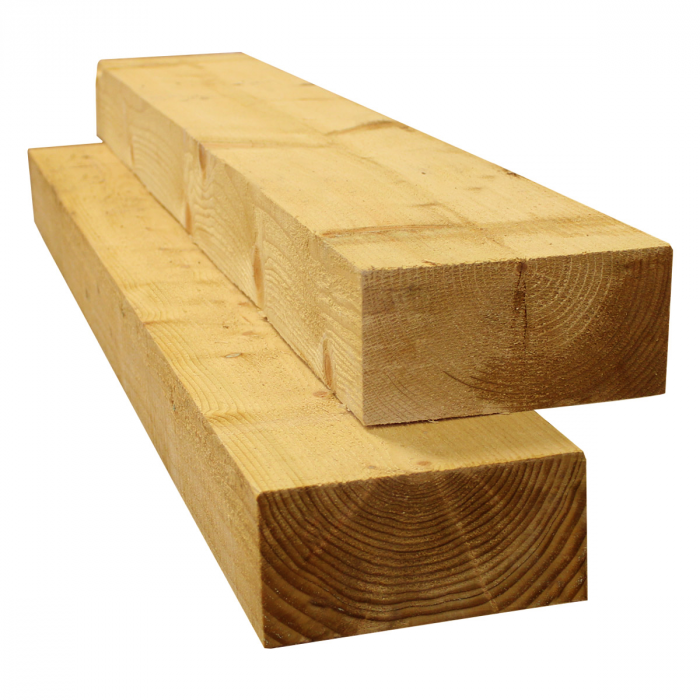
Garden railway sleepers are large pressure-treated timbers used for raised beds, edging, borders, steps, retaining features and general landscaping. These are new 195 × 95mm smooth-sawn sleepers, available in lengths from 0.6m to 3.6m.
Pressure treated for outdoor garden and landscaping projects.
What can you build with them?
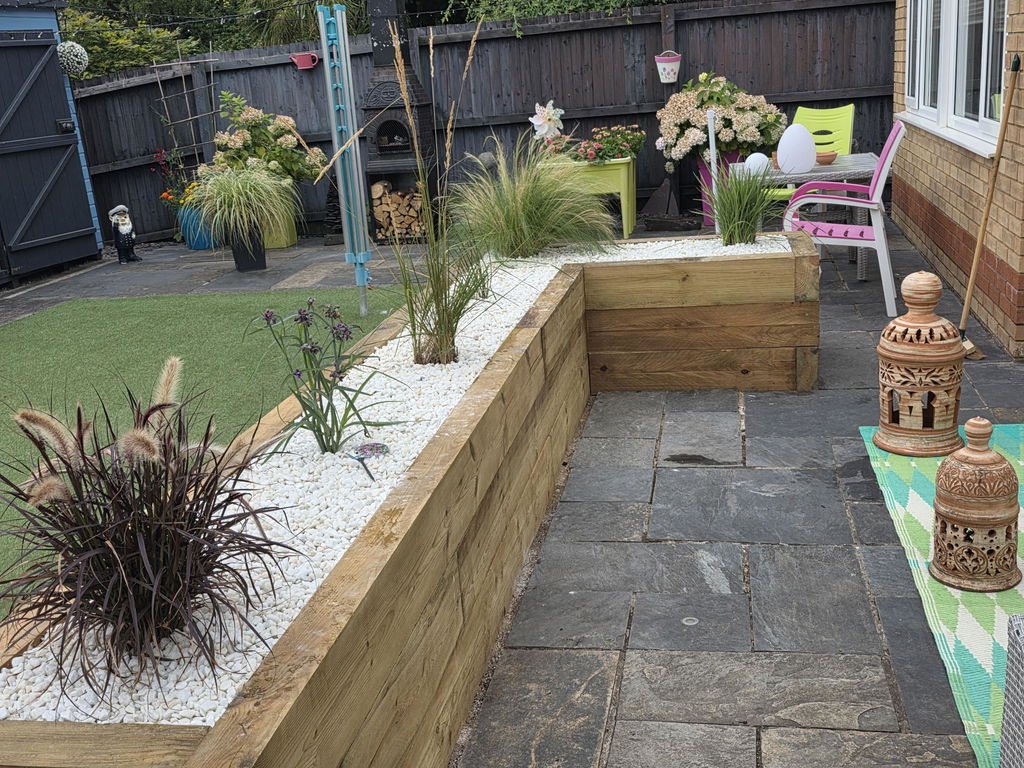
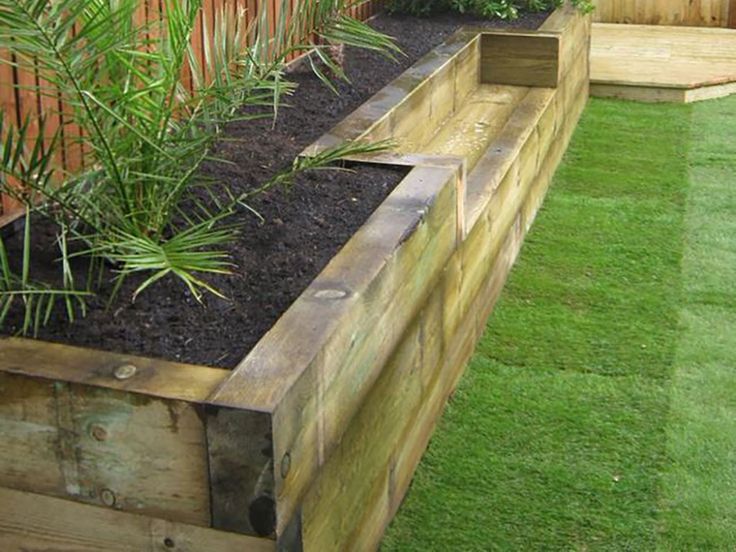
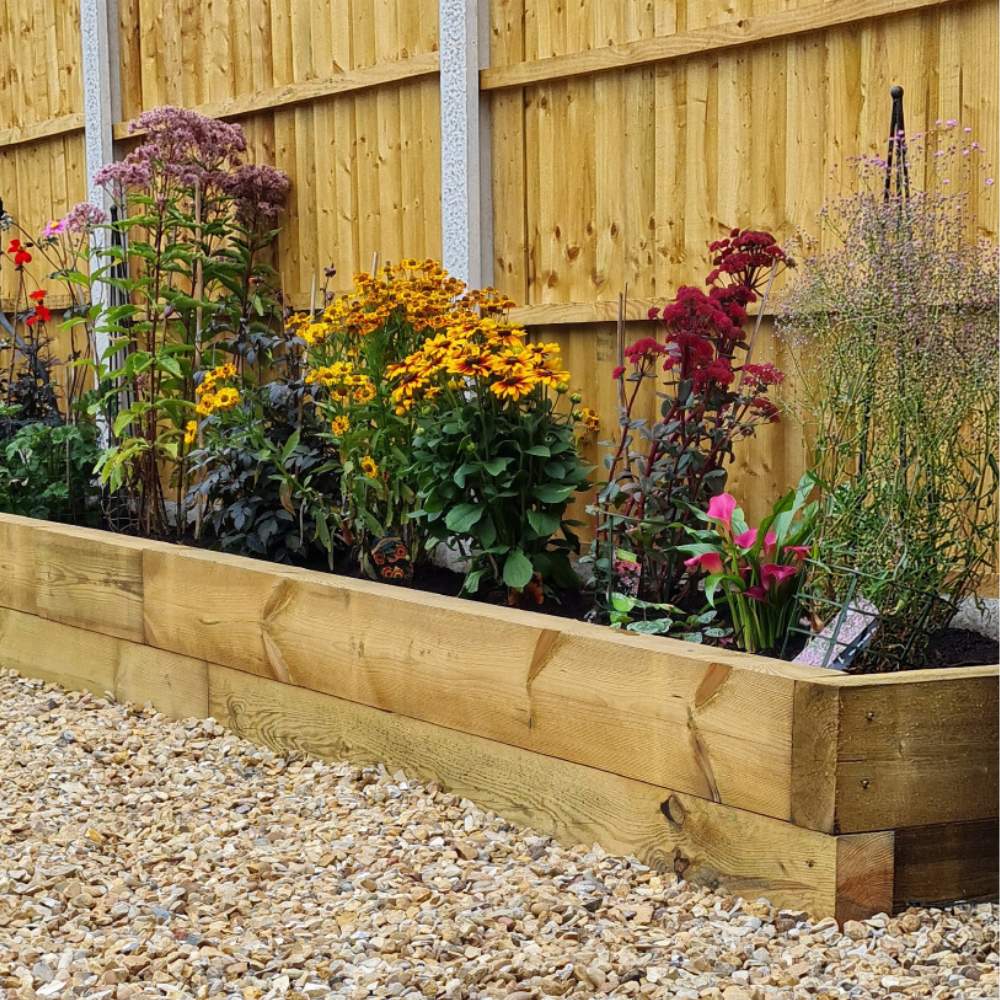
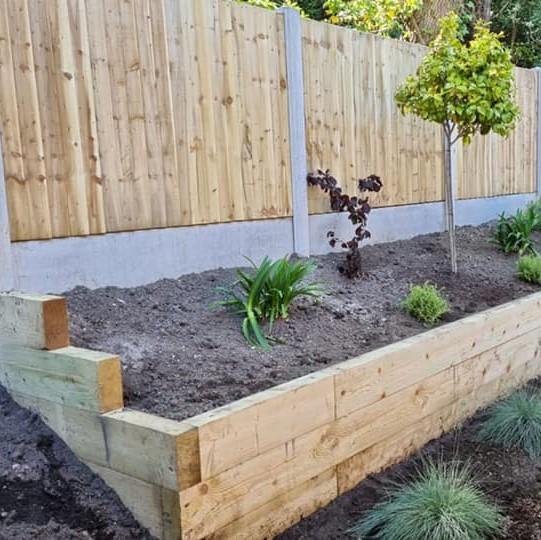
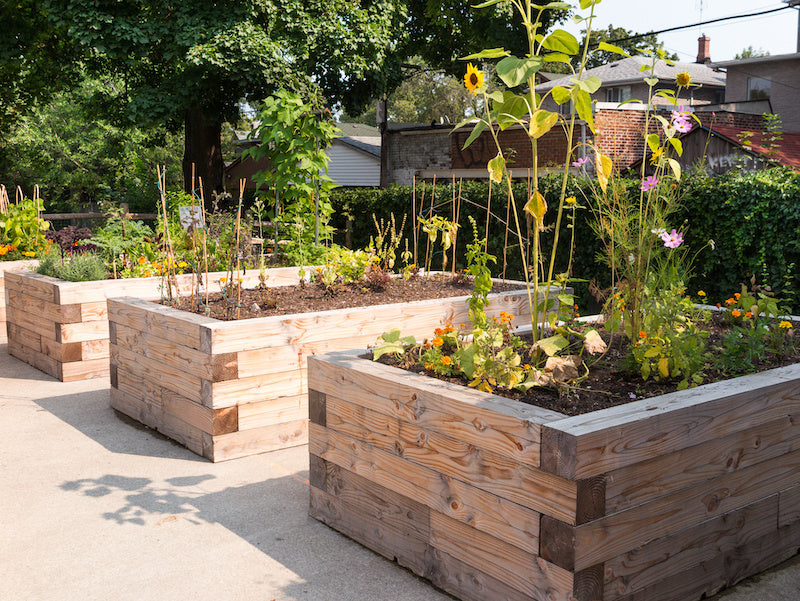
- Raised beds and vegetable planters
- Garden edging and borders
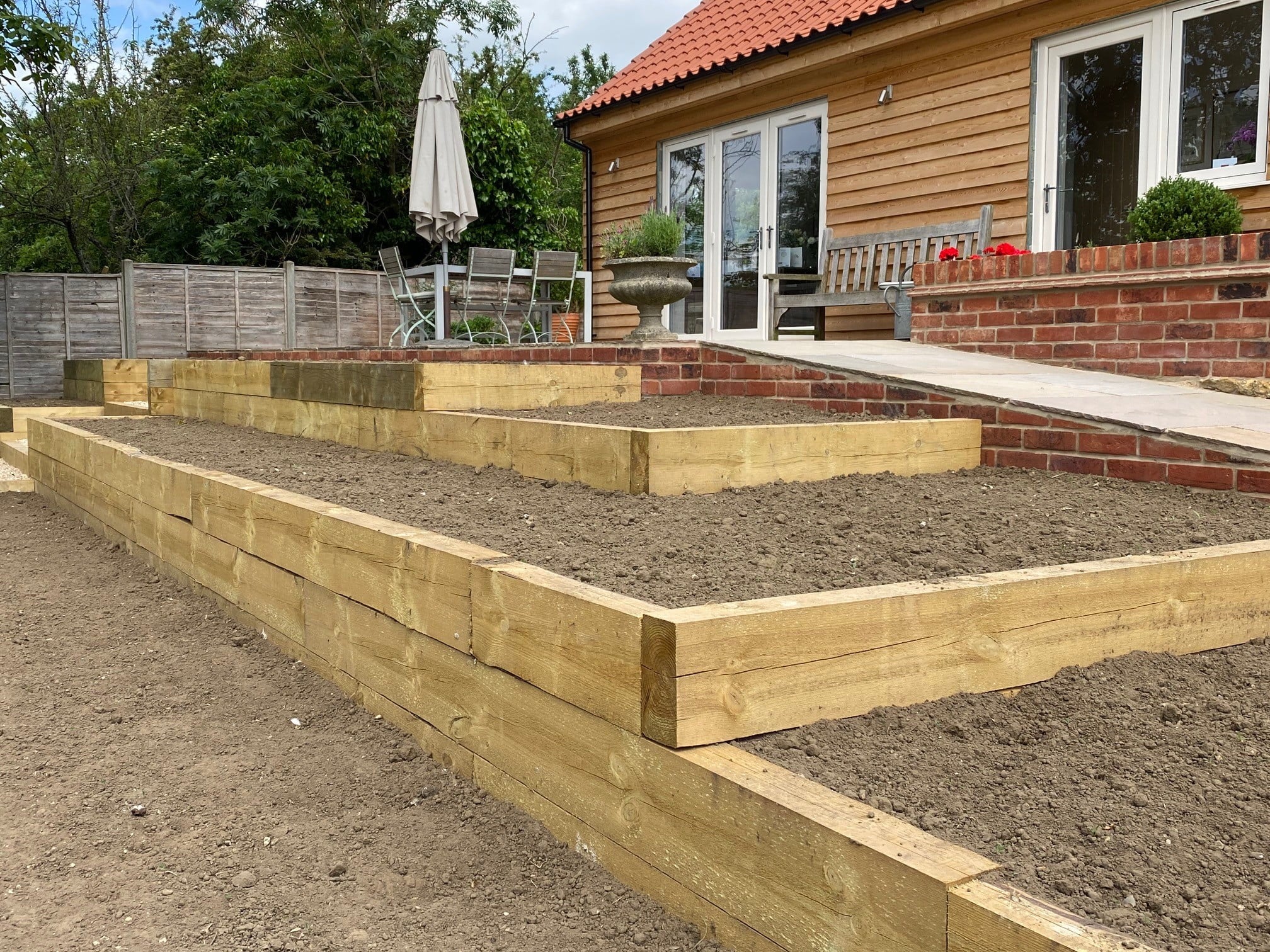
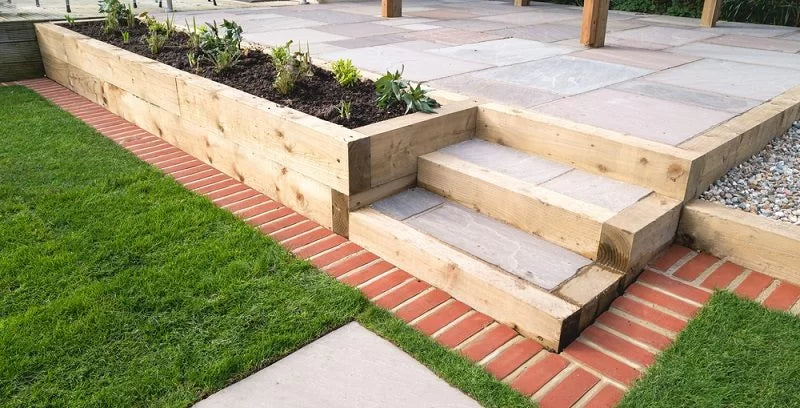
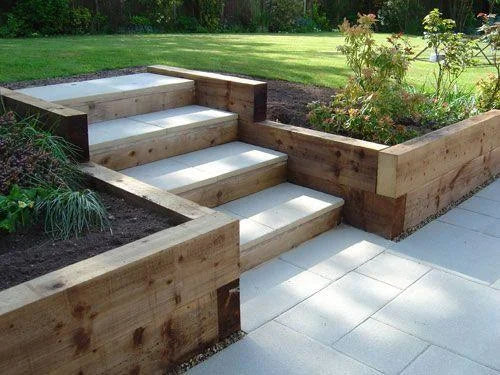
- Steps and level changes
- Low retaining features
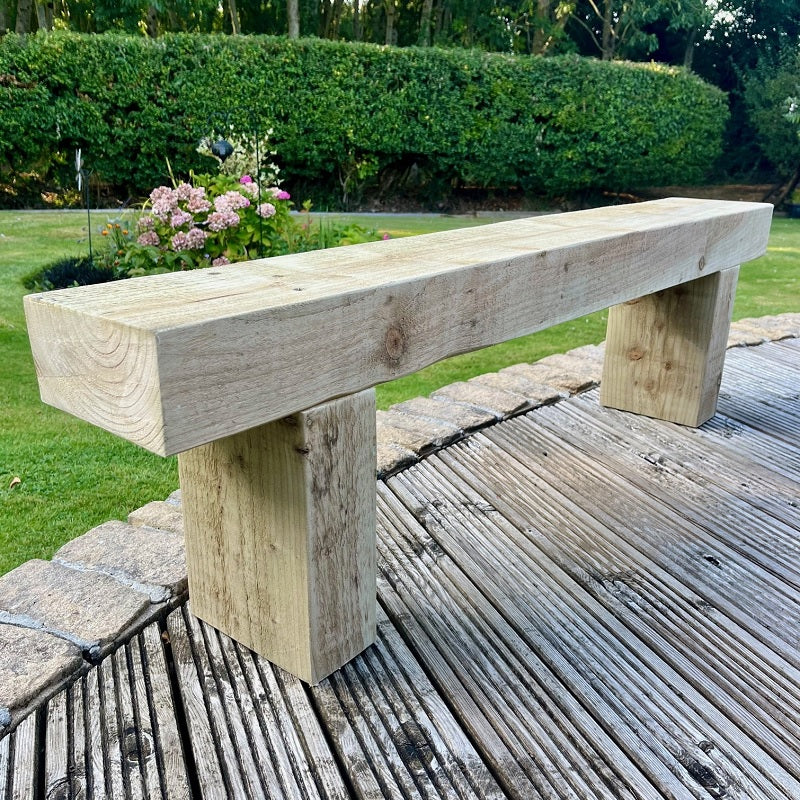
- Seats, benches and landscaping features
- General outdoor timber projects
Choose the length that reduces cuts and joins
Available lengths are 0.6m, 1.2m, 1.8m, 2.4m, 3.0m and 3.6m. Use full lengths where they suit the design. Fewer cuts normally means a quicker build, fewer joints and less waste.
What finish should you expect?
- Nominal size: 195 × 95mm. Timber dimensions can vary slightly through the season and between production runs.
- Finish: Smooth sawn. Cleaner than rough-sawn timber, but not planed joinery timber.
- Natural timber: Small splits and checks are normal in a section this size and can become more visible as the sleeper dries.
- Colour: Fresh treatment can leave a green tint which naturally fades and weathers over time.
- Handling: A 2.4m sleeper is normally around 20–25kg depending on moisture content. A two-person lift is the safest option for any sleeper length.
For raised beds, start with gravel and breathable lining
For most raised beds and edging jobs, we prefer a firm, level gravel base rather than laying the sleeper directly onto soil. Gravel improves drainage and helps the timber last longer.
Modern pressure-treated garden sleepers can be used for vegetable and herb beds. We recommend lining the soil-facing sides with moisture-permeable weed control membrane to reduce constant damp soil contact while still allowing water to move. Avoid turning the bed into a sealed plastic tank with DPM or heavy plastic where water can become trapped.
See How to Build a Raised Bed with Garden Sleepers for the full method.
How do you secure garden sleepers?
The fixing depends on the job. Use Sleeper Support Spikes for restraint in suitable ground, Sleeper Brackets & Flat Support Plates for corners and joints, and Sleeper Base Anchors on suitable concrete or hard standing.
For timber-to-timber connections, use Performance Hex Drive Structural Timber Screws. Around 65mm works with brackets where the fixing depth suits; around 150–200mm is the normal range for substantial direct sleeper-to-sleeper fixing. Pre-drilling is desirable.
If you stack courses, stagger the joints. Courses can be tied with double sleeper spikes, flat plates or structural screws through the top. Some installers avoid vertical screws because water can sit around the screw head and track down the fixing, so choose the method that suits the layout and drainage.
See How to Secure Garden Sleepers for the fixing options.
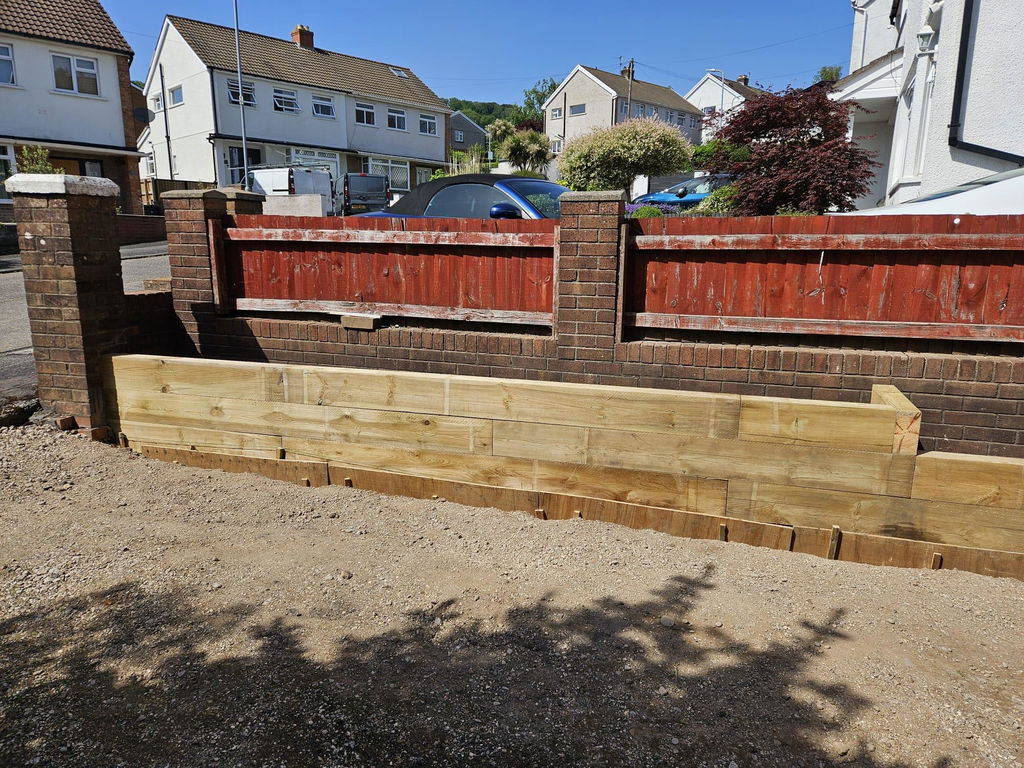
Drainage matters on retaining walls and steps
Always give water somewhere to escape. Retaining features need drainage behind the sleepers as well as enough structural restraint for the soil they hold back. Larger or higher retaining walls need proper design rather than simply more screws.
Sleeper steps can become slippery when wet. Anti-slip oils, strips and other products exist, but choose a solution that suits the finished design and follow the product manufacturer's guidance.
Cutting garden sleepers
Use whatever suitable woodworking tool you already have: circular saw, reciprocating saw, chainsaw or hand saw can all work. The 195 × 95mm section may need turning if your saw cannot cut through in one pass.
Always treat freshly cut ends with a suitable end-grain preservative or wood preserver before installation. If you would rather not cut them yourself, ask us about our cutting service.
New garden sleepers are not reclaimed railway sleepers
These are new pressure-treated landscaping sleepers. Genuine reclaimed railway sleepers can have old fixing holes, variable dimensions, heavy wear and an uncertain treatment history. If you specifically want the reclaimed look, check the timber and its treatment history carefully before using it in a domestic garden.
Shop the full Garden Railway Sleepers range for sleepers, brackets, spikes, concrete anchors and structural screws.