What Size Screw Do I Need for Timber?
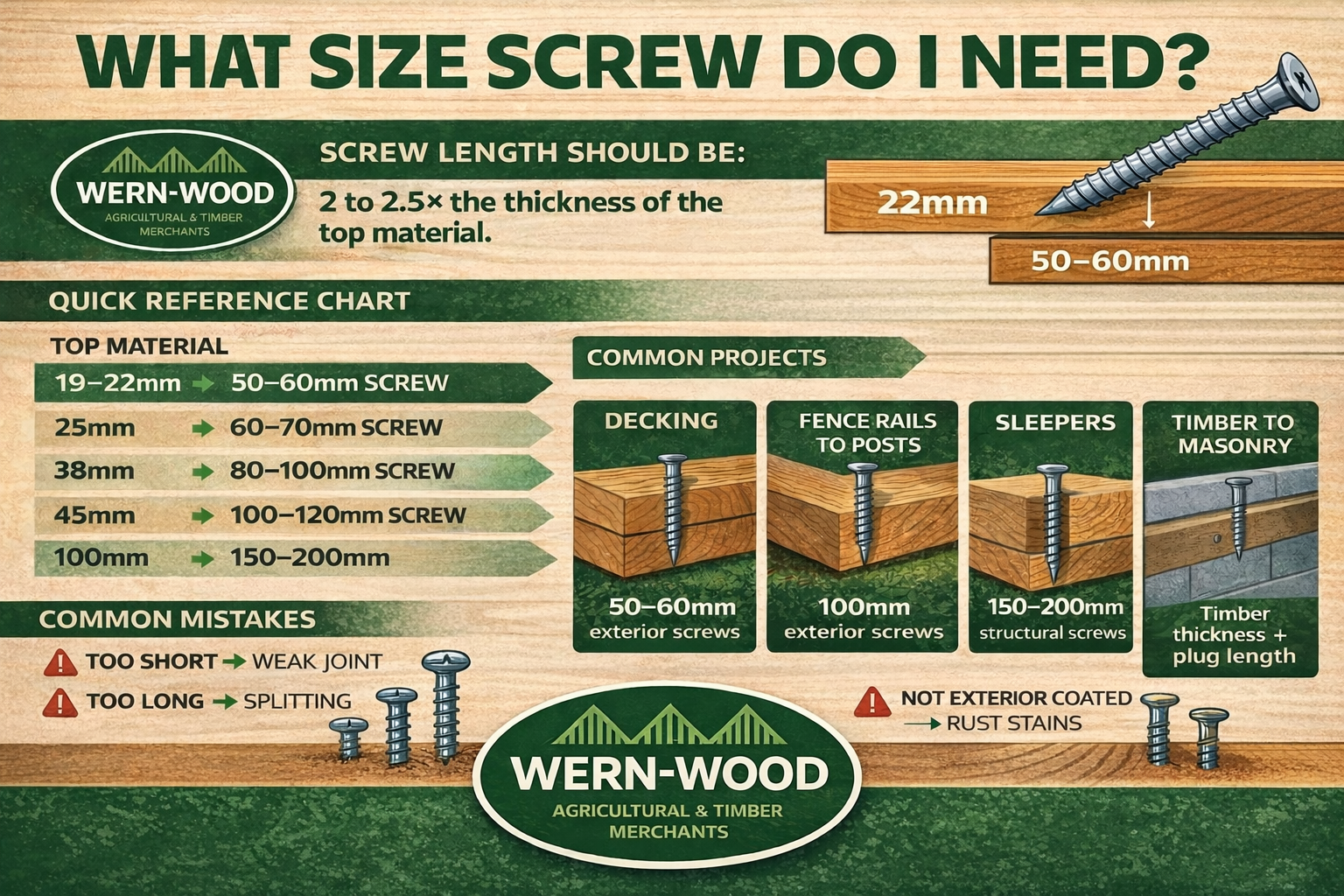
For a simple timber-to-timber fixing, start with a screw around 2 to 2.5 times the thickness of the top piece of timber. A 22mm board usually points towards a 50–60mm screw, while a 45mm rail may need around 90–120mm depending on the joint.
Screw length is only part of the decision. You also need the right screw type, diameter and corrosion protection for the job. Outdoor, structural and masonry fixings need more care than ordinary internal timber work.
Found the length? Choose the screw for the job
Do not buy a general-purpose screw simply because the length looks right. Start with the job, then choose the available length you need.
Choosing a screw by eye is one of the easiest ways to spoil an otherwise good timber job. A screw that is too short will not get enough bite into the second piece. A screw that is too long can split the timber, protrude through the back or add cost without improving the joint.
The screw must also suit the environment. An ordinary internal screw may be perfectly acceptable for dry joinery but completely wrong for decking, fencing or treated timber outdoors.
The simple timber screw length rule
For everyday timber-to-timber fixing:
- Measure the thickness of the timber you are fixing through.
- Multiply that measurement by 2 to 2.5.
- Round to a commonly available screw length.
- Check that the screw will get useful embedment into the second piece without coming through it.
- Choose a screw type and coating suitable for the job.
- Measure first
- Check embedment
- Match the environment
- Pre-drill where needed
- Use specified structural fixings
The rule works because the screw needs to pass through the first piece and still penetrate far enough into the second piece to hold the joint. Timber moves as it dries, swells and responds to changes in temperature and moisture, so a screw that only just catches the lower timber can loosen.
Common timber thicknesses and starting screw lengths
These examples are practical starting points for ordinary timber joints. The correct diameter, head, coating and fixing pattern still depend on the work.
| Top timber thickness | Starting screw range | Common examples |
|---|---|---|
| 12mm | 25–30mm | Thin trims and light boards. |
| 18mm | 40–50mm | Sheet materials and general joinery. |
| 22mm | 50–60mm | Featheredge, cladding and some decking boards. |
| 28mm | 60–70mm | Thicker decking and external boards. |
| 38mm | 80–100mm | Rails, framing and thicker timber joints. |
| 45mm | 90–120mm | Fence rails and structural-sized framing timber. |
| 100mm | 150–200mm+ | Sleepers and heavy landscaping timber, depending on the connection. |
Performance Plus Wood Screws cover common lengths from small joinery sizes through to longer framing screws. Select the diameter and length from the product page after measuring the joint.
Shop Performance Plus Wood Screws →What size screws should I use for sleepers?
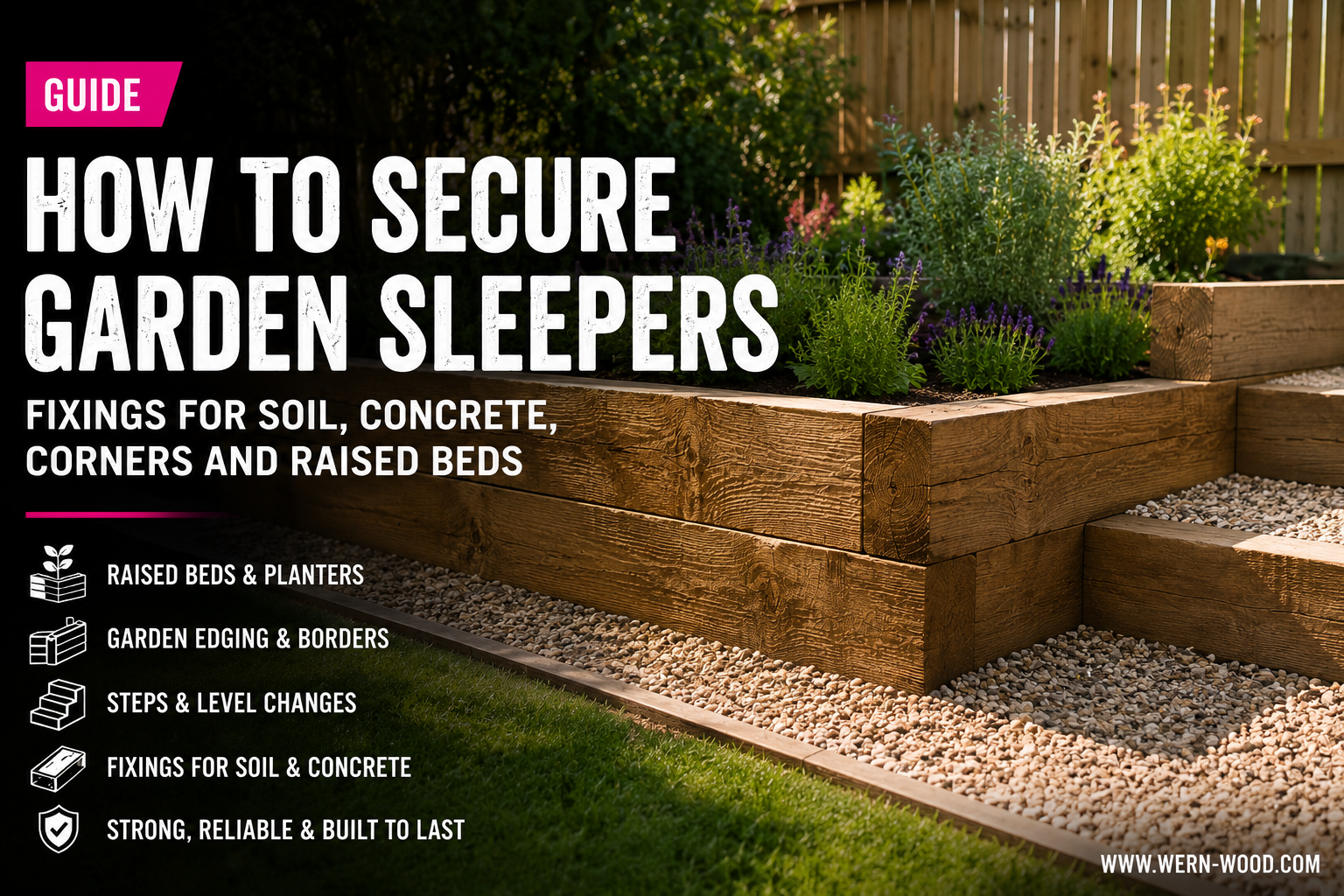
Sleepers are heavy and are frequently used for raised beds, garden edging, steps and landscaping structures. Short ordinary woodscrews are rarely the right answer for joining substantial sleeper sections.
For sleeper-to-sleeper fixing, 150–200mm structural or landscaping screws are a common practical range, depending on the sleeper thickness, orientation and joint. A 100mm sleeper points towards 200mm under the 2× rule, but not every connection needs the same embedment or fixing pattern.
For this type of work, screw diameter and head design matter as much as length. A structural timber screw is intended to pull heavy timber together and accept higher installation torque than an ordinary general-purpose screw.
Raised beds and simple edging are not the same as retaining walls, load-bearing structures or safety-critical work. Where a timber connection carries significant load, follow the project design and fixing manufacturer's specification.
Our Performance Hex Drive Structural Timber Screws are available in 100mm, 150mm and 200mm lengths, including individual screws and box quantities.
Shop Structural Timber Screws →What size screws should I use for decking?
Decking screws need to pass through the board and hold securely in the joist beneath. For many softwood decking boards, screws in the 50–70mm range are common, depending on the board thickness.
A typical 22–28mm decking board will often be fixed with a screw around 60mm long. That is why 4.5 × 60mm is such a common decking screw size. However, board profile, timber species, installation system and joist condition still matter.
Use a screw designed for outdoor decking and compatible with treated timber. A suitable decking screw should resist corrosion and countersink cleanly without unnecessarily damaging the board surface.
Our green-coated 4.5 × 60mm Decking Screws are available in tubs of 500 or 1,000, giving you a direct route from the size guide to the fixing normally used for common softwood decking boards.
Shop 4.5 × 60mm Decking Screws →What size screws should I use for fence rails and featheredge?
Fence rails are commonly around 38–45mm thick, so timber-to-timber rail fixings often fall within the 80–120mm range. The actual fixing depends on the rail, post and fence construction.
Featheredge boards are much thinner. For a nominal 22mm featheredge board, a 50–60mm exterior-rated screw is a practical starting point when fixing into rails. Many closeboard fences are instead built with suitable galvanised nails, so screws are not automatically the only or best method.
Fencing stays outdoors permanently and is normally built with treated timber. Use fixings suitable for outdoor exposure and compatible with the treatment. Do not substitute ordinary bright internal screws simply because the size is correct.
Browse our wider fixing range for screws, nails and fencing accessories, or use structural screws for heavier timber connections.
Shop Screws, Nails & Fixings →Fixing timber to masonry is different
The 2× to 2.5× timber rule does not tell you the full screw length when timber is being fixed to brick, block or concrete.
You need to allow for:
- the thickness of the timber or batten;
- the required embedment into the masonry;
- the plug, frame fixing, concrete screw or anchor being used;
- the wall material and condition;
- the load on the fixing.
For example, a 25mm batten plus 50mm required masonry embedment already needs at least 75mm of effective fixing length, before accounting for any product-specific allowance.
Follow the fixing manufacturer's drilling diameter, hole depth and embedment guidance. Where the fixing is safety-critical or heavily loaded, obtain the appropriate design advice.
Can a timber screw be too long?
Yes. Longer is not automatically stronger.
An unnecessarily long screw can protrude through the reverse face, clash with other fixings, split timber near ends and edges, or increase installation torque without improving the joint. Correct embedment is more useful than simply choosing the longest screw available.
Do I need to pre-drill timber screws?
Pre-drilling is particularly useful:
- near board ends or edges;
- in hardwood or very dry timber;
- with larger-diameter screws;
- where the finished appearance matters;
- when the screw manufacturer recommends a pilot hole.
Some modern timber screws have cutting points and thread designs intended to reduce splitting and installation torque. That can reduce the need for pre-drilling in many softwoods, but it does not make pilot holes unnecessary in every situation.
Internal, exterior and structural screws are not interchangeable
| Screw type | Best suited to | Main check |
|---|---|---|
| General wood screws | Dry internal timber, joinery, framing and general carpentry. | Length, diameter, drive type and whether pre-drilling is needed. |
| Exterior coated screws | Outdoor timber where the coating is approved for the treatment and exposure. | Compatibility with treated timber and expected weather exposure. |
| Decking screws | Fixing decking boards to timber joists. | Board thickness, corrosion protection and clean countersinking. |
| Structural timber screws | Sleepers, frames, pergolas, landscaping and heavy timber joints. | Specified diameter, length, spacing and load requirements. |
| Stainless steel screws | More aggressive exposure, visible fixings and selected hardwood applications. | Grade, timber compatibility and project specification. |
Common screw-selection mistakes
- Guessing the length instead of measuring the top timber.
- Using a screw that only just catches the second piece.
- Choosing by length alone and ignoring diameter, head and coating.
- Using internal screws outdoors on decking, fencing or treated timber.
- Using ordinary woodscrews for heavy sleeper joints.
- Applying the timber rule to masonry fixings.
- Skipping pre-drilling near ends, edges or in hardwood.
- Assuming the longest screw is automatically the strongest choice.
Before ordering screws
Run through these checks:
- What is the thickness of the timber you are fixing through?
- How much sound timber is available underneath?
- Is the work internal, external, treated, hardwood, masonry or structural?
- Does the screw need corrosion protection?
- Is a wood screw, decking screw, structural screw, nail, bolt or anchor the better fixing?
- Will the timber need pre-drilling or countersinking?
Frequently asked questions
What length screw do I need for timber?
For uncomplicated timber-to-timber fixing, begin at approximately 2 to 2.5 times the thickness of the top piece. A 22mm board therefore points towards around 50–60mm. Check the full joint before ordering.
How much screw should enter the second piece of timber?
It needs meaningful embedment rather than merely catching the surface. The exact depth depends on the screw diameter, joint and load. Structural work should follow the fixing manufacturer's or project specification.
What size screws are normally used for decking boards?
Many common softwood decking boards use exterior decking screws around 50–70mm long. A 4.5 × 60mm decking screw is a common choice for standard boards fixed to timber joists.
What size screws should I use for featheredge boards?
For nominal 22mm featheredge, 50–60mm is a practical starting range when screws are used. The screw must be exterior-rated and compatible with treated timber. Suitable galvanised nails are also widely used for closeboard fencing.
What size screws should I use for sleepers?
Heavy-duty structural or landscaping screws around 150–200mm are commonly used, depending on sleeper thickness and joint design. Use a fixing intended for substantial timber rather than an ordinary short wood screw.
Can I use ordinary internal screws outside?
No. Outdoor timber requires fixings with suitable corrosion resistance. Check that the screw is compatible with treated timber and the expected level of exposure.
Do I always need stainless steel screws outdoors?
Not always. Suitable exterior coatings or galvanised fixings can be appropriate for many jobs, while stainless steel is useful in harsher, more corrosive or appearance-sensitive situations. Follow the fixing and timber guidance.
Do timber screws need pilot holes?
Not in every softwood joint, but pre-drilling remains sensible near edges and ends, in dense or dry timber, with larger screws, and whenever the manufacturer recommends it.
Summary: measure the timber, then match the screw to the job
Start with a screw length around 2 to 2.5 times the thickness of the top timber for simple timber-to-timber fixing. Then check the available embedment, screw diameter, head, coating and environment.
Use general wood screws for appropriate internal work, decking screws for deck boards, and structural timber screws for sleepers and heavy timber. The right route should now be clear before you reach the product page.
Ready to buy the screws?
Choose the fixing range that matches your project, then select the length you calculated above.
This guide provides general practical information only. For structural connections, engineered timber, retaining structures, masonry anchors, safety-critical fixings or manufacturer-specific systems, follow the relevant drawings, fixing manufacturer instructions or competent design advice.