

Description
Quick answer: Pressure-treated softwood decking boards for new garden decks, patios, seating areas and replacement decking. Nominal size 125 × 32mm, finishing at approximately 120 × 28mm, with lengths from 2.4m to 4.8m.
Treated timber decking boards for new and replacement decks
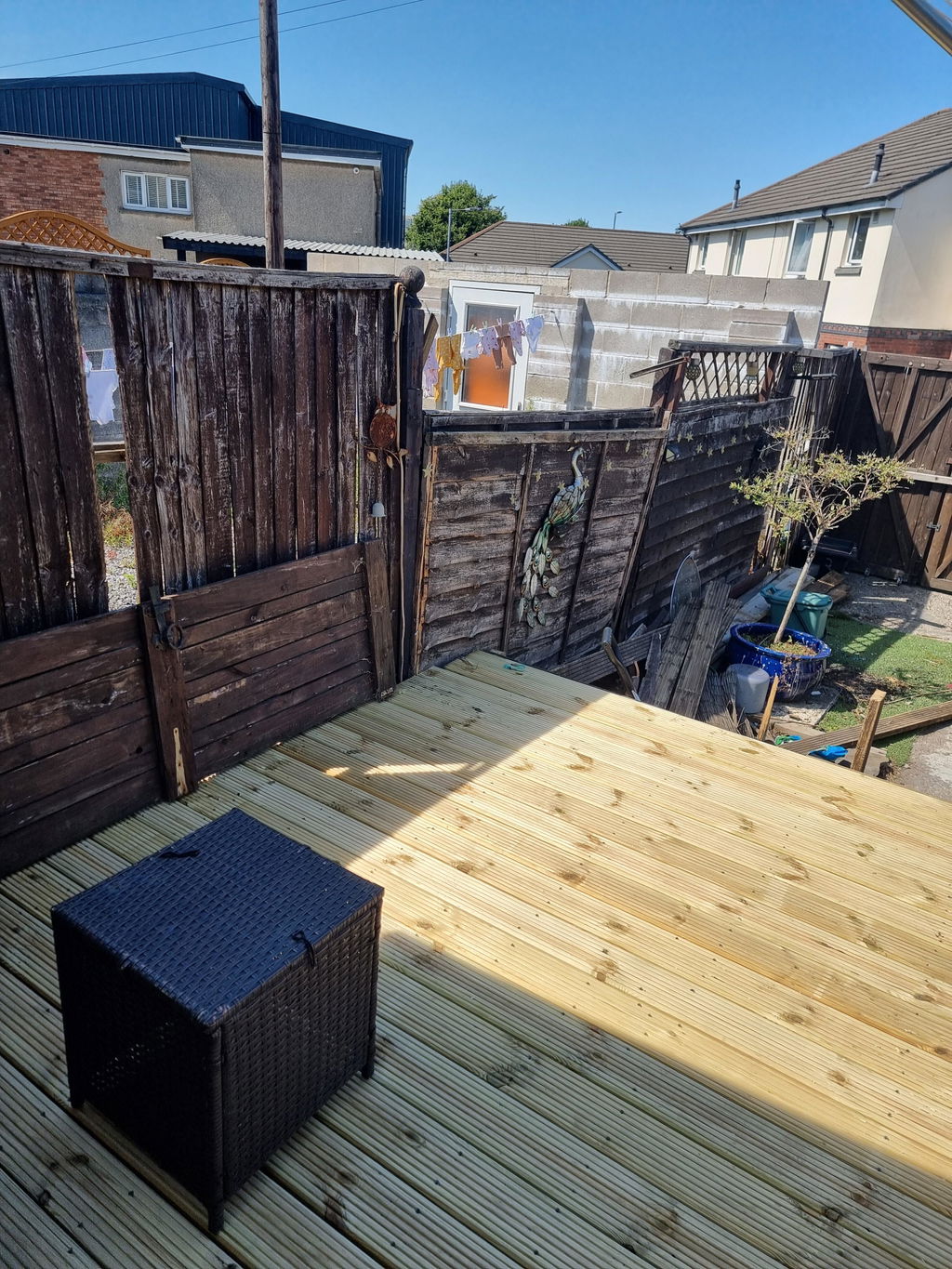
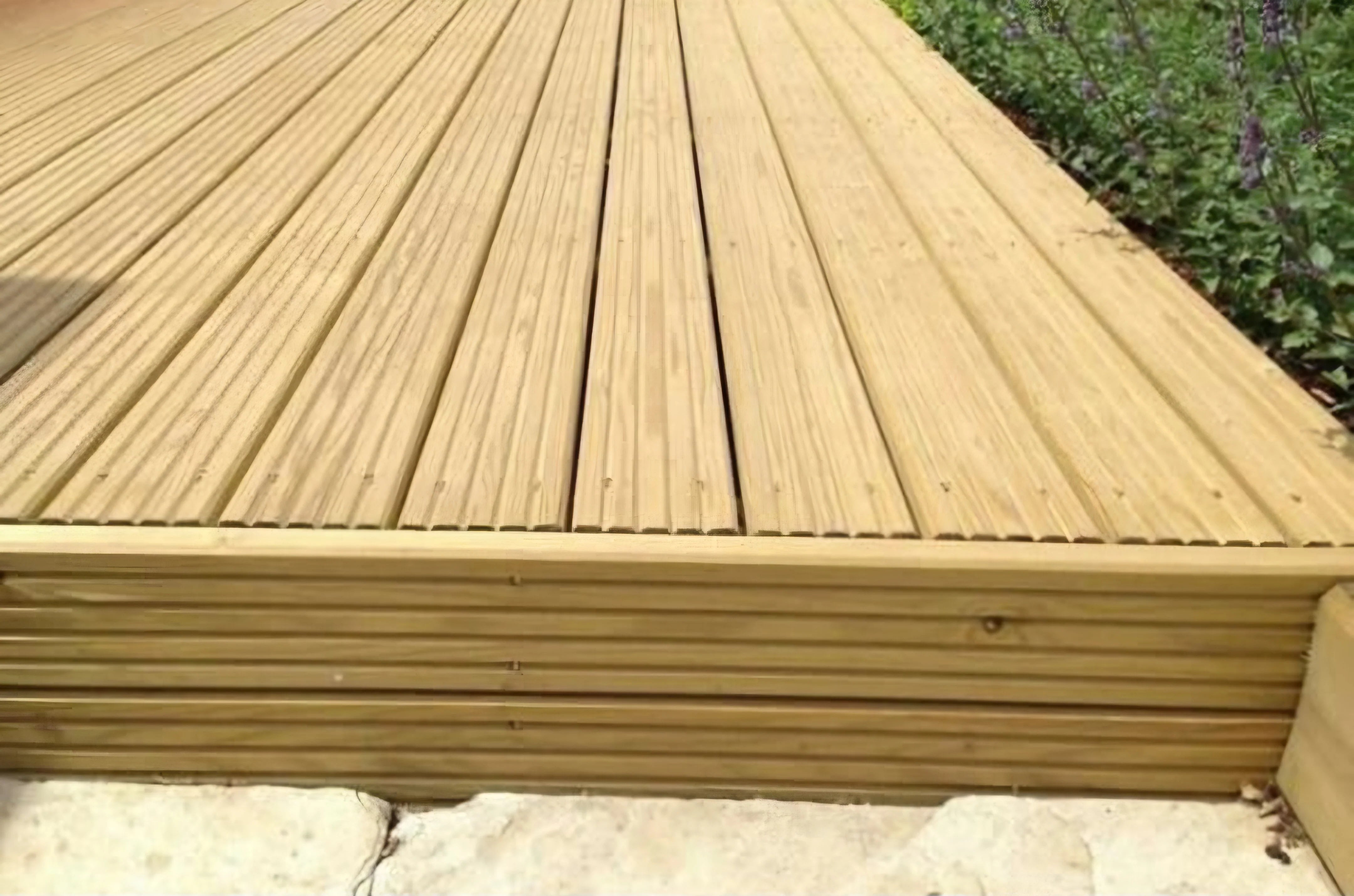
These timber decking boards — also commonly searched for as decking planks or deck boards — give a traditional real-wood finish and are suitable for domestic and trade decking projects. They are kiln dried, pressure treated for exterior use and easy to cut and fix with standard woodworking tools.
They can also be used as replacement deck boards where the finished size and profile suit the existing deck. If you are replacing damaged boards and are unsure whether the existing subframe can stay, see Replacing Decking Boards: When You Can Keep the Existing Frame.
Decking board lengths
This range includes 2.4m, 3.0m, 3.6m, 3.9m, 4.2m and 4.8m lengths. Current availability is shown in the variant selector above. Selecting a length that suits the finished deck can reduce joins, offcuts and wasted timber.
Looking for 4m decking boards? Timber merchants commonly group lengths around 4 metres under that search. Our range includes 3.9m and 4.2m options, subject to current availability.
- Nominal size: 125 × 32mm
- Finished size: approximately 120 × 28mm
- Material: pressure-treated softwood
- Use: garden decking, patios, seating areas, walkways and replacement decking
If you are matching an existing deck, compare the finished dimensions and board profile before ordering, as machining can vary slightly between batches.
How many decking boards do I need?
Board quantity depends on the finished deck size, board direction, spacing and the lengths you choose. Use our Decking Calculator to calculate decking boards, 4x2 framing timber, screws and the current estimated material cost together.
If you want to work the layout out manually, see How Many Decking Boards Do I Need?.
Plan the board layout before fixing
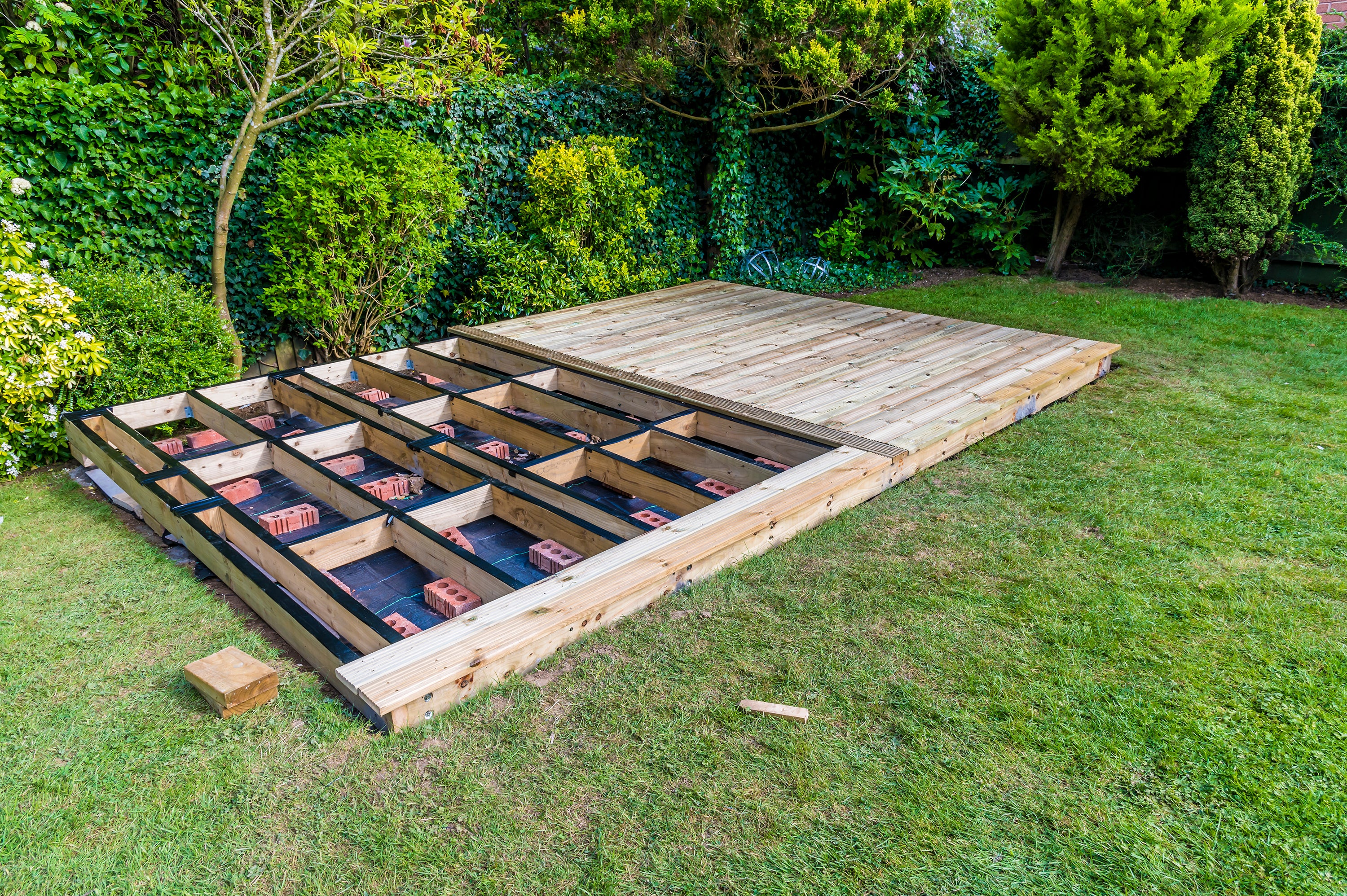
For timber decking, use a suitable treated subframe and leave a consistent gap between adjacent boards for drainage and normal timber movement. Our decking board spacing guide explains the recommended 5–8mm gap and how to keep the layout consistent.
Use suitable exterior-grade decking screws, re-treat freshly cut ends where possible and plan the board face and direction before fixing the first row. See How to Lay Decking Boards for the full installation sequence.
Complete the decking project
For a complete deck, add treated structural timber for the subframe, decking screws, weed membrane and any balustrade or treatment required for the finished job. You can also browse the full Timber Decking range or choose a ready-planned Timber Decking Kit.