


Description
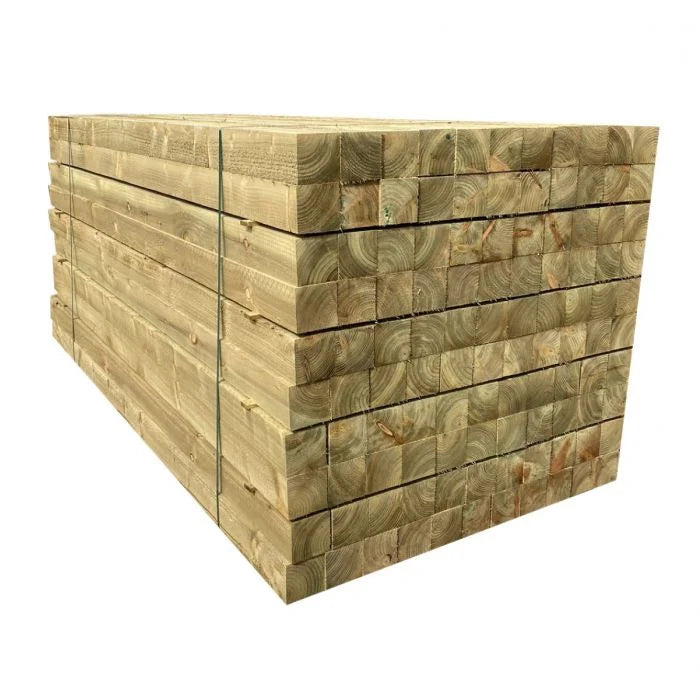
UC4 pressure-treated softwood fence posts for garden fencing, closeboard and featheredge fencing, boundaries and general timber fence construction. They are treated for ground-contact use with a claimed service life of 15 years.
Fence post sizes
| Post section | Available lengths |
|---|---|
| 75 × 75mm (3×3) | 1.8m / 6ft, 2.4m / 8ft, 3.0m / 10ft, 4.2m / 14ft |
| 100 × 100mm (4×4) | 1.8m / 6ft, 2.4m / 8ft, 3.0m / 10ft, 3.6m / 12ft, 4.2m / 14ft |
| 125 × 100mm (5×4) | 3.0m / 10ft |
| 150 × 75mm (6×3) | 1.8m / 6ft, 2.1m / 7ft, 2.4m / 8ft |
| 150 × 100mm (6×4) | 2.4m / 8ft |
| 150 × 150mm (6×6) | 2.4m / 8ft, 3.0m / 10ft, 3.6m / 12ft |
| 175 × 175mm (7×7) | 2.4m / 8ft |
Choosing a timber fence post size
- 100 × 100mm (4×4) – our main general-purpose garden and boundary fence post size. The 2.4m / 8ft variant is the best-selling size in this range, followed by the 3.0m / 10ft option.
- 75 × 75mm (3×3) – a more compact option for lighter garden fencing.
- Larger sections – available where a more substantial timber post is required. Choose the section to suit the fence design and load.
For a typical 6ft fence with around 600mm buried, an 8ft post is the normal starting point. Check How Deep Should Fence Posts Be?, then use How Far Apart Should Fence Posts Be? and How Many Fence Posts Do I Need? to plan the run.
Setting the post into the ground? Add our Wern-Wood 20kg rapid-set Postmix; for a standard 75mm or 100mm timber post, we normally allow around 1.5–2 bags per post.
Building with ready-made fence panels? Add galvanised fence panel brackets. For compatible 3×3 ground-set posts, add a PostSaver sleeve for extra ground-line protection. Finish square timber posts with compatible timber fence post caps.
For timber, concrete, steel and agricultural alternatives, browse the full Fence Posts range. For treatment and service-life guidance, see How Long Does Treated Timber Last?.