


Description
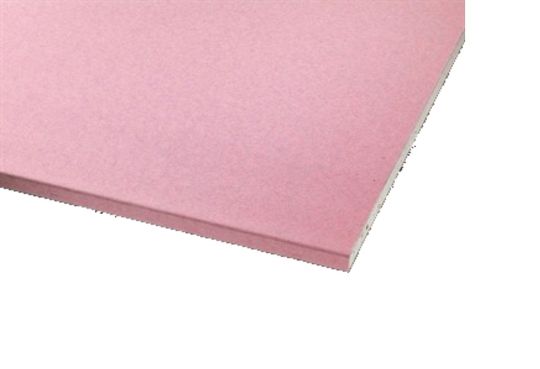
Quick answer: Fire resistant square edge plasterboard is used for internal walls, ceilings, partitions and linings where enhanced fire performance is required. It should be used as part of a suitable fire-rated system where a fire rating is needed, because the plasterboard alone does not automatically create a compliant fire-rated wall or ceiling.
What is this used for?
This fire resistant plasterboard is designed for internal building work where additional fire performance is required compared with standard plasterboard. It is commonly used for internal partitions, wall linings and ceilings in residential, commercial and general interior construction projects.
Typical uses include fire-rated internal partitions, wall linings, ceilings, garages, separating areas and internal spaces where extra fire performance has been specified.
Is this the right plasterboard for your project?
Choose fire resistant plasterboard where the project specification calls for enhanced fire performance. It is a more suitable option than standard plasterboard when the wall or ceiling forms part of a fire-rated construction.
Fire performance depends on the full system, not just the board. The final rating can depend on the board type, number of layers, frame, insulation, fixings, joint treatment, sealing, penetrations and workmanship. Where a specific fire rating is required, follow the relevant building regulations, manufacturer guidance and project specification.
If fire performance is not needed, standard plasterboard may be the better choice. For humid internal areas, consider moisture resistant plasterboard. Where thermal improvement matters, check insulated plasterboard.
What does fire resistant plasterboard mean?
Fire resistant plasterboard is manufactured with additives that improve its fire resistance compared with standard wallboard. This makes it useful in suitable internal wall and ceiling systems where additional fire performance is required.
It is important not to treat the board as a fire-rated system by itself. A compliant fire-rated wall or ceiling normally depends on the complete build-up, including how the board is fixed, jointed and sealed.
What does square edge mean?
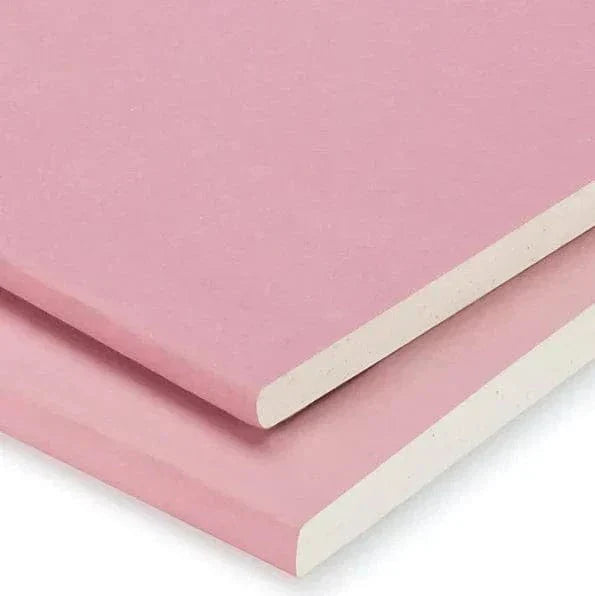
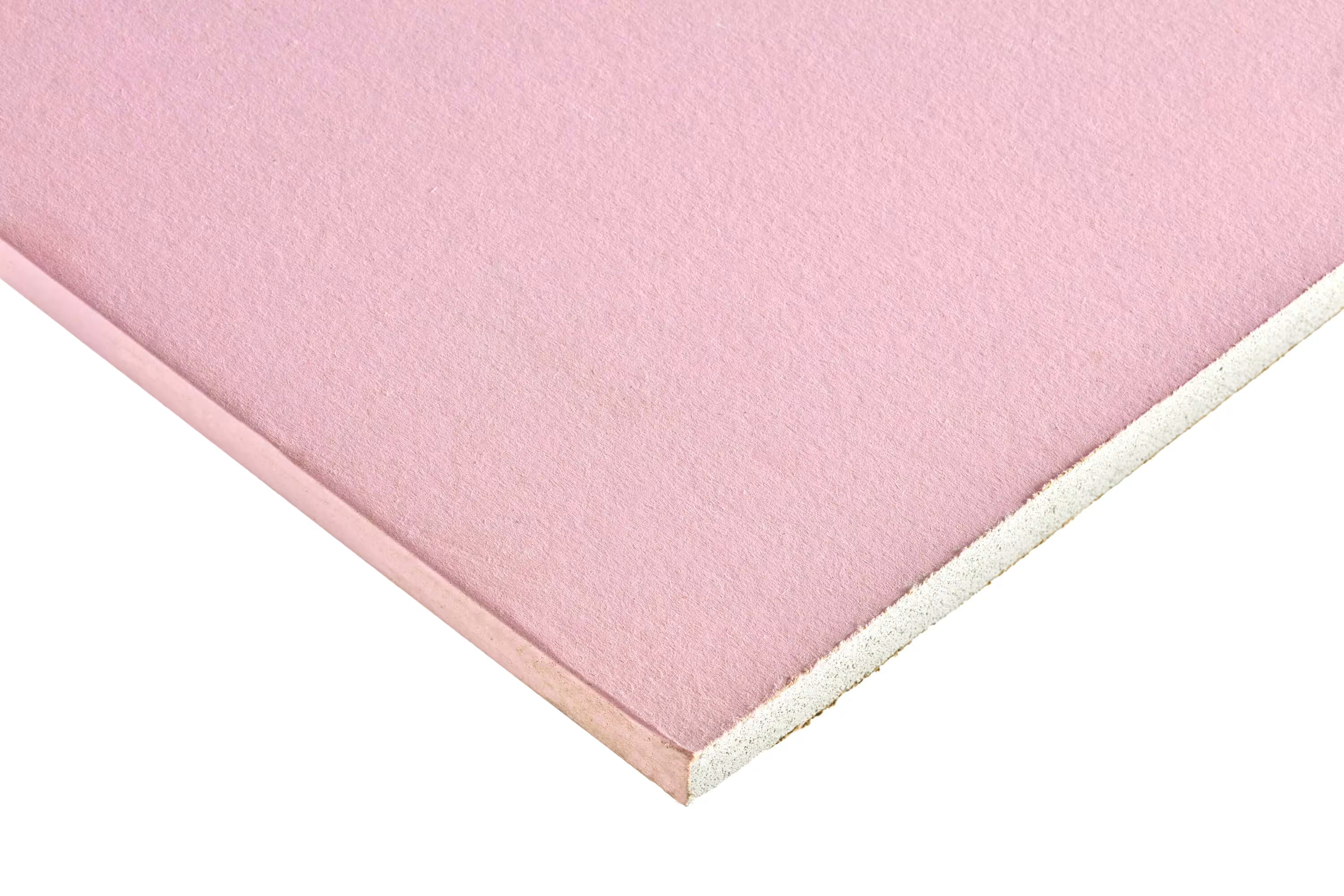
Square edge plasterboard has straight edges rather than tapered edges. It is commonly chosen where the board will be finished with a full skim coat of plaster.
The board may also be finished or decorated depending on the installation method, but square edge plasterboard is usually the most natural choice where the full surface will be skim plastered.
Key features
- Fire resistant board: Designed to provide improved fire resistance compared with standard plasterboard.
- Internal use: Suitable for partitions, wall linings and ceilings where enhanced fire performance is required.
- Square edge profile: A practical choice where the surface will be finished with a full skim coat of plaster.
- 12.5mm board: A common plasterboard thickness for internal wall and ceiling applications.
- Large sheet format: 2400mm x 1200mm boards cover larger areas efficiently.
- EN 520 Type A: Classification stated for this fire resistant plasterboard.
Things to check before ordering
- Fire rating: If a specific fire rating is required, check the full system specification. The board alone does not automatically create a compliant fire-rated wall or ceiling.
- Installation method: Follow the relevant building regulations, manufacturer guidance and project specification where fire performance is required.
- Full build-up: Board layers, frame type, insulation, fixing pattern, jointing, sealing and penetrations can all affect fire performance.
- Finish method: Square edge plasterboard is usually chosen for full skim plastering.
- Fixings: Use suitable drywall screws for the frame or background you are fixing into.
- Handling: Each board weighs approximately 23.9kg, so plan safe handling before moving and fitting.
- Storage: Store boards flat, dry and protected before installation.
Complete the job
For fixing fire resistant plasterboard, start with suitable drywall screws. You may also need scrim tape, plasterboard adhesive, angle beads and finishing plaster depending on how the boards are being fitted and finished.
If this is not the right board for the job, view the full plasterboards and dry lining range, including standard plasterboard, moisture resistant plasterboard and insulated plasterboard.