
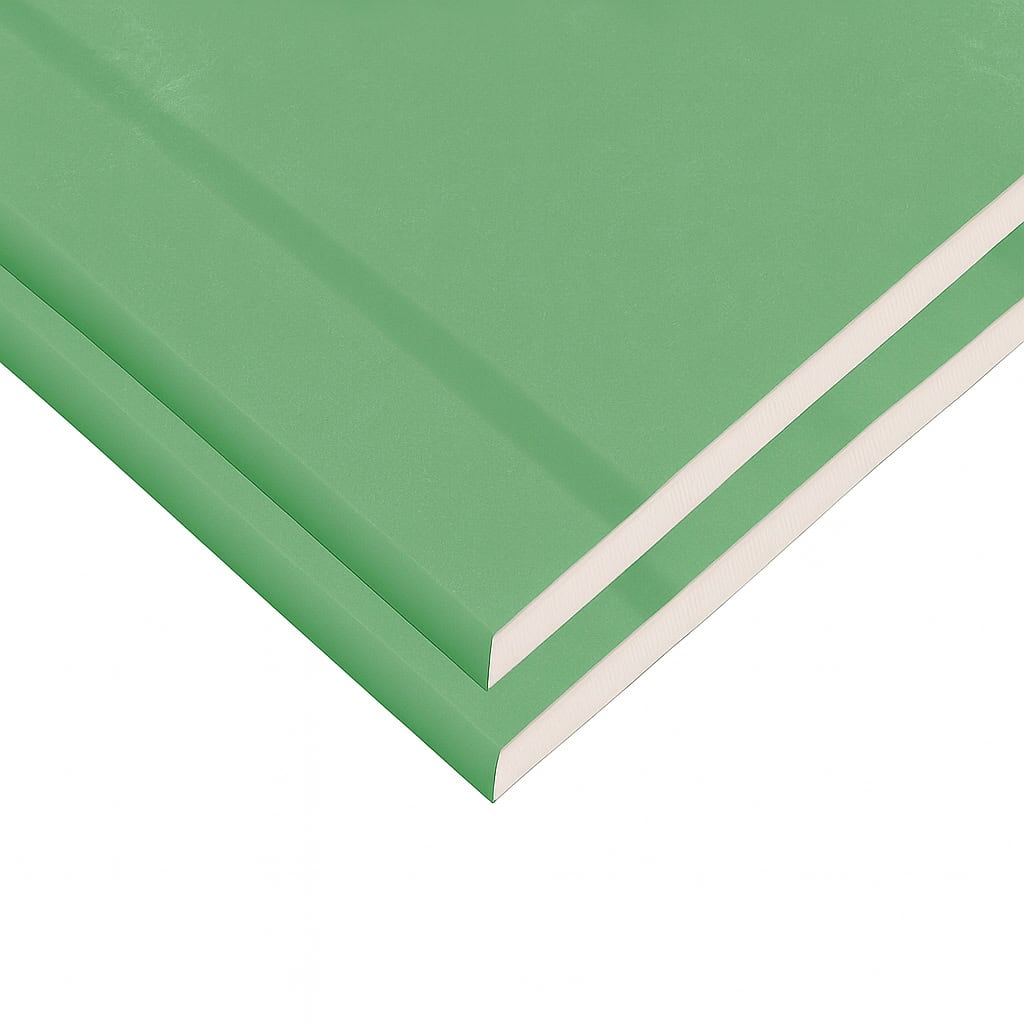


Description
Quick answer: Moisture resistant tapered edge plasterboard is used for humid internal areas where standard plasterboard may not be suitable, such as kitchens, utility rooms, bathrooms and condensation-prone ceilings. It is moisture resistant, not waterproof, so it should not be used where the board will be in direct or continuous contact with water.
What is this used for?
This moisture resistant plasterboard is designed for internal areas where increased resistance to humidity is needed. It is suitable for drylining, partitions, wall linings and ceilings in rooms where moisture in the air may be a concern.
Typical uses include kitchens, utility rooms, bathrooms, shower rooms excluding direct water contact areas, humid internal partitions, wall linings and ceilings in areas prone to condensation.
Is this the right plasterboard for your project?
Choose moisture resistant plasterboard where the room is more humid than a normal dry internal area. It is a better choice than standard plasterboard for many kitchens, utility rooms and bathroom walls or ceilings where the board is not directly exposed to water.
This board is not a waterproof tile backer board and should not be treated as one. Do not use it where it will be exposed to direct or continuous water, such as inside a shower enclosure, wet room area or any location where water can regularly soak the board.
If you do not need moisture resistance, standard plasterboard may be the more suitable option. If the project needs fire performance or thermal improvement, check fire rated plasterboard or insulated plasterboard instead.
What does moisture resistant mean?
Moisture resistant plasterboard is made with additives that help improve resistance to humidity compared with standard plasterboard. This makes it useful in internal rooms where moisture in the air is more likely.
Moisture resistant does not mean waterproof. The board still needs the correct finish, protection and installation method for the room, especially in areas close to sinks, baths, showers or regular condensation.
What does tapered edge mean?
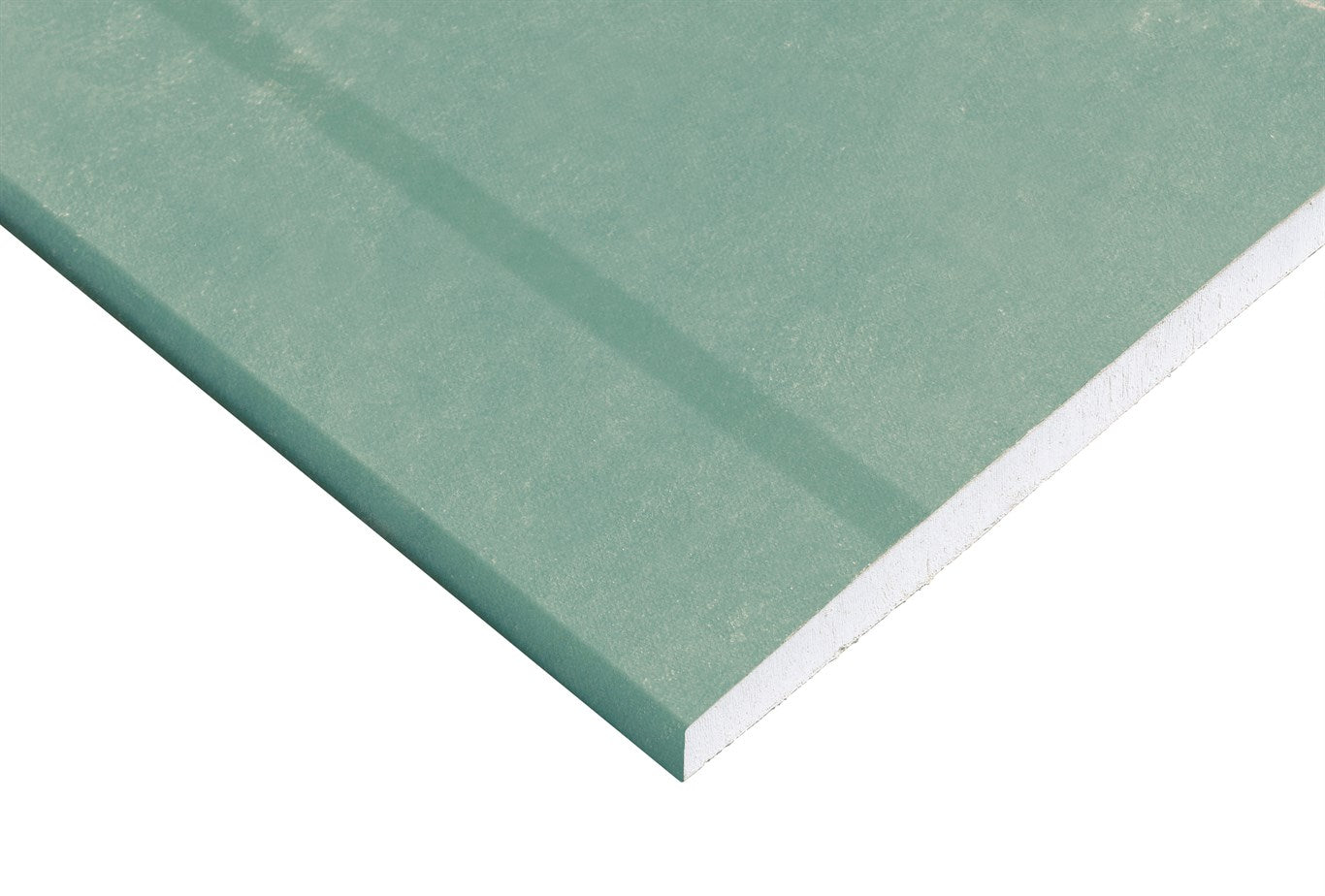
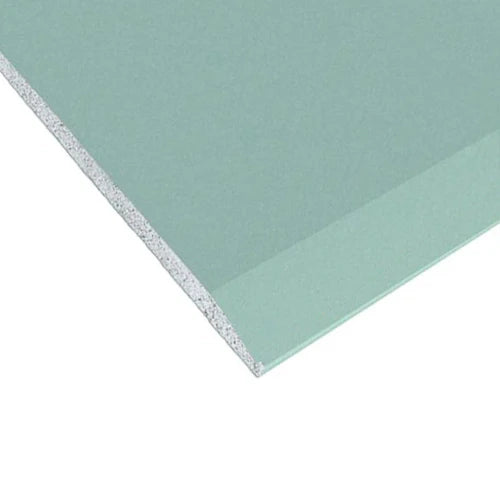
Tapered edge plasterboard has slightly recessed long edges. This creates space for jointing tape and compound, making it suitable for tape-and-joint finishing.
This board can still be skimmed if required, but the tapered edge makes it especially useful where the joints are being taped and filled rather than the whole surface being fully skim plastered.
Key features
- Moisture resistant board: Better suited to humid internal areas than standard plasterboard.
- Internal use: Suitable for kitchens, utility rooms, bathrooms, shower rooms outside direct water contact areas, partitions, wall linings and condensation-prone ceilings.
- Tapered edge profile: Designed to make tape-and-joint finishing easier.
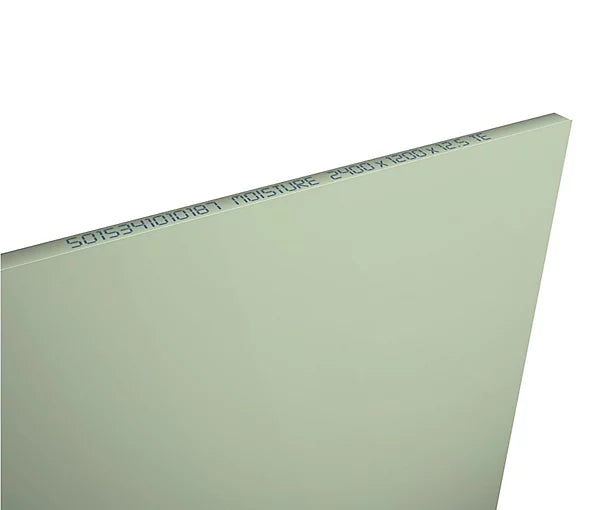
- 12.5mm board: A common plasterboard thickness for internal wall and ceiling work.
- Large sheet format: 2400mm x 1200mm boards cover larger areas efficiently.
Things to check before ordering
- Water exposure: This board is moisture resistant, not waterproof. Do not use it where it will be in direct or continuous contact with water.
- Room type: It is suitable for humid internal areas, but wet rooms, shower enclosures and direct splash zones may need a different board or system.
- Finish method: Tapered edge boards are well suited to tape-and-joint finishing, but can also be skimmed if required.
- Surface protection: Use the correct finishing system, sealants, primers, tiles, paint or surface protection for the room and exposure level.
- Fixings: Make sure you have suitable drywall screws for the frame or background you are fixing into.
- Storage: Store boards flat, dry and protected before installation.
Complete the job
For fixing moisture resistant plasterboard, start with suitable drywall screws. You may also need scrim tape, jointing compound, plasterboard adhesive, angle beads and finishing plaster depending on how the boards are being fitted and finished.
If this is not the right board for the job, view the full plasterboards and dry lining range, including standard plasterboard, fire rated plasterboard and insulated plasterboard.