Your Timber Can Be Ruined Before You Even Build With It
Outdoor timber should be stored flat, raised off the ground, evenly supported, protected from direct rain and well ventilated before installation. Do not leave timber sitting on soil, grass, wet concrete or uneven bearers. Do not wrap it tightly in plastic. Poor storage can cause twisting, bowing, surface mould, staining and uneven drying before the job has even started.
Most people think the job starts when the saw comes out. It does not. The job starts when the timber arrives.
Decking boards, fence rails, sleepers, treated sawn timber and landscaping timber are all natural materials. They can move as moisture changes. Store them badly for a few days and you can make the installation harder than it needed to be.
That does not mean timber needs to be treated like glass. It means it needs basic care: keep it flat, keep it supported, keep it off the ground, cover it sensibly, and let air move around it.
The simple rule for storing outdoor timber
If you only remember one thing, make it this: timber should be stored as if you still need it to be straight when you use it.
- Keep it off the ground
- Stack it flat
- Support it evenly
- Cover the top
- Keep the sides ventilated
- Avoid standing water
- Separate heavy and light products
Outdoor timber can handle being used outside when it is the correct product for the job. That does not mean it should be left dumped in a wet heap before fitting.
Before the lorry arrives: prepare the storage area
The best time to think about timber storage is before delivery day, not after the driver is outside and the rain has started.
Clear a flat area close to where you will be working. Avoid low spots where water collects, muddy areas, wet grass, and uneven ground. If you can store the timber under cover in a dry, well-ventilated place, that is usually best. If it must be stored outside, set the area up properly first.
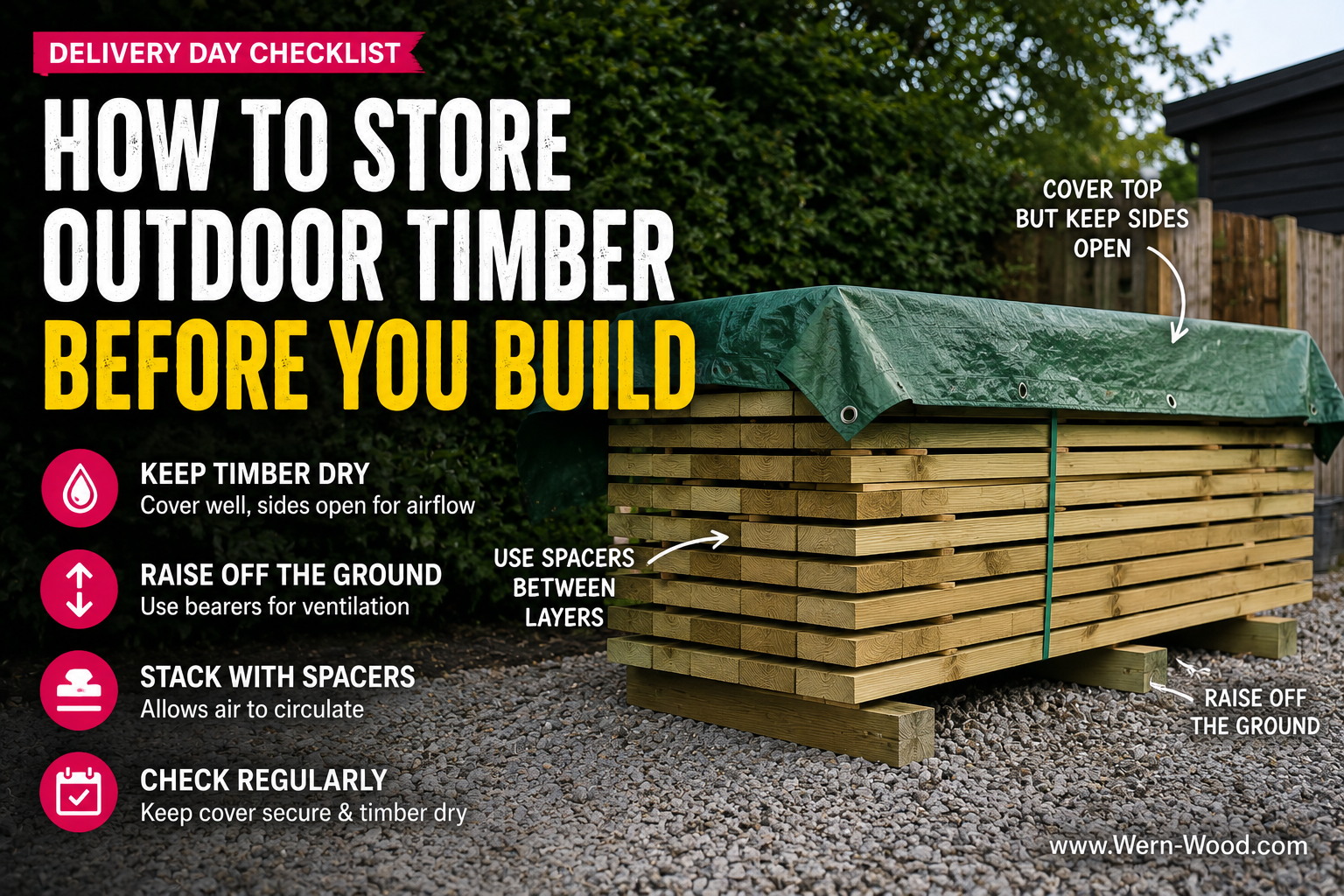
- Use bearers, pallets or offcuts to lift timber clear of the ground.
- Use bearers of the same thickness so the stack does not twist.
- Support long lengths along their span rather than only at the ends.
- Keep stacks away from puddles, soil and wet concrete.
- Leave room for airflow and safe access around the stack.
If you are ordering bulky materials, check Delivery Information in advance so you know how the delivery works and can prepare space before it arrives.
The worst storage spot is usually the most convenient one: grass beside the driveway, a low corner of the garden, or hardstanding where water sits. If the timber is going to wait there for more than a few hours, lift it, level it and cover it properly.
On delivery: check, sort and stack properly
Once the timber arrives, do not just leave every product in one mixed pile. Heavy sleepers, fence posts and structural timbers can crush or distort lighter boards if they are stacked badly.
Work through the delivery sensibly:
- Check the order before you start moving materials around.
- Sort by product type so heavy items are not sitting on thin boards.
- Stack timber flat rather than leaning it against walls or fences.
- Keep boards aligned so the stack supports itself evenly.
- Support long lengths such as decking boards, rails and treated sawn timber along their length.
- Keep packs stable so they cannot tip, roll or slide.
Leaning timber looks harmless, but it encourages bowing and makes long boards harder to work with later. Flat, even support is boring — and that is why it works.
Keep timber off the ground at all times
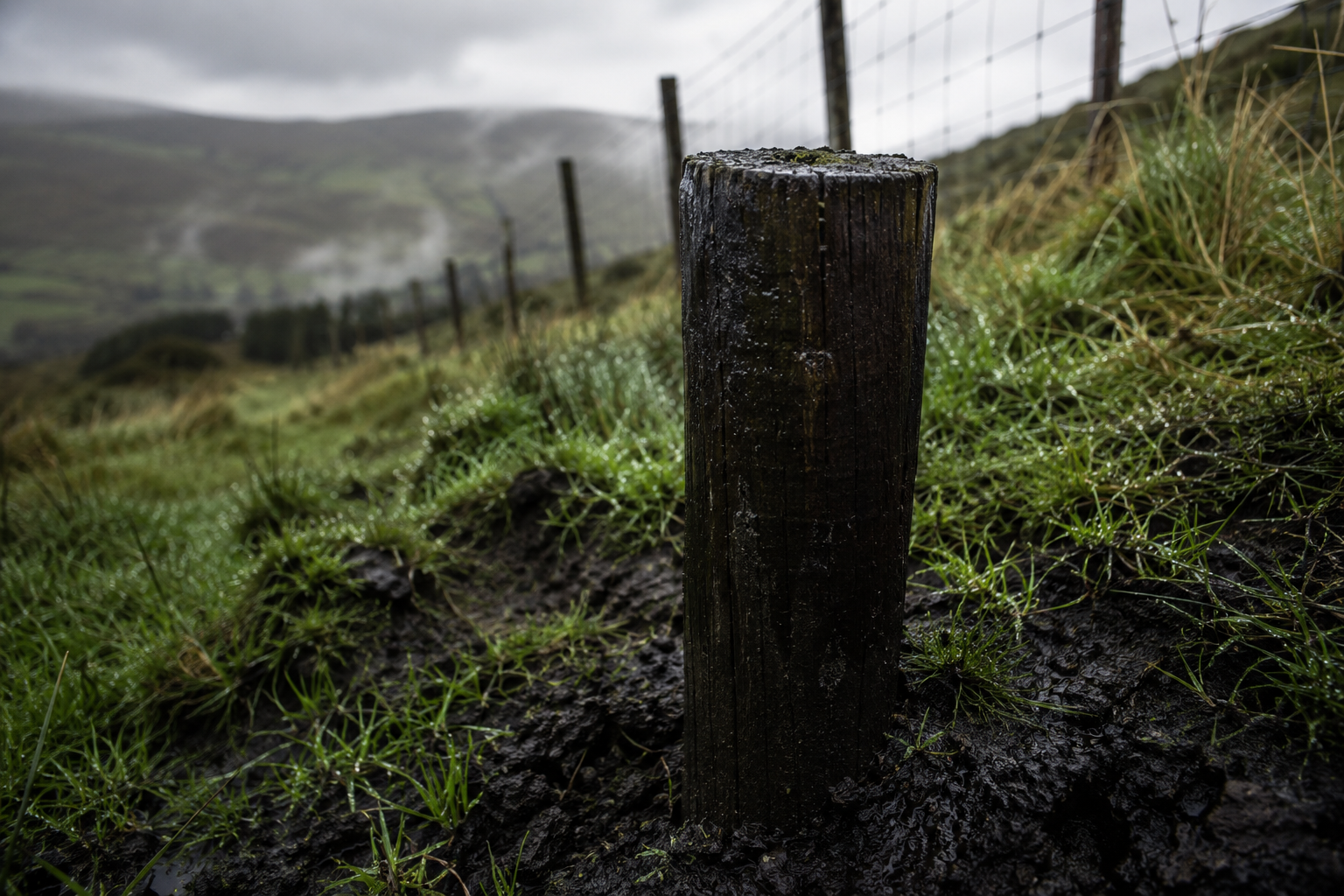
Ground contact is one of the fastest ways to introduce unwanted moisture before the timber has even been fitted. Soil, wet grass and damp concrete can all hold moisture against timber.
This applies even to treated outdoor timber. Treatment helps timber perform in the correct use, but storage still matters. A treated decking board, fence rail or cut length of treated sawn timber should not be left sitting in wet grass because it is “outdoor timber”.
| Product | Storage risk | Better approach |
|---|---|---|
| Decking boards | Can bow or stain if left unsupported or damp. | Stack flat on even bearers with airflow. |
| Fence rails and boards | Can twist if leaned or unevenly supported. | Keep flat, aligned and raised off the ground. |
| Fence posts | Can sit in standing water if left on soil or concrete. | Store raised and separated from lighter boards. |
| Garden sleepers | Heavy packs can mark or crush lighter materials. | Stack separately on firm bearers. |
| Treated sawn timber | Long lengths can sag if only supported at the ends. | Use regular bearers along the length. |
Cover timber — but do not trap moisture
Timber should be protected from direct rain, but it still needs air. A sheet thrown tightly around the whole pack can trap moisture inside, especially if the timber was already damp or the ground below is wet.
Best practice is simple:
- Cover the top to shed rain.
- Keep the sides open so air can move.
- Avoid tight plastic wrapping that traps condensation.
- Make sure the cover cannot sag and hold water against the timber.
- Check the stack after heavy rain rather than assuming the cover has worked.
A waterproof sheet can help keep rain off, but timber still needs ventilation. Fully sealing timber in plastic can trap moisture and encourage surface mould, staining or uneven drying.
Separate different timber products
Not every timber product should be stacked together. A mixed delivery might include heavy sleepers, long decking boards, fence posts, gravel boards, rails and thinner landscaping timber. They should not all be treated as one pile.
Where possible:
- Store sleepers separately from lighter boards.
- Keep posts together rather than placing them across thin sections.
- Keep long boards supported so they do not sag between bearers.
- Keep treated and untreated products separated if your delivery includes both.
- Keep sheet materials separate and follow sheet storage guidance if they are part of the order.
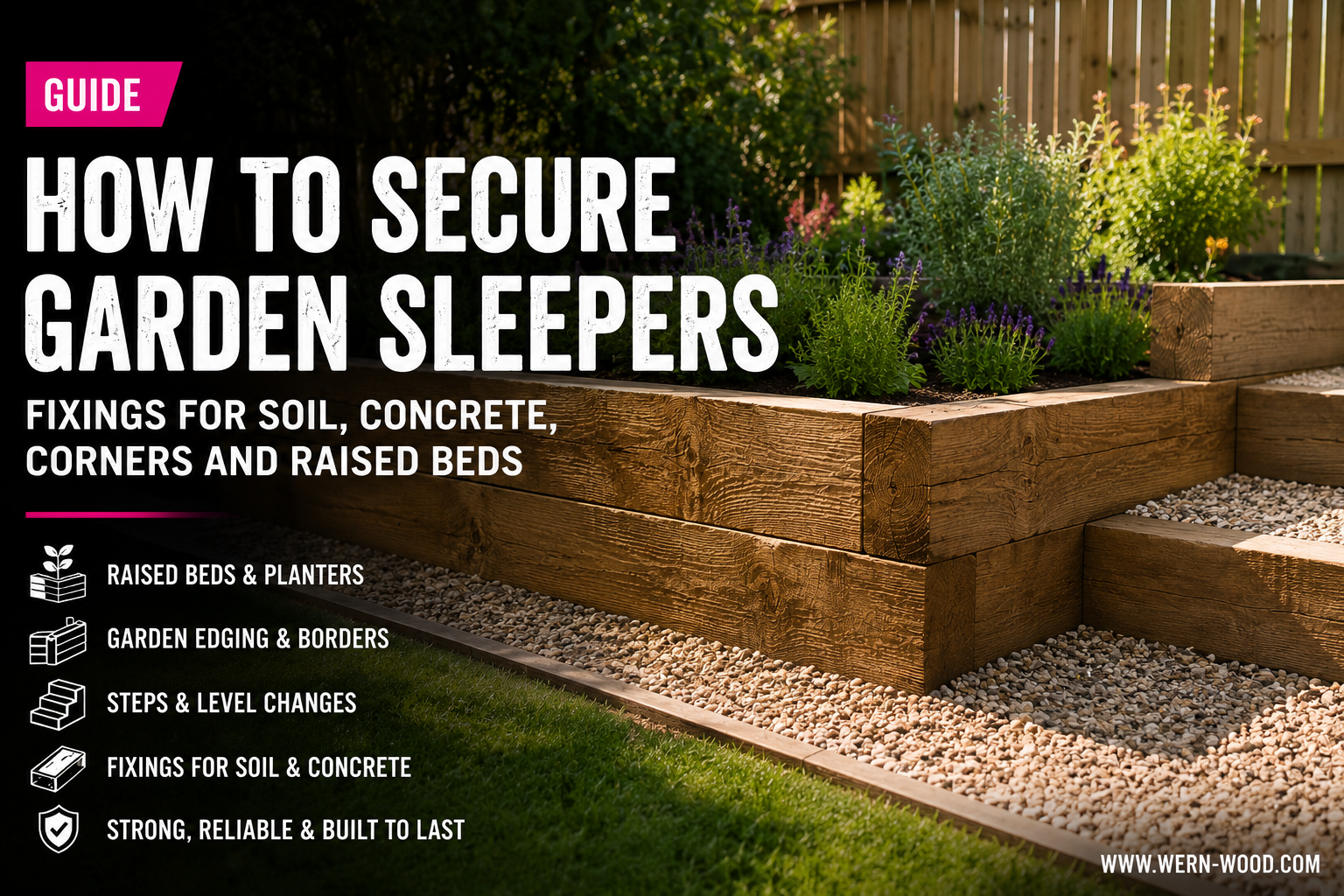
If you are storing Garden Sleepers alongside lighter fencing or decking materials, put the heavy items on their own firm bearers rather than on top of boards you still need straight.
Let timber settle before you build
Timber moves as moisture changes. That is normal. What you want to avoid is sudden, uneven change — one side soaked, one side baked in sun, one end on damp ground, the other end drying fast.
If possible, give timber a short settling period in sensible storage conditions before installation. Keep it raised, stacked and ventilated near the environment where it will be used. Do not drag timber from poor storage straight into a precision build and expect every length to behave perfectly.
For decking, fencing and landscaping, the aim is not to dry the timber like furniture timber. The aim is to avoid shock, trapped moisture and uneven drying before the job starts.
Protect cut ends during storage
Cut ends need extra care. When treated timber is cut, notched, drilled or bored, the exposed area should be protected with a suitable end-grain preservative. End grain takes in moisture more readily than the face of the timber, so do not leave freshly cut ends sitting in water or pressed into wet ground.
- Re-treat freshly cut, drilled or notched areas where suitable.
- Keep cut ends away from standing water.
- Store cut lengths under cover but ventilated.
- Do not put cut ends into the ground, even if coated.
If treated timber needs cutting, protect the exposed ends before installation. For ground-contact jobs such as posts, plan cuts carefully and do not bury a cut end in the ground.
Do different outdoor timber products need different storage?
The basic rule is the same — flat, raised, covered and ventilated — but some products need extra care.
| Material | Storage priority | Common mistake |
|---|---|---|
| Decking boards | Flat support, airflow and rain protection. | Leaving boards in a tight wet pack until fitting day. |
| Fence panels | Store upright only if properly supported and safe; otherwise keep flat and protected. | Leaning panels against a wall in wind or rain. |
| Fence rails | Even support along the length. | Resting long rails only at each end. |
| Fence posts | Keep off wet ground and away from standing water. | Leaving posts in grass because they are “treated”. |
| Garden sleepers | Firm, level bearers and stable stacking. | Stacking heavy sleepers on top of lighter boards. |
| Treated sawn timber | Flat, aligned stacking and ventilation. | Leaning against a fence or storing on uneven ground. |
Common timber storage mistakes
- Leaving timber directly on grass or soil — this puts moisture straight into the stack.
- Stacking on uneven bearers — the timber follows the shape of the support.
- Leaning long boards against a wall — this encourages bowing.
- Wrapping tightly in plastic — trapped moisture can be worse than rain.
- Letting a cover sag — pooled water holds moisture against the timber.
- Mixing heavy and light materials — sleepers and posts can distort lighter boards.
- Leaving cut ends exposed — especially where rain or standing water can reach them.
- Storing too long before building — order close to the job where possible.
Before you order: plan where the timber will go
Storage is easier when you plan it before checkout. This matters most with bulky orders because the delivery point, access and storage area can affect how smoothly the job starts.
| If you are ordering | Prepare this first | Helpful link |
|---|---|---|
| Decking boards | Long flat storage with bearers and top cover. | Timber Decking |
| Fence panels and boards | A safe area where panels are not left leaning loose in wind. | Fencing, Decking & Landscaping |
| Garden sleepers | Firm bearers on level ground, away from lighter timber. | Garden Sleepers |
| Treated sawn timber | Regular bearers along the length and a ventilated cover. | Treated Sawn Timber |
| Any bulky outdoor order | Delivery access, unloading point and clear storage space. | Delivery Information |
FAQs
Should outdoor timber be stored outside?
Outdoor timber can be stored outside temporarily if it is raised off the ground, stacked flat, protected from direct rain and kept well ventilated. Under cover is better where possible.
Can I leave treated timber on the ground?
No. Even treated timber should be kept off the ground before installation. Soil, grass and damp concrete can hold moisture against the timber and create avoidable problems.
Should I cover timber with plastic?
You can use a cover to protect timber from rain, but do not wrap it tightly in plastic. Keep the sides ventilated so moisture is not trapped inside the stack.
Can I lean decking boards or fence rails against a wall?
It is better not to. Long timber should be stored flat and evenly supported. Leaning boards can encourage bowing and make them harder to install neatly later.
Do cut ends of treated timber need protecting?
Yes. Freshly cut, drilled or notched treated timber should be protected with a suitable end-grain preservative. Cut ends should not be buried in the ground.
How long can timber be stored before building?
Store timber for as short a time as practical before fitting. If it needs to wait, keep it raised, flat, covered from rain and ventilated. Poor storage for even a short period can make the job harder.
Summary: storage is part of the build
Correct timber storage is not an optional extra. It is part of the job.
Keep outdoor timber flat, raised, evenly supported, protected from rain and properly ventilated. Separate heavy and light products, protect cut ends, and avoid letting timber sit in wet grass, soil or standing water before installation.
Do that, and your fencing, decking and landscaping timber has a much better chance of going together properly when the build starts.
Ordering outdoor timber?
Plan the job and the storage area before delivery day. Browse fencing, decking, sleepers and treated timber online, then make sure you have somewhere flat, raised and ventilated ready for when it arrives.
Shop Outdoor Timber → Order online or collect from our Briton Ferry yard. Yes, we deliver.Sources checked: Timber Development UK guidance on storing timber on site; Wood Protection Association and Timber Development UK guidance on storing and handling treated timber; Wood Protection Association guidance on cut ends and treated timber. This article is general timber storage guidance only. Always follow product-specific supplier guidance where provided, especially for specialist treated products, sheet materials, structural timber and any timber used in ground contact.