Concrete or Postmix for Fence Posts? The Honest Yard Answer
For most fence posts, use postmix. Leftover concrete, paving grout or general cement-based products may hold a post for a while, but they are not all designed for the same job. Postmix is made specifically for setting posts quickly and firmly. The real issue is not just whether the post feels solid on day one — it is whether the base is installed in a way that avoids holding water around the timber over time.
We see this question all the time: “I’ve got a few bags of concrete left over from another job — can I use that instead of postmix?”
The honest answer is: probably, yes, it will hold a fence post in the short term. But that does not automatically make it the best product for the job.
Fence posts fail in the real world because of a mix of movement, ground conditions, wind load, poor installation and moisture. The concrete or postmix around the base is only one part of the system. The post itself, the hole depth, the drainage, the soil, and the way the top of the mix is finished all matter.
The difference is not “concrete good, postmix bad”
Concrete is not one single thing. The word gets used loosely for all kinds of cement-based products, but different mixes are designed for different jobs. A foundation mix, paving grout, mortar, repair compound and post-setting mix are not automatically interchangeable.
Small changes to water, cement, aggregate and additives can change how a mix behaves. Some mixes are designed to flow. Some are designed to be workable for longer. Some are designed to finish neatly. Some are designed to build strength quickly. That is why using a random leftover bag can be a gamble — not because it will instantly fail, but because it may not behave like a post-setting product.
- Different set times
- Different water demand
- Different aggregate size
- Different strength development
- Different drainage behaviour
- Different intended use
Why postmix is usually the better choice
Postmix is designed for one job: setting posts. It is a ready-to-use, fast-setting mix made for timber, concrete and metal posts. You dig the hole, position the post, add water and postmix as instructed, check the post is plumb, and let it set.
That speed matters. A slower-setting general concrete mix gives the post more time to move, especially if the ground is loose, the post is tall, or the fence line is exposed. With postmix, the post is usually firm enough much sooner, which makes the job easier for DIY customers and trade users alike.
If you are replacing one or two fence posts, postmix is usually the simplest answer. It is cleaner, quicker, easier to handle, and designed for the job. The saving from using leftover concrete is rarely worth it if the post ends up out of line or sitting in a poorly finished base.
The moisture problem people forget
A timber fence post spends its life in a difficult place. The ground line is exposed to rain, soil moisture, splashback, drying, wetting and movement. Even treated timber needs the right installation.
The problem with using the wrong cement-based product is not only strength. A wetter or slower-setting mix can leave timber in contact with moisture for longer during installation. More importantly, if the finished base holds water around the post instead of shedding it away, the post can spend more time damp at the most vulnerable point.
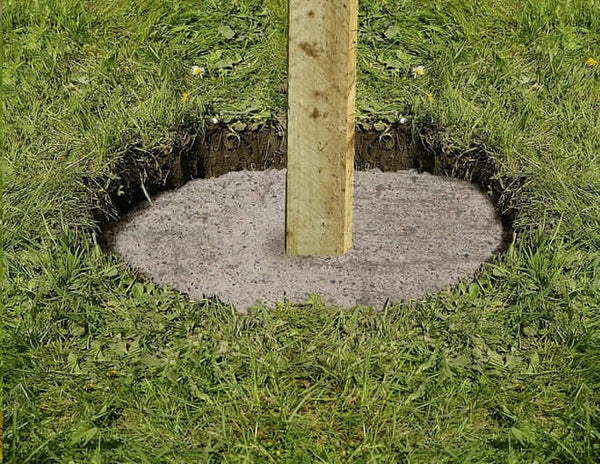
This is why the top of the postmix or concrete matters. The finished surface should not form a little bowl around the post. It should be shaped so water falls away from the timber.
Postmix does not magically fix bad drainage. A badly dug hole, poor ground conditions, standing water, wrong post treatment, or a flat concrete collar that traps water can still cause problems. The mix helps secure the post, but the installation still has to be right.
Can you use leftover concrete?
Yes, in some cases. If you have a few bags of suitable concrete left from another job, it may hold a fence post perfectly well, especially for a light-duty repair. But you need to be honest about what you are using.
If the bag is old, damp, partly set, designed for a different use, or you are not sure what it actually is, it is not the best choice for setting a new fence post. That is especially true for taller fence runs, gate posts, exposed sites, clay ground, or any job where failure would be expensive or awkward to repair.
| Option | Best use | Risk |
|---|---|---|
| Postmix | Most timber, concrete and metal fence post installations | Still needs correct hole depth, drainage and finishing |
| General concrete | Some heavier-duty or non-standard jobs where the mix is suitable and installed correctly | Slower set, more effort, more chance of poor mixing or over-watering |
| Paving grout / mortar / random leftovers | Not recommended as the main post-setting material | May not have the right strength, aggregate, set time or intended use |
| Small concrete finishing collar | Finishing the top of the hole to shed water away from the post | Can make things worse if shaped like a bowl that holds water |
Where leftover concrete can be useful
The best use for leftover suitable concrete is often not as the main post-setting material. It can be useful as a finishing detail around the top of the post hole, provided it is shaped correctly.
The aim is simple: do not leave a dip around the post. Finish the surface so rainwater falls away from the timber instead of sitting against it.
That small detail can matter more than people think. A post that is held solidly but constantly wet at ground level is still being put under unnecessary stress.
Before you choose concrete or postmix
Before setting a post, check the whole job — not just the bag you are pouring into the hole.
- What type of post are you setting? Timber, concrete, metal, gate post or agricultural post?
- Is the timber suitable for ground contact? Fence posts should be suitable for permanent ground contact use.
- How exposed is the fence line? Taller fences and windy locations put more load through the posts.
- What is the ground like? Loose, wet, clay or sloping ground may need more care.
- Is the hole deep enough? A shallow hole with expensive postmix is still a poor installation.
- Will water drain away? Avoid leaving a flat or dipped surface around the post.
- Are you fitting panels, rails, featheredge or a gate? The load on the post changes with the fence type.
So what would we use?
For a normal fence post job, we would use postmix. It is the product made for the task, it sets quickly, and it removes a lot of the guesswork that comes with using leftover materials from other jobs.
If you already have a suitable bag of concrete and you are doing a light-duty repair, it may work. But if you are buying materials for a proper fencing job, buy the right post, the right fixing material, and the right supporting products at the same time.
If you are trying to use something up, leftover concrete may do a job. If you are trying to install the post properly first time, use postmix.
FAQs
Is postmix stronger than concrete?
Not automatically. Strength depends on the exact product and mix. The main advantage of postmix is that it is designed for setting posts quickly and conveniently. For normal fencing jobs, that usually matters more than chasing the strongest possible concrete mix.
Can I use paving grout to set a fence post?
It is not recommended as the main setting material. Paving grout is made for jointing paving, not for securing fence posts under load. It may harden, but that does not make it the right product for the job.
Can concrete rot a timber post?
Concrete itself does not “rot” timber, but poor installation can hold moisture around the base of the post. Timber decay risk increases when moisture is trapped around vulnerable areas, especially near ground level. Use suitable ground-contact timber and finish the base so water sheds away.
Should the top of the postmix be flat?
No. A flat or dipped finish can leave water sitting around the post. Shape the top so water runs away from the timber.
How many bags of postmix do I need per post?
One 20kg bag is often used for a standard fence post hole, but larger posts, deeper holes, loose ground or gate posts may need more. Always judge by the post size, hole size and ground conditions.
Setting fence posts properly?
Browse our postmix, fence fixings, fence posts, rails and fencing essentials. Choose the right materials before you dig the hole, and the job becomes much easier to get right.
Shop Postmix & Fence Fixings → Order online or collect from our Briton Ferry yard. Yes, we deliver.General guidance only. Always follow the instructions on the specific postmix or concrete product being used. Ground conditions, post size, fence height, exposure, drainage and intended use can all affect what is suitable. Sources checked include Tarmac postmix guidance, Cemex concrete workability guidance, TRADA timber ground-contact guidance, European Wood Protection Association use class guidance, and the live Wern-Wood sitemap.