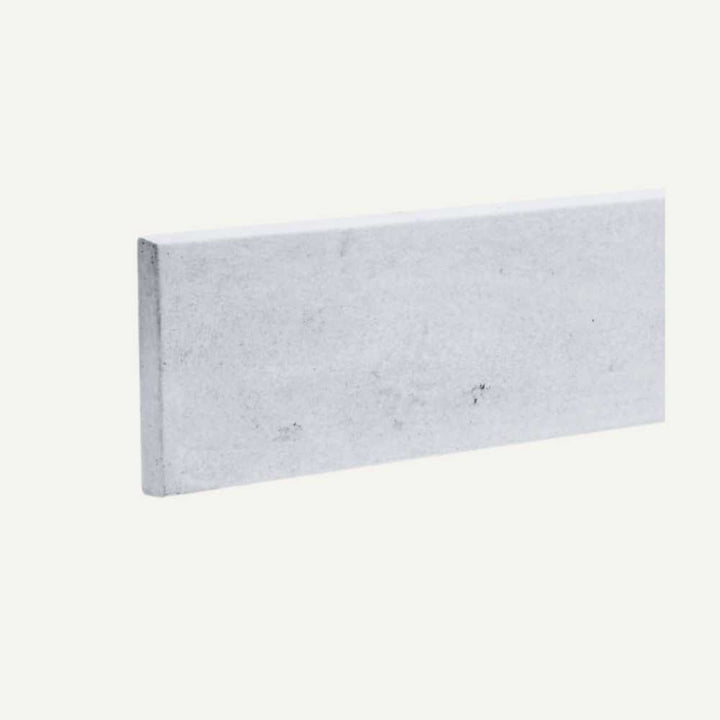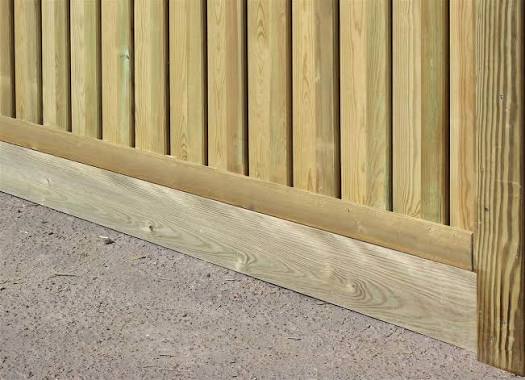
Timber and concrete gravel boards do the same basic job at the bottom of a fence, but they suit different fencing systems. Timber is normally the more flexible choice for timber-post, featheredge and closeboard fencing because it is easier to handle and cut on site. Concrete is the natural fit for compatible slotted concrete-post systems where a heavy, non-timber base is wanted.
If you already know which type you need, browse our Gravel Boards range, shop Pressure Treated Timber Gravel Boards, or view our Concrete Gravel Boards.
Timber vs concrete gravel boards at a glance

| Consideration | Timber gravel boards | Concrete gravel boards |
|---|---|---|
| Typical fencing system | Timber posts, featheredge and closeboard fencing | Compatible slotted concrete posts and fence panels |
| Handling | Easier to handle, position and adjust on site | Much heavier and needs more care when handling |
| Cutting | Can be shortened with suitable woodworking tools | Better ordered to the correct bay size rather than treated as an easy site adjustment |
| Appearance | Natural timber finish | Smooth concrete finish |
| Ground-level material | Pressure-treated timber | Concrete does not rot |
| Wern-Wood sizes | 75, 100, 150 and 200mm board heights in selected lengths | 1830 × 300mm (approx. 6ft × 12in) |
When should you choose timber gravel boards?
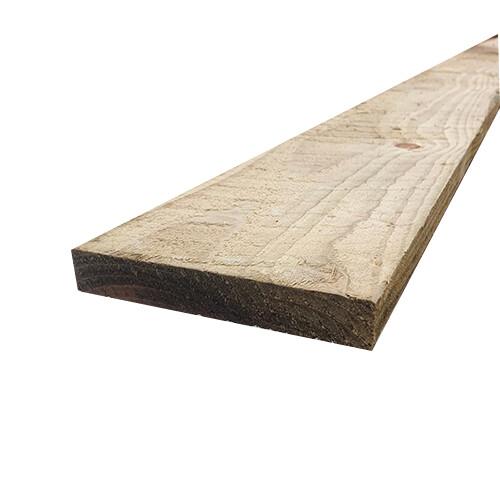
Choose timber when the rest of the fence is being built around timber posts and rails, when you want a consistent timber finish, or when the fence layout may need boards cut to suit shorter or non-standard bays.
Our Pressure Treated Timber Gravel Boards are available in 75mm, 100mm, 150mm and 200mm heights across selected lengths from 1.8m to 4.8m. They suit featheredge, closeboard and panel-fencing applications.
When should you choose concrete gravel boards?
Choose concrete when you are using a compatible slotted concrete-post fencing system and want a non-timber component at ground level. Concrete is heavier and less convenient to alter on site, so post spacing and board size should be confirmed before installation.
Our Concrete Gravel Board is a smooth-faced, steel-reinforced 1830 × 300mm board designed for compatible slotted concrete posts.
Which option is better?
Neither material is automatically better. Start with the fencing system. For timber posts, featheredge or a site-built fence where boards may need cutting, timber is normally the practical choice. For compatible slotted concrete posts and a standard panel bay, concrete gives you a durable non-timber base.
Can concrete gravel boards be used with timber posts?
Yes, in some purpose-made systems. Specialist gravel-board brackets or cleats can support certain concrete boards against timber posts. However, the board and fixing have to be designed to work together.
Our current 1830 × 300mm concrete gravel board is sold for compatible slotted concrete posts, so that is how we recommend installing it. For a straightforward timber-post fence, a timber gravel board remains the simpler match.
For the full answer, see Can You Use Concrete Gravel Boards With Timber Posts?
What gravel board size should you choose?
Match the board length to the post spacing and make sure timber boards finish on a post. Height depends on the fencing layout and the amount of board wanted below the main fencing. Concrete boards need to match the compatible post system.
See What Size Gravel Board Do I Need? for the sizes we stock and a simple spacing example.