Quick answer: Choose a Suffolk latch for a traditional thumb-operated gate latch with its own handle. Choose a ring latch when you want a built-in ring handle that can operate the latch from the gate face and, on suitable installations, from both sides. Choose an automatic gate latch when you want the latch to catch as the gate reaches the closed position—but remember that an automatic latch does not include a handle and does not pull the gate closed.
A gate latch has two jobs: it holds the gate shut and provides a way to release it. The main difference between Suffolk, ring and automatic gate latches is how you operate them and whether the fitting includes a handle.
Suffolk, ring and automatic gate latches compared
| Latch | How it opens | Built-in handle? | Best reason to choose it |
|---|---|---|---|
| Suffolk latch | Lift the thumb piece to raise the latch bar. | Yes | Traditional appearance and simple thumb operation on a timber gate or ledged door. |
| Ring gate latch | Turn the ring to move the spindle and release the latch. | Yes | A proper hand grip and convenient operation from the gate face or both sides when fitted in the appropriate arrangement. |
| Automatic gate latch | Release the catch directly; it engages when the gate reaches the closed position. | No | Simple self-latching action when the gate is pushed shut. |
What is a Suffolk latch?
A Suffolk latch is a traditional thumb-operated latch used on timber gates and ledged doors. A handle and thumb piece are fitted to one face of the gate. Pressing the thumb piece lifts the latch bar on the other side so the gate can open.
The handle is part of the latch arrangement, so you do not normally need to buy a separate pull handle simply to operate the gate. Our new Eliza Tinsley option is the Suffolk Latch with Long Thumb Bit. We also stock a black or galvanised Suffolk latch.
A Suffolk latch is a good choice when:
- You want a traditional fitting on a timber gate
- The gate is normally approached from the handle side
- You want the handle and latch function in one fitting
- The gate construction allows the thumb bar to pass through and operate correctly
What is a ring gate latch?
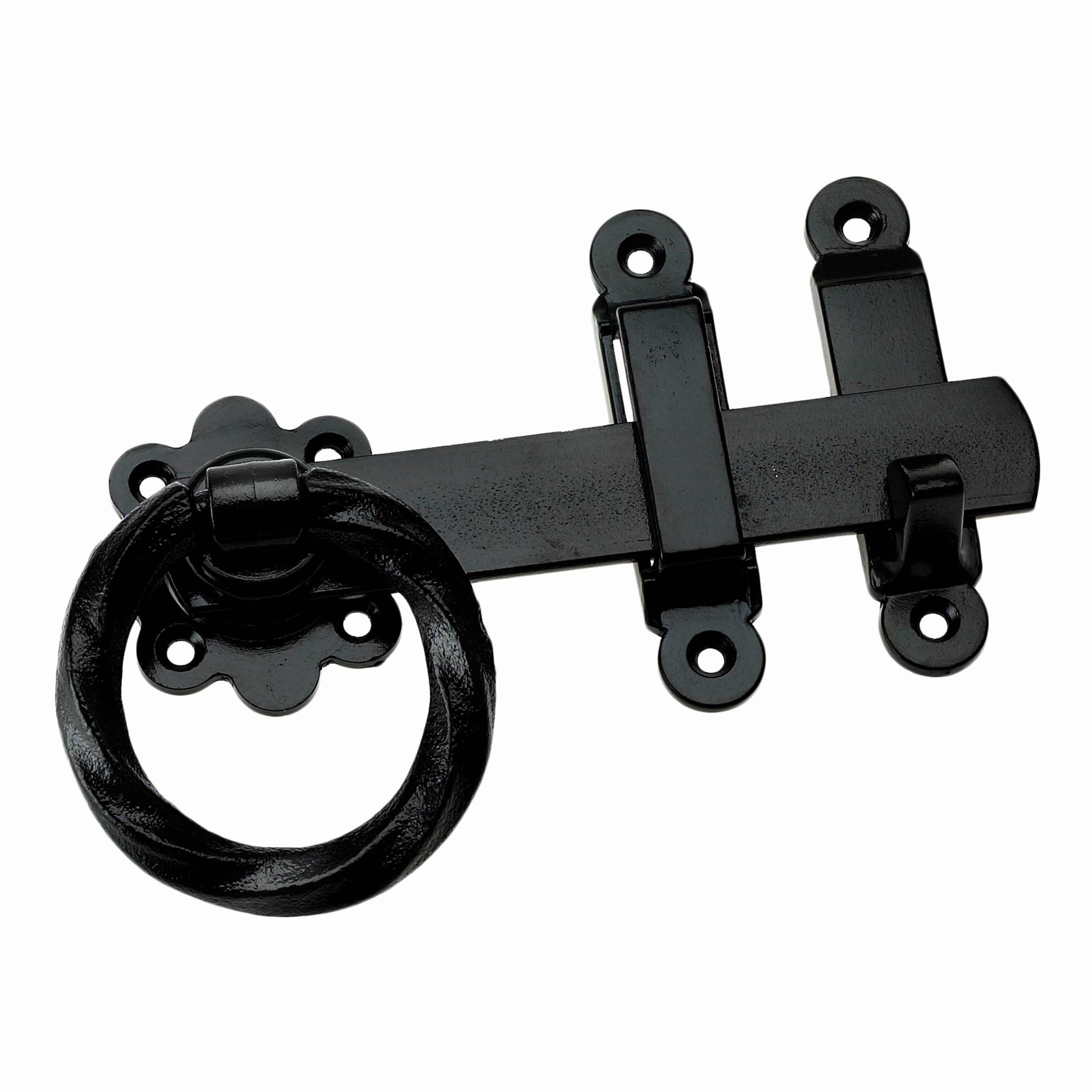
A ring gate latch uses a ring handle connected through the gate to the latch mechanism. Turning the ring operates the latch. This gives you a built-in handle and a larger grip than a small thumb piece.
Ring latches are particularly useful when the gate needs a handle on both faces. The exact operation depends on how the individual latch is fitted, so check the product parts and your gate thickness before drilling.
We stock the Eliza Tinsley Ring Gate Latch and Twisted Ring Gate Latch. The twisted pattern changes the appearance of the handle; the basic buying decision remains whether a ring-operated latch suits the gate.
A ring latch is a good choice when:
- You want a handle that is easy to grip
- The gate needs to be opened from either side
- You prefer a traditional ring-handle appearance
- The spindle and latch can be positioned through solid gate material
What is an automatic gate latch?
An automatic gate latch is designed to catch when the gate reaches the closed position. The moving part of the latch meets the keeper and engages without you manually sliding a bolt each time.
It does not close the gate for you. The gate still needs to be pushed, pulled or fitted with a suitable separate closing device. The latch only catches once the two parts meet correctly.
It also does not include a gate handle. When using our Automatic Gate Latch, you may need a separate grip such as a Black Pull Handle so the gate can be pulled open and closed comfortably.
An automatic latch is a good choice when:
- You want the latch to engage as the gate shuts
- You do not need a traditional Suffolk or ring handle
- You are happy to add a separate handle where required
- The gate and post are aligned closely enough for the catch to meet the keeper
Does a gate latch lock the gate?
Not necessarily. A latch is primarily there to keep the gate closed during normal use. It should not automatically be treated as a security lock.
Where additional security or restraint is needed, consider a separate Brenton bolt, tower bolt or hasp and staple, depending on the job. Read our gate bolt comparison before choosing.
Common gate-latch mistakes
Buying an automatic latch and expecting a handle
An automatic latch catches the gate; it does not give you a proper hand grip. Add a pull handle where the gate needs one.
Expecting the latch to correct a sagging gate
The latch and keeper need to meet accurately. If the gate is dropping, the hinges, gate framing and post should be checked before repeatedly moving the keeper.
Ignoring the gate thickness
Suffolk and ring latches include parts that work through or around the gate. Check that the thumb bar or spindle can pass through the gate and operate without binding.
Using a latch as the only security fitting
For a gate that needs to resist unauthorised opening, choose a suitable locking or bolting arrangement as well as the everyday latch.
Which latch should you buy?
Choose a Suffolk latch for traditional thumb operation with an integrated handle. Choose a ring latch when you want a ring handle and convenient operation from the gate faces. Choose an automatic gate latch when automatic engagement matters more than having an integrated handle.
For the rest of the installation, see our guide to tee hinges and hook and band hinges or follow the complete wooden gate hardware checklist. You can also browse all gate latches and catches.