Build a Bird Box That Birds Might Actually Use
A good bird nesting box should be made from untreated timber or suitable plywood, have walls at least 15mm thick, use the right entrance hole size, include drainage and cleaning access, and never have a perch. Do not use treated timber for the box and do not treat, paint or preserve the inside. Wildlife safety matters more than making the project look perfect.
A bird box is one of the simplest timber projects you can build, but it is also one of the easiest to get wrong. A box can look neat and still be poor for birds if it is made from treated timber, has the wrong hole size, includes a perch, traps moisture, or is placed in full sun where chicks can overheat.
This guide builds one standard hole-fronted nesting box for small garden birds. It is a general beginner project, not a specialist species guide and not a bird-feeding guide. The aim is simple: build a safe, practical box from suitable timber, then place it sensibly.
- Standard hole-fronted box
- Untreated PSE or suitable plywood
- Proper cut list included
- No treated timber
- No perch
- Cleaning access included
Do not use treated timber for this nesting box. Do not paint, stain, preserve or treat the inside. If you only have treated timber available, wait until you have suitable untreated material before building the box.
What timber should you use?
The wildlife-first recommendation is usually rough-cut, untreated softwood. That gives a natural, untreated material and a grippier inside surface. From a Wern-Wood project route, the practical options are untreated PSE timber or a suitable plywood sheet, provided the material is untreated and thick enough.
PSE is smooth and easy to cut, which makes it beginner-friendly. If using PSE, lightly roughen the inside front below the entrance hole so young birds have something to grip when leaving the box. If using plywood, choose a suitable thickness and avoid any board that is treated, coated, film-faced or unsuitable for this use.
| Material | Suitable? | Notes |
|---|---|---|
| Untreated PSE timber | Yes | Easy to cut and handle. Roughen the inside front face below the entrance hole. |
| Suitable untreated plywood | Yes, if appropriate | Use a suitable thickness and avoid coated, treated or film-faced sheets. |
| Treated timber | No | Do not use treated timber for a nesting box. |
| Painted, stained or preserved interior | No | The inside of the box should be left untreated. |
The bird box we are building
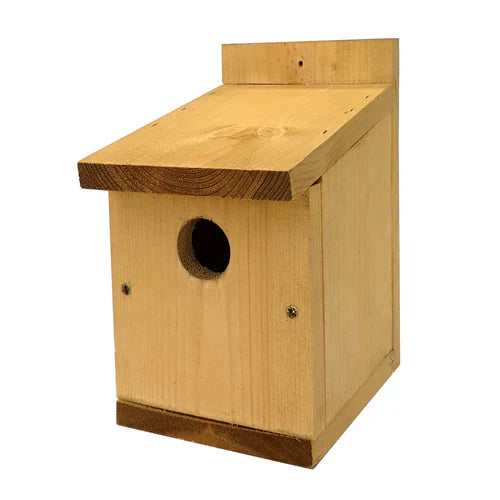
This guide builds a simple small bird box using one 150mm-wide board layout. The design is based on a standard hole-fronted nesting box: back, front, two sides, floor and an opening roof.
Other bird box styles exist, including open-front boxes for robins and larger boxes for bigger species. Those need different dimensions, entrance designs and placement, so they should be treated as separate projects. This guide keeps to one simple hole-fronted box.
Cut list for a standard small bird box
This cut list works with timber around 150mm wide and at least 15mm thick. The exact internal size will vary slightly depending on the material thickness. Keep the internal floor area sensible and avoid making the box cramped.
| Part | Quantity | Cut size | Notes |
|---|---|---|---|
| Back | 1 | 460mm x 150mm | Longer back gives fixing space above and below the box. |
| Front | 1 | 200mm x 150mm | Drill the entrance hole before assembly. |
| Sides | 2 | 200mm high at back, sloping down towards the front | Slope helps the roof shed rain. Mark both sides together so they match. |
| Floor | 1 | 120mm x 150mm | Adjust if your timber thickness changes. Drill small drainage holes. |
| Roof | 1 | 220mm x 150mm | Make this openable for cleaning outside nesting season. |
Dry-mark the parts on the board first. Label each piece as back, front, side, side, floor and roof. If your board width or thickness is different, adjust the floor and side fit before cutting everything.
Entrance hole sizes
The hole size affects which birds are most likely to use the box. There is some variation between species guidance, so treat this as a practical small-garden-bird guide rather than a guarantee.
| Hole size | Often used for | Note |
|---|---|---|
| 25mm | Smaller tits such as blue tit, coal tit and marsh tit | Smaller hole helps exclude larger birds. |
| 28mm | Often used where you want to favour great tit or similar small birds | BTO notes smaller holes can restrict the box more towards blue tits. |
| 32mm | General small hole-nesting birds, including house sparrows and tits | BTO describes 32mm as a useful general size for small hole-nesting birds. |
Whichever size you choose, keep the bottom of the entrance hole at least 125mm above the floor. This helps reduce the risk of young birds being reached by predators.
Birds do not need a perch to use the box. A perch can make it easier for predators or intruders to reach eggs or chicks. Leave the front clean with just the entrance hole.
Materials and tools
Keep this project simple. You are building the timber box, not a feeding station or wider wildlife setup.
Materials
- Untreated PSE timber at least 15mm thick, or suitable untreated plywood
- Exterior-suitable screws from timber fixings, or suitable galvanised nails from nails
- A small strip of rubber or similar safe flexible material for a simple roof hinge, if using that method
- Optional hook, screw or safe fixing method for securing the openable roof
Tools
- Tape measure
- Pencil
- Square
- Saw
- Drill/driver
- Hole saw or flat bit for the entrance hole
- Small drill bit for drainage holes
- Sandpaper or rasp for smoothing sharp edges
- Eye protection and suitable dust protection when cutting or drilling
Cutting and sanding timber or plywood can create harmful dust. Work outside or in a well-ventilated area where practical, clamp the work securely, avoid breathing dust, and use suitable eye protection and respiratory protection when cutting or sanding.
Step-by-step build method
Step 1: Mark out the timber
Mark all six main pieces before cutting: back, front, two sides, floor and roof. Use the cut list above and label each part directly on the timber in pencil.
If you are working from one board, plan the cuts so the roof and back are not left short. The roof needs a little overhang, and the back needs enough length for fixing the box in place later.
Step 2: Cut the panels
Cut the back, front, floor and roof first. Then cut the two side pieces with a sloping top so the roof can shed rain. Mark the two side pieces together so the slope matches.
Lightly sand sharp edges, but do not over-smooth the inside. Birds benefit from some grip, especially below the entrance hole.
Step 3: Drill the entrance hole
Mark the entrance hole on the front panel before assembly. Choose the hole size based on the type of small bird you are trying to support. Drill cleanly and remove sharp splinters around the hole.
Keep the bottom of the hole at least 125mm above the floor level. Do not drill it too low.
Step 4: Roughen the inside front if needed
If using smooth PSE timber or smooth plywood, roughen the inside face below the entrance hole. A few shallow saw marks or a roughened surface can help young birds climb up towards the entrance when they are ready to leave.
Do not fit a perch.
Step 5: Fix one side to the back
Start with the back panel flat on the bench. Fix one side panel to it using screws or suitable nails. Pre-drill if needed to reduce splitting.
Keep the outside edges aligned and check the side is sitting square before adding the floor.
Step 6: Fit the floor
Drill a few small drainage holes in the floor before fitting it. Then fix the floor between the back, side and front position. The box should drain rather than trap moisture.
Do not seal the inside with glue, paint or preservative.
Step 7: Fit the front and second side
Fit the front panel with the entrance hole already drilled. Then add the second side panel. Check the box is square as you go.
If small gaps appear at the top slope, adjust carefully before fixing the roof. The box should be weather-resistant, but it does not need to be airtight.
Step 8: Fit the roof as an openable lid
The roof should be secure but openable for cleaning later in the year. A simple rubber hinge is a common method. You can also use another safe method that lets the roof open without leaving sharp metal edges or loose fixings inside the box.
Make sure the roof overhangs the front enough to help shed rain. Add a simple catch or fixing so the roof cannot lift in wind.
Step 9: Leave the inside untreated
Once assembled, check the inside is clean and free from sharp points, loose fixings or splinters. Leave the inside completely untreated.
If you choose to finish the outside, only use a wildlife-safe external approach and allow it to dry fully before putting the box up. The simplest and safest beginner route is to leave the box untreated, especially inside.
Where to put the bird box
A well-built box can still go unused if it is placed badly. Choose a quiet, sheltered position away from harsh direct sun, strong weather and regular disturbance.
- Place the box around 2m to 5m above ground where practical.
- Avoid strong direct midday sun.
- Face the entrance away from the worst prevailing weather.
- Tilt the box slightly forward so rain does not run into the entrance.
- Keep it away from easy access by cats and regular disturbance.
- Do not place it directly beside a busy feeding station.
Robins and some other birds prefer open-front boxes, while larger birds need larger boxes and different entrance sizes. This article only covers a standard hole-fronted box for small garden birds. Build different styles from species-specific guidance rather than adapting this one blindly.
When and how to clean it
Clean the box only outside the nesting season, usually in autumn once you are sure it is no longer active. Do not disturb an active nest.
Wear gloves, remove old nesting material, use boiling water to clean the inside, and allow the box to dry thoroughly. Do not use insecticides, flea treatments or strong cleaning chemicals.
If birds are using the box, leave it alone. Cleaning, moving or opening the box at the wrong time can disturb nesting birds and put eggs or chicks at risk.
Before you order checklist
- Is the timber or plywood untreated?
- Is the material at least 15mm thick?
- Have you avoided treated timber completely?
- Have you chosen the entrance hole size before drilling?
- Will the bottom of the hole sit at least 125mm above the floor?
- Have you planned drainage holes in the floor?
- Will the roof open for autumn cleaning?
- Have you left the inside untreated?
- Have you avoided adding a perch?
- Have you chosen a quiet, sheltered position away from harsh sun and disturbance?
Useful Wern-Wood categories for this build
| Part of the project | What to browse |
|---|---|
| Untreated timber option | Planed PSE timber |
| Plywood option | Plywood sheets |
| Screws | Timber fixings |
| Nails | Nails |
Common mistakes that make bird boxes less useful
- Using treated timber: avoid it completely for this project.
- Treating the inside: the inside should stay bare and untreated.
- Adding a perch: birds do not need it, and it can help predators or intruders.
- Drilling the entrance too low: keep the bottom of the hole at least 125mm above the floor.
- Forgetting drainage: the box should not trap water inside.
- Sealing the roof permanently: you need access for cleaning outside nesting season.
- Putting it in full sun: avoid harsh direct sun and exposed weather.
- Cleaning at the wrong time: only clean when the box is no longer active.
FAQs
Can I use treated timber for a bird nesting box?
No. For this beginner wildlife project, do not use treated timber. Use untreated PSE timber or suitable untreated plywood instead, and leave the inside completely untreated.
Can I paint or stain the bird box?
Do not paint, stain or preserve the inside. If you finish the outside, use a wildlife-safe external approach and let it dry fully before putting the box up. The simplest beginner option is to leave the box untreated.
How thick should the timber be?
Use timber or plywood at least 15mm thick. Thin material gives poorer insulation and durability.
What size entrance hole should I drill?
For a small garden bird box, common sizes are 25mm for smaller tits, 28mm for some slightly larger small birds, and 32mm as a more general small hole-nesting bird size. Check species-specific guidance if you are building for a particular bird.
Should I add a perch?
No. Birds do not need a perch, and it can make the box more vulnerable to predators or intruders.
Does the roof need to open?
Yes, it should be possible to open the roof or another panel for cleaning outside nesting season. Do not permanently seal the box shut.
Can I make a robin box from this guide?
Not directly. Robins usually prefer open-front boxes, which need a different design and siting approach. This guide is for a standard hole-fronted box for small garden birds.
When should I clean the bird box?
Clean it in autumn once you are sure nesting has finished. Wear gloves, remove old material, clean with boiling water and let it dry. Do not use insecticides or strong chemicals.
Final thought: make it safe before making it pretty
A bird box does not need to be fancy. It needs to be untreated inside, thick enough to insulate, drained, cleanable, perch-free and placed somewhere birds are likely to feel safe.
If you only remember one thing, remember this: do not use treated timber and do not treat the inside. Build it simply, place it carefully, and leave the birds to decide whether it is the right home.
Building a simple bird nesting box?
Browse untreated PSE timber, suitable plywood, screws and nails online. Keep the project simple, avoid treated timber, and build the box around wildlife-safe guidance first.
Shop Planed PSE Timber → Order online or collect from our Briton Ferry yard. Yes, we deliver.General guidance only. This article covers a simple hole-fronted bird nesting box for small garden birds. For species-specific boxes, unusual siting, larger birds or conservation projects, follow specialist wildlife guidance from organisations such as the RSPB, BTO or The Wildlife Trusts.