Description
Quick answer: Treated softwood fence posts are pressure treated timber posts used for garden fencing, featheredge fencing, fence panels, gates and outdoor timber structures. Choose the post size and length based on the fence height, ground conditions, exposure and whether the post is carrying a gate or heavier load.
What is this used for?
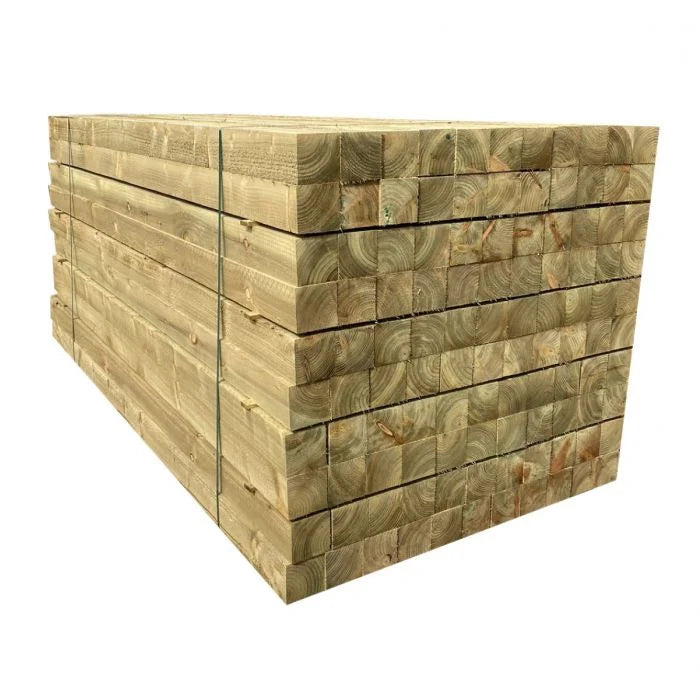
These treated softwood fence posts are used as the main upright support for timber fencing and outdoor structures. They are suitable for garden fencing, featheredge fencing, fence panels, boundary fencing, gate posts, landscaping projects and heavier-duty outdoor timber work where the correct post size is chosen.
We stock a wide range of standard and specialist sizes, including 75 x 75mm, 100 x 100mm, 125 x 100mm, 150 x 75mm, 150 x 100mm, 150 x 150mm and 175 x 175mm options, with different lengths and top styles available.
Is this the right fence post for your project?
Choose treated softwood fence posts when you need timber posts for an external fence run, gate, boundary or outdoor structure. The right post depends on what it is supporting. A light garden fence does not need the same post as a heavy gate, exposed boundary or larger outdoor build.
For standard fencing, 75 x 75mm and 100 x 100mm posts are common choices. For heavier fencing, exposed areas, corners, ends and gates, larger posts such as 125 x 100mm, 150 x 100mm or 150 x 150mm may be more suitable.
For a full featheredge fence, you will usually need featheredge boards, motorway rails, gravel boards and fixings or postmix as well as the posts.
Which size fence post should you choose?
The larger the fence, gate or load, the more important post size becomes. As a simple guide, use smaller posts for lighter fencing and larger posts for gates, corners, exposed areas and heavier builds.
| Post size | Typical use |
|---|---|
| 75 x 75mm | Standard garden fencing, light fence panels, featheredge fencing and lighter landscaping work. |
| 100 x 100mm | Heavier garden fencing, exposed fence runs, stronger panel fencing and small to medium gate applications depending on gate weight. |
| 125 x 100mm | Gate posts, fence ends, corners, return points and areas with more load or movement. |
| 150 x 75mm | Heavier-duty fencing where a rectangular post profile is preferred. |
| 150 x 100mm | A stronger option for fence ends, gate support points and heavier boundary work. |
| 150 x 150mm | Driveway gates, garden gates, pergolas, heavier fencing and larger outdoor structures. |
| 175 x 175mm | Feature posts, entrance details, landscaping features and heavier visual boundary work. |
Size note: Imperial sizes are provided as a familiar reference only. All timber is sold in metric measurements, so please use the listed metric size when ordering or checking suitability for your project.
What length fence post do you need?
For posts set into the ground, allow enough length below ground level to support the fence properly. The product page gives a common rule of thumb of allowing around 450mm to 600mm below ground for in-ground installations.
As a practical guide, a 6ft fence often uses an 8ft post when set into the ground, while exposed locations or heavier fence runs may need a longer or larger post. If you are using bolt-down supports on concrete, you may not need the same extra length for burial.
Ground contact and treatment
The product page states these treated fence posts are pressure treated and suitable for in-ground installation where required. The FAQ also states they are UC4 treated for in-ground structural use.
Even with treated posts, good installation still matters. Set posts securely, use suitable postmix or concrete where required, keep the post plumb while the concrete sets, and re-treat freshly cut ends where possible.
Key features
- Pressure treated softwood: Treated for exterior fencing and outdoor timber use.
- Multiple sizes available: Choose from standard and specialist post sizes depending on the project.
- Suitable for in-ground use: The product page states these posts are suitable for in-ground installation where required.
- Square top, weathered top and pointed options: Different variants are available depending on the size and intended look.
- Useful for fencing and gates: Suitable for garden fencing, featheredge fencing, panels, gates and heavier outdoor projects when the right size is chosen.
- Trade and DIY use: Suitable for full fence runs, repairs, replacement posts and outdoor construction work.
Things to check before ordering
- Fence height: Taller fences need longer and often stronger posts.
- Buried depth: For in-ground posts, allow enough length below ground level for stability.
- Exposure: Windy, open or exposed sites may need larger posts, closer spacing or deeper fixing.
- Gate weight: Gates usually need stronger posts than standard fence runs.
- Post spacing: Fence posts are commonly spaced around 1.8m to 2.4m centres depending on the fencing system.
- Supporting materials: A full fence may also need featheredge boards, motorway rails, gravel boards and fixings or postmix.
- Cut ends: Re-treat freshly cut ends where possible after cutting.
- Natural timber movement: Sawn treated timber can move, check, split slightly or twist as it dries and settles outdoors.
Complete the job
For fencing installation, you may also need postmix, concrete and fence fixings. For featheredge fencing, pair these posts with featheredge boards, motorway rails and gravel boards.
To plan a featheredge fence before ordering, use the Featheredge Fencing Calculator. To compare post options, view the full Fence Posts collection.
Payment & Security
Your payment information is processed securely. We do not store credit card details nor have access to your credit card information.