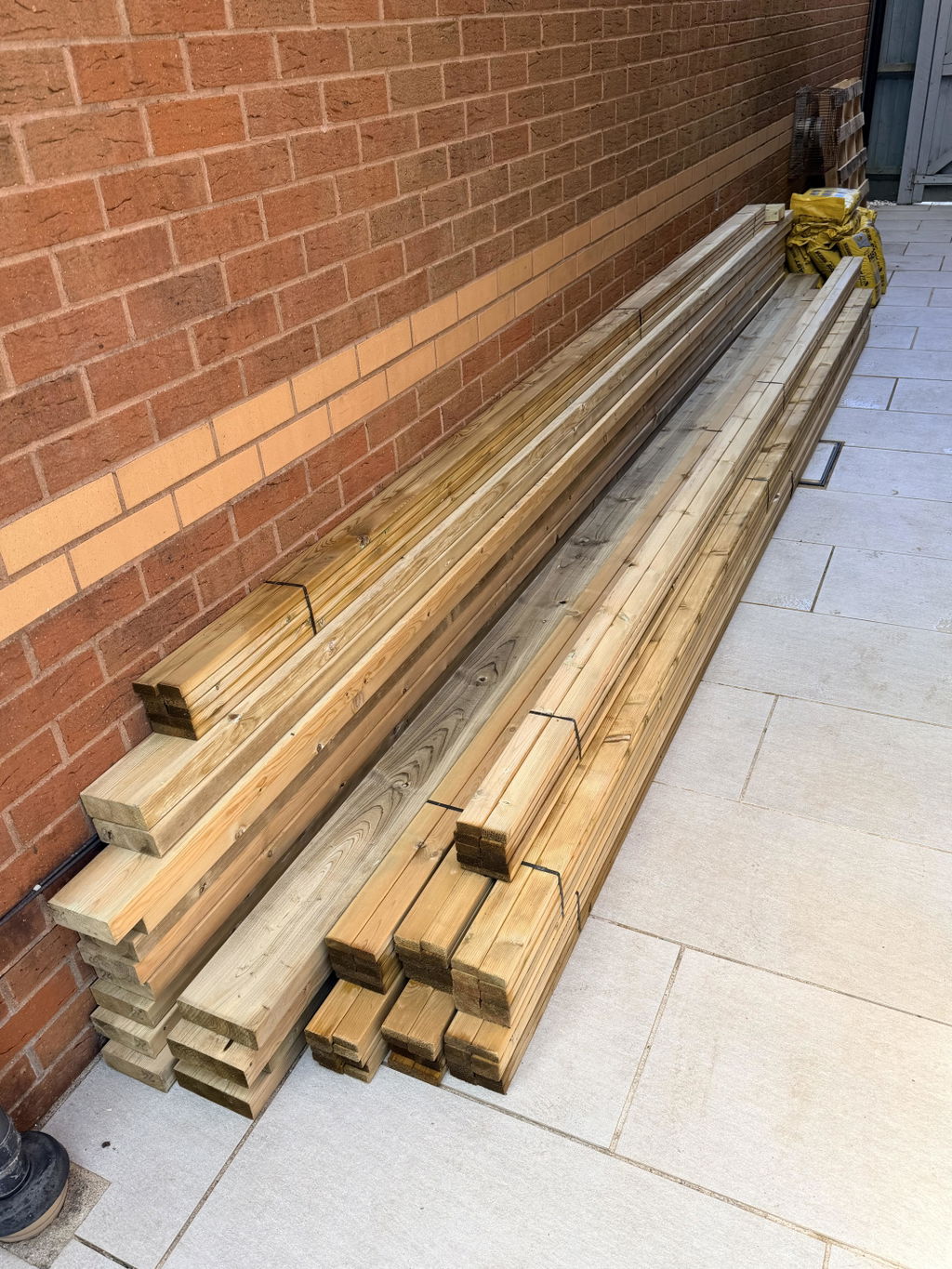
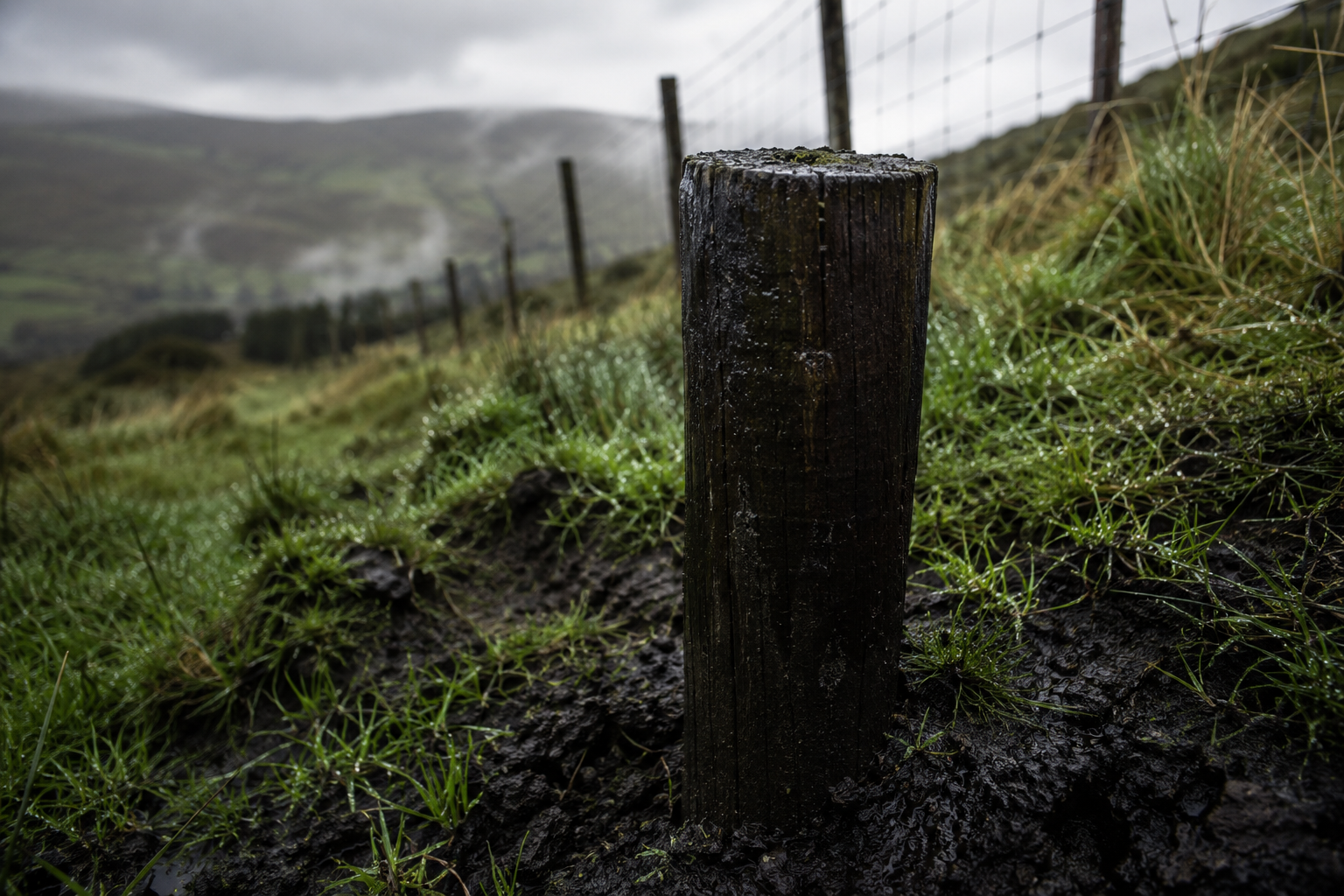
Posts are the uprights that carry the whole structure. Size affects strength, visual weight, and how the pergola feels.
75×75mm
3×3 inch
The lightest option. Fine for smaller, sheltered builds where the structure doesn't need to carry much weight.
Spans up to around 2.5m
Sheltered, enclosed gardens
Lightweight overhead structure
Budget or temporary builds
100×100mm
4×4 inch
The standard choice for most garden pergolas. Strong enough for typical spans, looks proportional, and is widely stocked at sensible prices.
Spans up to around 3–3.5m
Standard exposed gardens
Most freestanding builds
150×150mm
6×6 inch
A substantial post for larger or more demanding builds. Noticeably heavier looking — which is often exactly what you want for a feature pergola.
Spans of 4m or more
Exposed or windy locations
Exposed or windy locations
Feature or statement builds
75×75mmCross section at scale relative to other sizes
100×100mmNoticeably chunkier — the right choice for most builds
150×150mmSubstantial. Sets a different visual tone for the whole build
Rule of thumb: A 6×6 post on a small pergola looks oversized and heavy. A 3×3 post on a large span looks spindly and will flex. Match the post to the span and the load it will carry.
B
Beams — what they are and which size
Beams run along the length of the pergola, sitting on top of the posts. They carry the rafters and everything on the roof.
Beams run along the depthOne beam each side (freestanding), resting on top of the posts. The rafters then rest on top of the beams.
47×150mm
6×2 inch — structural timber
The go-to beam size for most garden pergolas. Plenty of strength for spans up to around 4m with normal overhead loads.
Spans up to ~4m
Most residential pergola builds
Most residential pergola builds
Pairs well with 100×100 posts
47×200mm
8×2 inch — structural timber
A deeper, stiffer beam for wider spans or heavier loads. Also gives a more architectural look if that suits the build.
Spans of 4m or more
Pairs well with 150×150mm posts
Heavier roof infill or fabric
Pairs well with 150×150 posts
Why depth matters: A deeper beam (200mm vs 150mm) deflects less across the same span. On long spans you'll notice the difference — a 47×150mm beam across 5m will flex visibly under load, where a 47×200mm will not.
R
Rafters — what they are and which size
Rafters span across the width, sitting on top of the beams. They're the visible "fingers" of the roof and set the visual rhythm of the structure.
Rafters span the widthThey cross over the top of both beams and overhang each side by around 300mm. The spacing between them is your rafter spacing setting.
47×100mm
4×2 inch — structural timber
The standard rafter for most garden pergolas. Light enough to look elegant, strong enough for typical widths and typical overhead use.
Widths up to ~3.5m
Open, airy overhead feel
Open, airy feel
Standard residential builds
47×150mm
6×2 inch — structural timber
A deeper rafter for wider spans or heavier loads. Also adds a more substantial, architectural feel to the overhead structure.
Widths of 4m or more
Wider spans or heavier builds
Where deflection over span matters
When visual weight is the goal
Overhang: The calculator adds 300mm overhang each side beyond the beams. This is standard practice — it softens the look, gives rainwater somewhere to go, and ties the structure together visually. You can trim to taste on site.
S
Rafter spacing — 400mm vs 600mm centres
Spacing controls how many rafters you use, how much light gets through, and how much coverage you want overhead.
400mm centres
Closer spacing — more rafters
More rafters, more overhead coverage, The structure feels more solid with more coverage overhead.
Exposed or windy gardens
Where you want more overhead coverage
More coverage and shade overhead
A more substantial, solid look
600mm centres
Wider spacing — fewer rafters
The standard for most garden pergolas. Open, airy feel with plenty of light. Suits most standard garden pergola builds.
Open, airy feel with more light through
Sheltered gardens
More light and airflow through the roof
Most standard residential builds
Visual comparison at the same width400mm feels denser and more sheltered. 600mm is open and airy. Neither is wrong — it depends on what the build is for.
F
Post fixing — bolt-down shoe vs in-ground postmix
How you fix the posts to the ground affects the build process, the post length you need, and the long-term durability.
Bolt-down shoe
Surface mount — onto concrete, slabs or patio
A metal shoe bolted to an existing solid surface. The post sits above ground level, which avoids the main cause of timber rot — prolonged contact with damp soil.
Existing patio, concrete or paving
Posts stay shorter (no burial depth needed)
Post base stays dry — longer lifespan
Easier to replace a post if needed
Not available in 150×150mm
In-ground postmix
Set into the ground with rapid-set concrete
Posts go directly into the ground, set in postmix concrete. A strong, permanent fixing — but the post must be long enough to allow 600mm below ground.
Grass, soil or gravel surfaces
Posts need 600mm extra length for burial
Very solid once set
Required for 150×150mm posts
Allow 24 hours before loading
On a patio or concrete?
Use bolt-down shoes. Drill into the surface and fix with coach bolts. Your posts can be shorter and the base stays dry. This is the cleaner install for most garden builds.
On grass or soil?
Use in-ground postmix. Add 600mm to your chosen height to get the right post length. Make sure posts are perfectly plumb before the postmix sets — you won't be moving them afterwards.
T
Freestanding vs lean-to
This changes how many posts you need and how the structure is supported.
Freestanding
4 posts — stands independently
The standard pergola — four posts carrying two beams and a set of rafters. Stands in the middle of a garden or on a patio with no attachment to the house.
4 posts, 2 beams, full rafter set
Can go anywhere — no wall needed
Fully self-supporting structure
Corner braces on all four corners
Lean-to
2 posts — attached to a wall or building
One side of the pergola is supported by a ledger board fixed to a wall. You only need posts on the free-standing side. The calculator covers the 2 free posts — you'll need to fix a ledger board to the wall separately.
2 posts on the outer side only
1 beam on the outer side
Ledger board fixed to wall (not included)
Use appropriate fixings for your wall type
Lean-to note: The ledger board carries half the roof load, so fix it properly — use structural wall bolts spaced no more than 600mm apart and ensure they hit something solid (masonry, not just render or cladding). If in doubt, consult a builder before loading the structure.