Treated Timber Is Not One Product — And That Mistake Rots Outdoor Projects
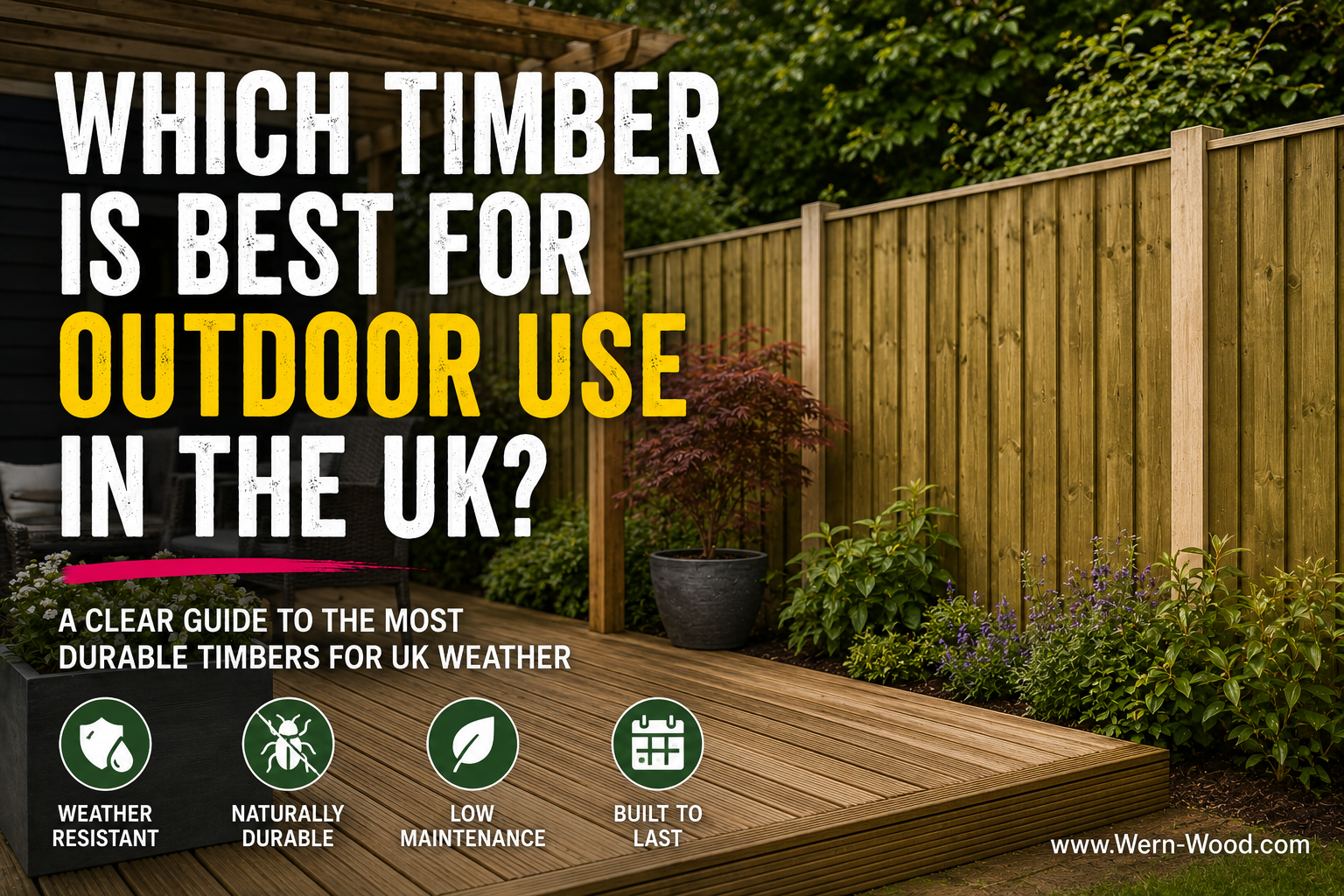
For most outdoor projects in the UK, the best timber is pressure-treated softwood — but only when the treatment level matches the job. Timber used above ground, such as fence rails, decking boards or cladding, is not the same as timber used in ground contact, such as fence posts, sleeper edges or structural supports close to damp ground. The key question is not just “is it treated?” The key question is “is it treated for where I am using it?”
Outdoor timber does not fail because it gets rained on once. It fails when the wrong product is used in the wrong place, moisture sits against it, cut ends are left exposed, or the installation traps water where it should be able to drain away.
That is why choosing timber for outdoor use is not just about picking something labelled “treated”. A fence rail, a decking board, a fence post and a garden sleeper are all outdoor products, but they are not all doing the same job.
If you are building a fence, deck, raised bed, pergola or landscaping feature, the right timber depends on three things: where the timber sits, how wet it will stay, and what happens if it fails.
The simple rule for outdoor timber
Start here:
- Above ground outdoors: treated outdoor timber
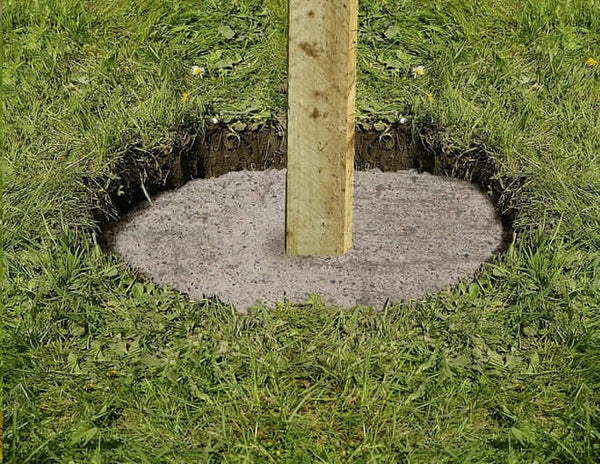
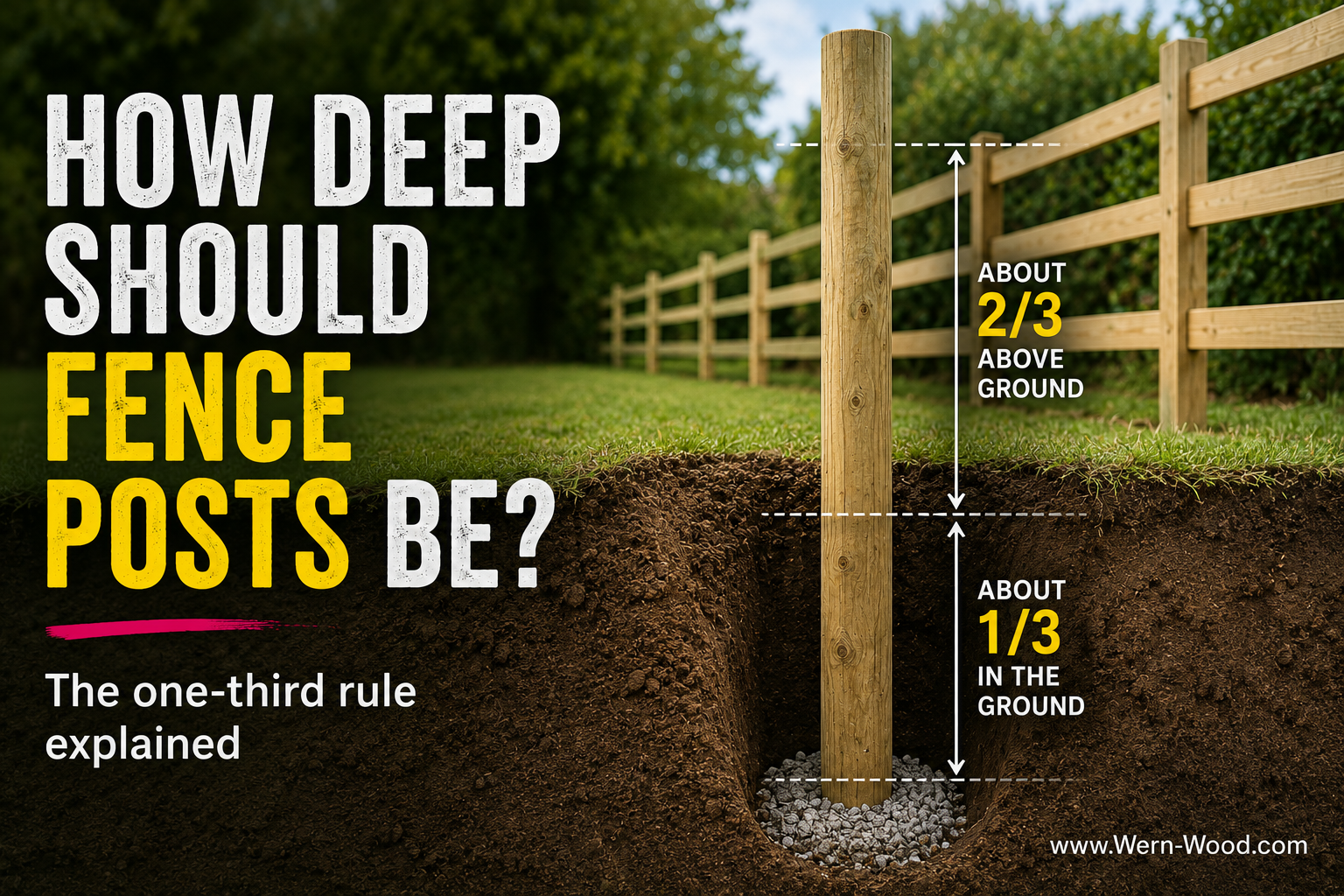
- Ground contact: Use Class 4
- Frequently wet areas: upgrade the specification
- Cut ends: re-treat after cutting
- Decking: think airflow and drainage
- Fencing: match posts, rails, boards and fixings
For general garden projects, pressure-treated softwood is usually the sensible starting point. It is widely used for fencing, decking, sleepers, outdoor structures and landscaping because it gives practical durability at a sensible cost.
The mistake is assuming all pressure-treated timber is equal. It is not. The treatment needs to match the intended use.
What does pressure-treated timber actually mean?
Pressure treatment is an industrial process that forces preservative into timber to improve resistance to decay and insect attack. That does not mean every treated timber product has the same level of protection.
The level of treatment should be matched to the timber’s end use. Timber used outdoors but above ground has different demands to timber buried in soil, touching wet ground, or supporting a structure where failure would matter.
Do not buy timber simply because it says “treated”. For outdoor projects, ask where the timber will be used. Above-ground use, ground contact, fresh-water contact and structural support are different situations.
Use Class 3 vs Use Class 4: the difference that matters
Most customer confusion comes down to this. Outdoor timber used above ground is not the same as outdoor timber used in contact with the ground.
| Use situation | Typical examples | What to look for |
|---|---|---|
| Outdoor, above ground | Fence rails, fence boards, decking boards, cladding, pergola components above ground | Outdoor treated timber |
| Ground contact or very wet use | Fence posts, sleeper edges, posts set into soil, timber close to damp ground | Use Class 4 |
| Exterior structural support | Deck subframes, posts, supports and components where failure would matter | Check the specification |
| Internal use | Indoor joinery, interior framing, dry internal timber | Do not over-specify outdoor treatment unnecessarily |
If you are unsure, move the question away from the label and onto the job: will this timber touch soil, hold moisture, sit close to the ground, or support something important? If the answer is yes, it needs more care.
Best timber for fencing
Fencing is where treatment confusion shows up quickly because a fence uses different timber components in different ways.
A fence post is in the ground and needs to resist moisture for years. A rail is above ground but still exposed to weather. A featheredge board is exposed to rain and wind, but it is not usually buried. A gravel board protects the bottom of the fence line from splash-back and ground contact.
| Fence component | What it does | Buying mistake to avoid |
|---|---|---|
| Fence posts | Hold the fence upright and usually sit in the ground. | Do not use general treated timber where a ground-contact post is needed. |
| Fence rails | Support boards or panels above ground. | Do not forget fixings and spacing; rails carry the fence load. |
| Featheredge boards | Create the main boarded fence face. | Do not treat the board like a post; it is a different component with a different job. |
| Gravel boards | Lift the fence panel or boards away from wet ground. | Do not leave panels or boards sitting directly on soil. |
| Postmix and fixings | Secure the fence and reduce movement. | Do not spend properly on timber and then under-spec the fixings. |
For fencing materials, start with Fence Posts, Featheredge Boards, Gravel Boards and Postmix & Fence Fixings together. The full system matters more than one single product.
Best timber for decking
Decking problems often start underneath, not on the surface. Customers focus on the board they can see, but the frame below is where trapped moisture, poor airflow and wrong specification can cause trouble.
Deck boards need to handle weather, foot traffic and regular wetting. The subframe needs to be properly designed, ventilated and kept away from unnecessary standing moisture. If the frame sits too close to damp ground or water is trapped against it, the deck can fail long before the boards look worn out.
- Decking boards need to suit outdoor foot traffic and weather exposure.
- Decking subframes need airflow, drainage and suitable timber specification.
- Decking screws and fixings need to suit exterior use.
- Cut ends should be protected after cutting, drilling or notching.
Browse Timber Decking for decking boards and outdoor decking materials.
Best timber for sleepers and landscaping
Landscaping timber often has a harder life than customers expect. Raised beds, edging, steps and retaining features may sit against soil, wet grass, gravel, concrete or damp ground for long periods.
That is exactly where treatment level and installation matter. Good drainage, avoiding trapped water and choosing timber suitable for the job are just as important as the size of the sleeper.
If timber is going to sit against soil or stay wet for long periods, do not treat it like ordinary above-ground timber. Ground contact is a different job. Choose the product for the wettest part of the project, not the driest.
For raised beds, edging and landscaping builds, browse Garden Sleepers. If the job involves fencing, edging and posts together, plan the whole material list before ordering.
Hardwood outdoors: when does it make sense?
Hardwood can be durable and attractive outdoors, but it is not automatically the best answer for every garden project. For most fencing, decking, landscaping and general outdoor builds, correctly specified treated softwood is usually the practical choice.
Hardwood may make sense where appearance, wear resistance or a specific finish matters. It may not make sense where the job needs long runs of cost-effective timber, regular replacement parts, or matching fencing components.
The key point is simple: hardwood is not a shortcut around correct specification. Outdoor use still needs good design, drainage, fixing and maintenance.
Cut ends are where outdoor timber gets caught out
When treated timber is cut, notched, drilled or bored, freshly exposed areas should be protected. This is especially important around end grain, where moisture can get in more easily.
The important warning is this: do not put cut ends into the ground, even if you have coated them. If a post or sleeper needs to go into ground contact, plan the material so the treated end and correct specification are doing the work.
Cutting treated timber can expose less-protected timber inside. Re-treat freshly cut, notched or drilled areas with a suitable end-grain preservative, and avoid putting cut ends into the ground.
What should you buy for each outdoor project?
If you are not sure where to start, use the job to choose the timber.
| Project | Main timber to consider | Do not forget |
|---|---|---|
| Garden fence | Fence posts, rails, featheredge boards or fence panels | Postmix, fixings, gravel boards and correct post specification |
| Decking | Decking boards and suitable subframe timber | Airflow, drainage, exterior fixings and cut-end protection |
| Raised beds | Garden sleepers or suitable landscaping timber | Drainage, soil contact and lining choices where needed |
| Pergola or outdoor structure | Treated timber selected for exterior exposure | Post bases, fixings, water run-off and whether any posts touch the ground |
| General outdoor framing | Treated sawn timber or suitable structural timber | Whether the timber is above ground, structural, or close to damp areas |
Common outdoor timber mistakes
- Assuming all treated timber is the same — treatment level depends on where the timber will be used.
- Using above-ground timber in ground contact — this is one of the fastest ways to shorten service life.
- Forgetting airflow under decking — trapped moisture causes problems from the bottom up.
- Putting cut ends into the ground — even coated cut ends should not be treated as a proper ground-contact end.
- Leaving fence boards or panels sitting on soil — use gravel boards or raise the timber away from constant damp.
- Using the wrong fixings — outdoor timber needs suitable exterior fixings and hardware.
- Buying one product for every part of the job — posts, rails, boards, sleepers and decking all do different jobs.
Before you order outdoor timber
Before buying, answer these questions:
- Will the timber touch soil, concrete or wet ground?
- Will it be above ground but exposed to rain?
- Is it structural or just decorative?
- Will failure be inconvenient, expensive or unsafe?
- Will you need to cut, drill or notch it?
- Does the job need posts, fixings, postmix, gravel boards or drainage?
- Are you choosing the timber for the actual use, not just the appearance?
For broad outdoor projects, start with Fencing, Decking & Landscaping. For general exterior framing and outdoor timber jobs, browse Treated Sawn Timber. If you are unsure, ask before ordering rather than after the timber is cut and fitted.
FAQs
What is the best timber for outdoor use?
For most UK garden and outdoor projects, pressure-treated softwood is the most practical choice. The important part is choosing timber treated for the correct use, especially where the timber touches the ground or stays wet.
Is treated timber suitable for outside?
Treated timber can be suitable outside, but not all treated timber is suitable for every outdoor job. Above-ground outdoor timber and ground-contact timber need different levels of protection.
What timber should I use in the ground?
Timber used in ground contact should be suitable for that use. In treatment terms, Use Class 4 is the key specification for timber in contact with the ground, very close to the ground, frequently wet, or providing exterior structural support.
Can I use normal treated timber for fence posts?
Do not assume general treated timber is suitable for fence posts. Fence posts usually sit in the ground, so they need to be suitable for ground contact.
What timber should I use for decking?
Use decking boards designed for exterior decking and make sure the subframe is properly specified, ventilated and installed with drainage in mind. Decking often fails from moisture trapped below, not just from wear on the top boards.
Do I need to treat cut ends?
Yes. When treated timber is cut, drilled, notched or bored, freshly exposed areas should be protected with a suitable end-grain preservative. Cut ends should not be put into the ground.
Summary: choose timber by where it will live
The best timber for outdoor use is not one single product. It depends on where the timber will sit, how wet it will stay, and what job it has to do.
For most garden work, correctly specified pressure-treated softwood is the sensible starting point. Use above-ground treated timber for above-ground outdoor work, ground-contact timber where the timber touches soil or stays wet, and suitable fixings and installation practice for the full job.
Choose the timber for the wettest, hardest-working part of the project. That is what stops outdoor timber failing earlier than it should.
Choosing timber for an outdoor project?
Start with the right category for the job: fencing, decking, sleepers, treated sawn timber, posts, gravel boards and fixings. Match the timber to where it will be used before you cut or fit anything.
Shop Outdoor Timber → Order online or collect from our Briton Ferry yard. Yes, we deliver.Sources checked: Wood Protection Association guidance on preservative treatment, Use Classes and Use Class 4 timber; WPA Buyer’s Guide to Preservative Treated Wood; Timber Development UK guidance on treated timber Use Classes. This article is general guidance only. Always check the suitability of the specific product before fitting, especially for ground contact, structural support, decking subframes, retaining features or agricultural use.