DIY Dry Lining Guide • Choosing the right board
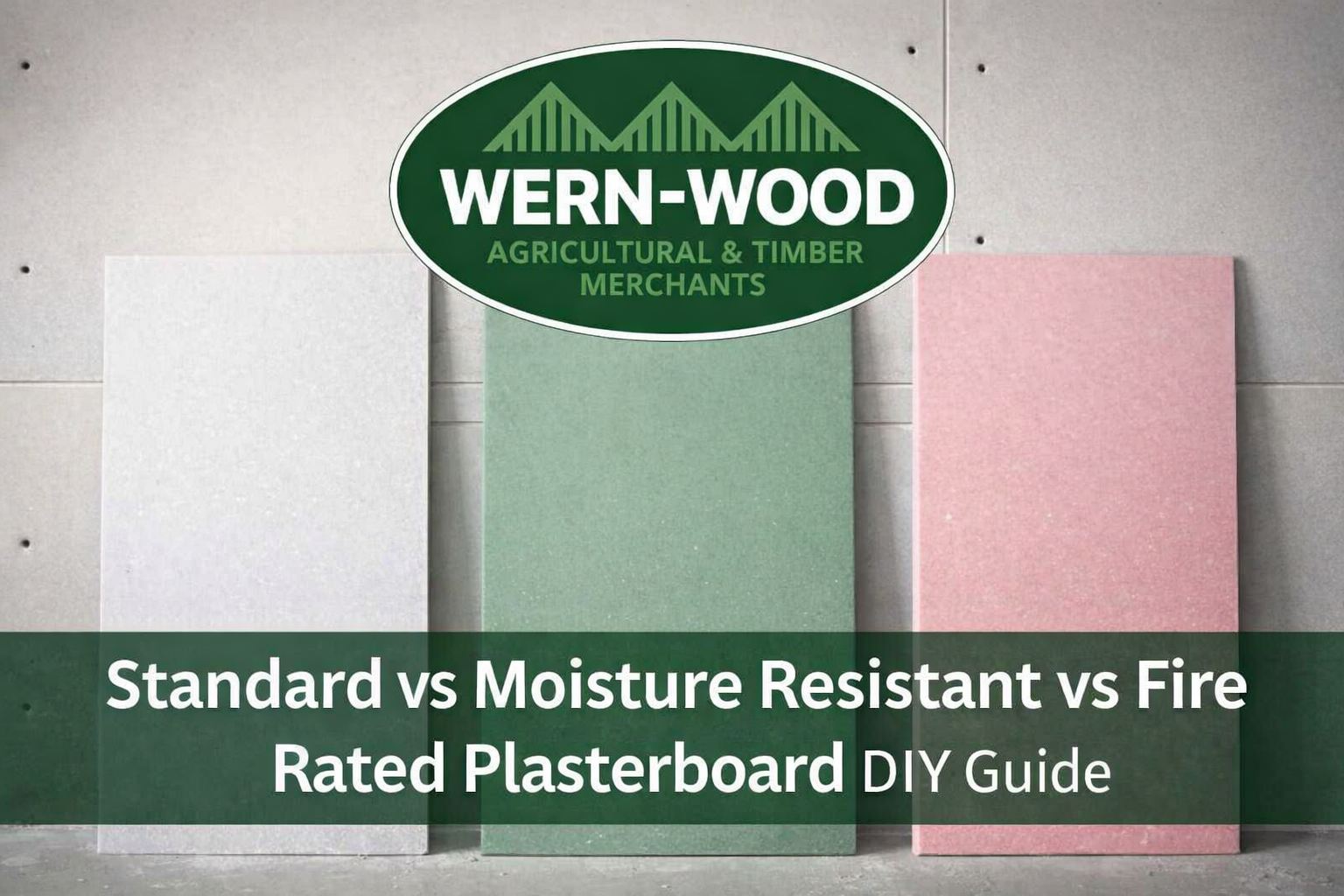
Standard vs Moisture Resistant vs Fire Rated Plasterboard: What’s the Difference?
If you’re boarding a wall, boxing in pipework, or renovating a room, plasterboard looks “all the same” until it doesn’t. The right choice depends on where it’s going and what it needs to cope with (everyday living, humidity, or extra fire performance). This guide explains the differences in plain English, with practical DIY project ideas for each type.
Jump to what you need
Short on time? Start with the quick comparison table, then jump to the board that matches your room.
Quick comparison: which plasterboard should you use?
This table is the fastest way to decide. After that, scroll down for project lists and DIY tips.
| Board type | Best for | Avoid using it for | Shop link |
|---|---|---|---|
| Standard plasterboard | Most internal walls/ceilings in dry rooms (living rooms, bedrooms, halls) | Bathrooms/shower rooms, consistently humid spaces, or where extra fire performance is required | Standard wallboard (square edge) |
| Moisture resistant plasterboard | Humid internal areas (bathrooms, kitchens, utility rooms) | Areas in direct water contact (it isn’t a waterproofing system on its own) | Moisture board (tapered edge) |
| Fire rated plasterboard | Areas where you want improved fire performance vs standard board | Assuming it “solves” fire safety on its own (details matter: build-up, fixings, joints, penetrations) | Fire panel (square edge) |
1) Standard plasterboard (everyday walls & ceilings)
Standard plasterboard (wallboard) is the go-to choice for general internal use — walls, partitions, and ceilings where you don’t need extra moisture or fire performance.
Best DIY projects for standard plasterboard
- Reboarding a bedroom wall before painting or skimming
- New stud partition wall to create a home office or separate space
- Ceiling repairs in dry rooms (hall, landing, bedroom)
- Boxing-in (pipes/cables) in dry areas
- Garage tidy-up (dry, non-humid sections) to improve the finish
Shop standard board
Choose the size you need and add dry lining essentials in the same order.
2) Moisture resistant plasterboard (bathrooms, kitchens & humid rooms)
Moisture resistant plasterboard is designed for internal areas where humidity and condensation are common. It helps the board hold up better in damp environments compared to standard wallboard.
Best DIY projects for moisture resistant plasterboard
- Bathroom refit (walls/ceilings in humid areas before tiling/finishing)
- Utility room upgrade (washing machine/tumble dryer humidity)
- Kitchen refresh (areas prone to steam and condensation)
- Cloakroom makeover (small rooms trap humidity fast)
- Ceiling replacement in bathrooms where condensation is a regular issue
Shop moisture resistant board
Add jointing supplies and the right fixings to reduce cracking and improve the finished look.
3) Fire rated plasterboard (extra fire performance vs standard board)
Fire resistant plasterboard is manufactured with fire-resistant additives to provide improved resistance to fire compared to standard wallboard. It’s a sensible choice where you want extra peace of mind or your project calls for enhanced fire performance.
Best DIY projects for fire rated plasterboard
- Garage conversion (creating a habitable room with better fire performance in the build-up)
- Upgrading a ceiling beneath a loft area as part of a renovation
- Partition walls where you want improved fire performance vs standard board
- Service boxing around internal zones where you want added reassurance (installed correctly)
- Utility/plant cupboard lining (where heat sources may be present)
Shop fire rated board
Order your boards and pick up screws/jointing supplies in the same basket.
Square edge vs tapered edge: why it matters
Edge type affects how you finish the board. You’ll see both across ranges like standard plasterboards and specialist boards.
Square edge (SE)
A straight edge profile often used where you plan to skim (or use a finish that suits the build-up). Example: Standard plasterboard square edge.
Tapered edge (TE)
Designed for jointing and taping systems to help create a flatter finish at board joints. Example: Moisture resistant plasterboard (tapered edge).
DIY tips: storage, cutting, fixing & jointing (quick wins)
1) Store it properly (prevents annoying problems later)
- Store boards flat and dry before installation.
- Avoid leaning sheets against walls for long periods (they can bow).
2) Cutting plasterboard (cleaner edges, less mess)
- Score the face paper with a sharp knife and straightedge.
- Snap the board on the score line, then cut the back paper.
- Lightly tidy edges if needed (especially around sockets and reveals).
3) Fixing methods (two common DIY routes)
Most DIYers choose either:
- Screwing to timber/metal stud (use drywall screws)
- Dot & dab bonding onto masonry (use plasterboard bonding adhesive)
4) Jointing (the part that makes it look “pro”)
- Use tape to reinforce joints (helps reduce cracking).
- Build up thin layers of compound rather than one thick fill.
- Sand lightly between coats for a smoother finish.
One-stop dry lining basket
Boards + tape + adhesive + fixings = fewer trips and a cleaner finish.
FAQ: plasterboard choices for DIYers
Can I use standard plasterboard in a bathroom?
Is moisture resistant plasterboard waterproof?
Does fire rated plasterboard make a room “fireproof”?
Which edge type should I choose: square or tapered?
Ready to order? Start here: Plasterboards & Dry Lining at Wern-Wood.