Tanalised timber is timber that has been pressure treated with preservatives to protect it from rot, fungal decay, and insect attack. The treatment is forced deep into the wood under pressure, making it suitable for outdoor use where untreated timber would quickly deteriorate.
If you are working on fencing, decking, or landscaping projects, tanalised timber is the standard choice. It is designed to perform in real outdoor conditions, not just look good when first installed.
What is tanalised timber?
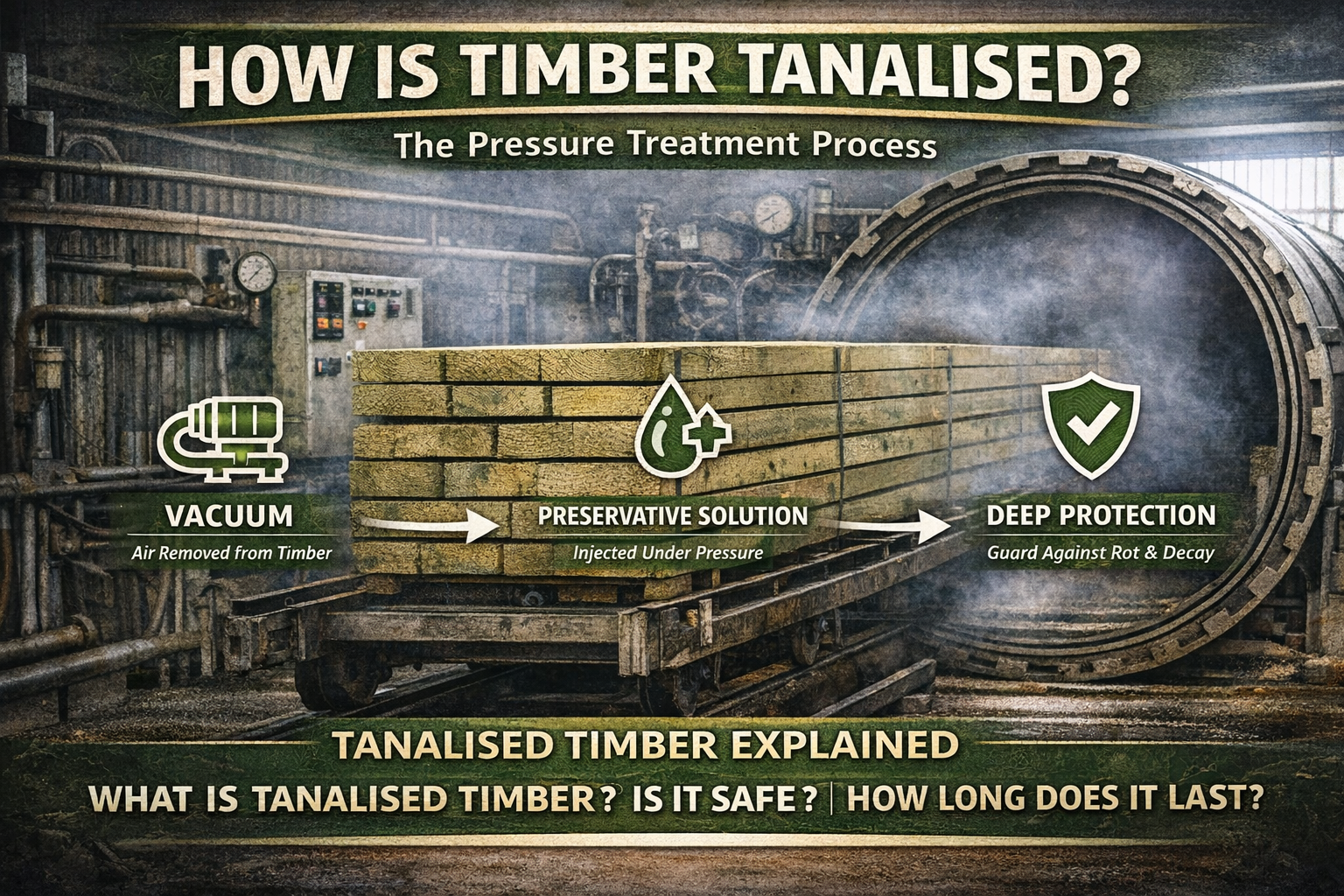
Tanalised timber is softwood (typically pine or spruce) that has undergone a pressure treatment process. This pushes preservative chemicals deep into the fibres of the timber, protecting it from within rather than just coating the surface.
This is why it lasts significantly longer outdoors compared to untreated timber.
How does tanalised timber work?
The timber is placed into a treatment vessel where preservatives are forced into the wood under high pressure. This ensures:
- Deep penetration into the timber
- Consistent protection throughout
- Resistance to moisture, fungi, and insects
Unlike surface treatments, this protection does not easily wear away.
What is tanalised timber used for?
Tanalised timber is used across a wide range of outdoor applications:
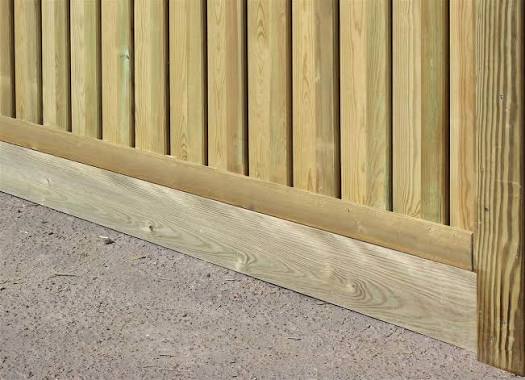
- Fencing materials including posts, rails, and feather edge boards
- Decking boards and structural subframes
- Railway sleepers for landscaping and retaining
- Garden structures such as pergolas and sheds
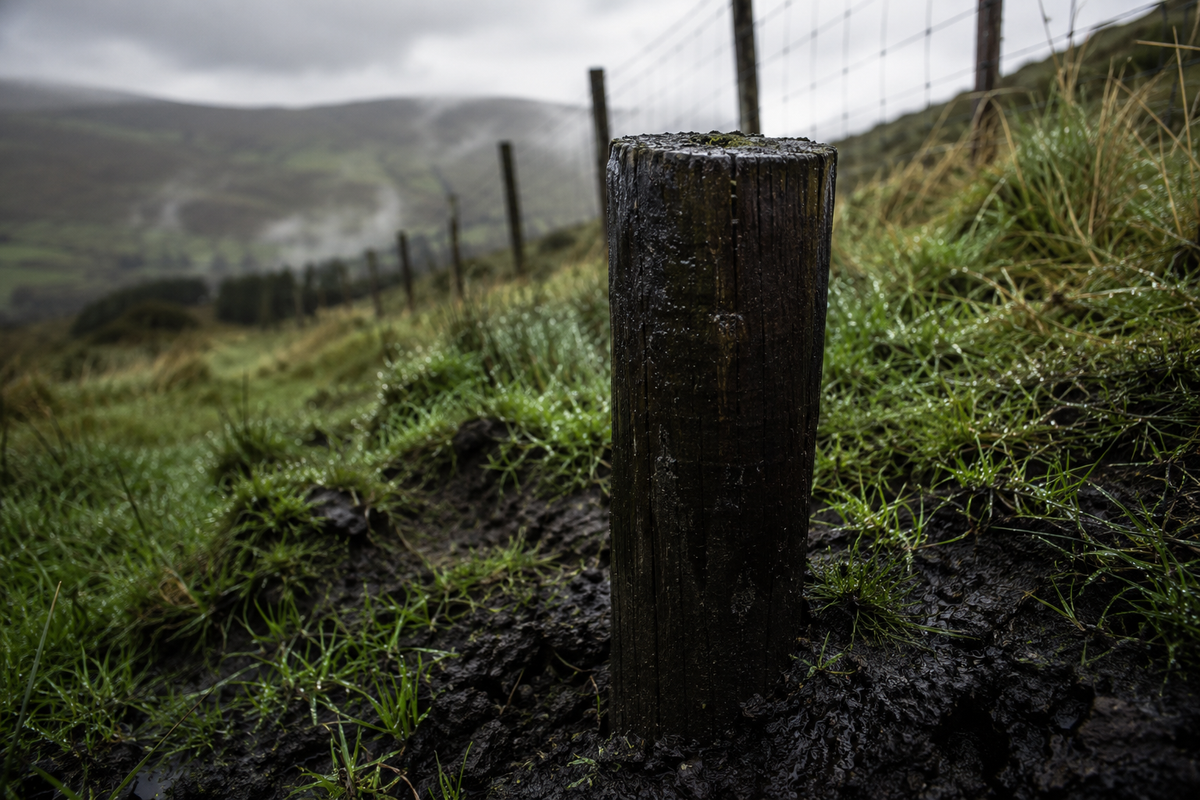
If the timber is going outside or into the ground, it should be treated. This is not an upgrade—it is the baseline for doing the job properly.
Benefits of tanalised timber
- Long lifespan – lasts significantly longer outdoors
- Rot resistance – protects against moisture and decay
- Insect protection – reduces risk of damage
- Cost-effective – avoids early replacement
- Low maintenance – no immediate treatment required
Common mistakes when using tanalised timber
- Not treating cut ends – exposed cuts remove protection and should be sealed
- Using untreated timber outdoors – leads to premature failure
- Assuming it is waterproof – it is water-resistant, not waterproof
- Poor installation – drainage and fixing still matter
Most failures on site are not due to the treatment—it is usually how the timber has been cut or installed.
Tanalised timber vs untreated timber
Tanalised timber:
- Designed for outdoor use
- Resistant to rot and insects
- Long lifespan
Untreated timber:
- Best suited for indoor use
- Prone to moisture damage
- Short lifespan outdoors
Using untreated timber outside is a false economy. It may cost less upfront, but it will fail much sooner.
Expert advice
On site, tanalised timber is the standard. If you are building fencing or decking, treated timber is expected—not optional.
Getting quantities right is just as important as choosing the right material. Using a tool like the Featheredge Fence Calculator helps ensure you order correctly first time, avoiding waste and delays.
The key detail most people miss is after cutting. Every cut edge removes the protective layer, so sealing those cuts is what keeps the timber performing long-term.
FAQs
Is tanalised timber waterproof?
No, tanalised timber is not waterproof. It is water-resistant and designed to slow moisture absorption, helping prevent rot.
How long does tanalised timber last?
Typically 15–30 years depending on exposure, installation, and whether it is in ground contact.
Do you need to treat tanalised timber after cutting?
Yes. All cut ends should be treated with a suitable preservative to maintain protection.
Can tanalised timber be painted or stained?
Yes. Once dry, it can be painted, stained, or oiled to improve appearance and add surface protection.
Is tanalised timber safe?
Modern treated timber is safe for general outdoor use but should not be burned or used where it may contaminate drinking water.