Wooden vs Concrete Fence Posts: The Wrong Choice Costs More Later
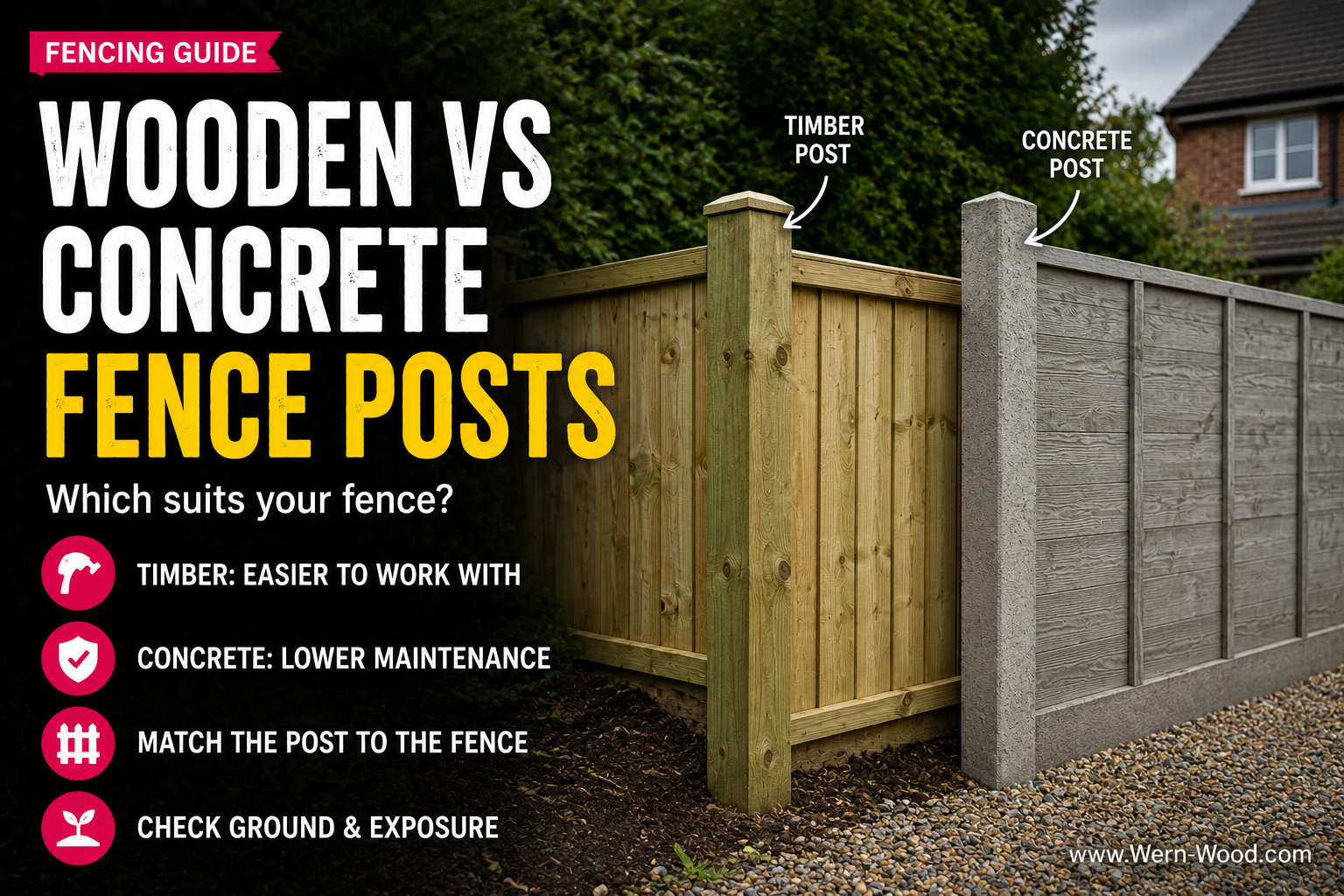
Choose wooden fence posts if you want a natural look, easier cutting, simpler fixing for rails and featheredge, and more flexibility on site. Choose concrete fence posts if you want longer-term rot resistance, lower maintenance, strong panel support and a more durable option for wet ground or exposed fence runs. Timber is easier to work with. Concrete is heavier and less flexible, but usually wins for lifespan and low maintenance.
Fence posts are not the exciting part of a garden fence, but they are the part that decides whether the fence stays upright.
Most people choose between wooden and concrete fence posts based on price or appearance. That is understandable, but it is not the full decision. The right post depends on the fence style, ground conditions, wind exposure, future maintenance, and whether you are building panels, featheredge, rails or a gate.
Get the post choice wrong and the fence may still look fine on day one. The problem usually shows up later: rot at ground level, loose panels, awkward repairs, leaning posts or fixings that do not suit the system.
Wooden vs concrete fence posts: the simple comparison
If you want the short version, use this:
| Question | Wooden fence posts | Concrete fence posts |
|---|---|---|
| Best for | Featheredge, post-and-rail, built fencing, traditional garden fencing. | Panel fencing, long-term boundary fencing, low-maintenance installs. |
| Appearance | Natural timber look that blends into gardens. | More practical/industrial look, often hidden partly by panels. |
| Working on site | Easier to cut, drill, notch and fix into. | Heavy, harder to adjust, needs accurate setting out. |
| Ground contact | Needs suitable treatment and good installation. | Does not rot in the ground. |
| Maintenance | Needs checking over time, especially at ground level. | Lower maintenance, but check for cracks, movement and panel fit. |
| Typical buying mistake | Using the wrong size, treatment or depth for the ground conditions. | Underestimating weight, handling and alignment before setting. |
Both options can be the right choice. The mistake is assuming one is always better.
When wooden fence posts make sense
Wooden fence posts are the practical choice when you want a traditional look, easier installation and straightforward fixing into the post.
They are especially useful for:
- Featheredge fencing
- Post-and-rail fencing
- Custom-built fencing
- Garden gates
- Uneven sites needing site adjustment
- Projects where appearance matters
Timber posts are easier to drill, screw, nail, notch or cut on site. That makes them ideal for built fencing where rails, boards and fixings need to be set out properly.
Wern-Wood’s fence posts range includes timber fence posts, concrete fence posts, agricultural posts, gate posts and post supports for different fencing jobs. The page also notes that timber fence posts are pressure treated for external use, including ground contact applications. Browse Fence Posts.
If you are building rails and featheredge, timber posts are usually the easier post to work with. If you are slotting standard fence panels between posts and want lower maintenance, concrete posts deserve a serious look.
The downside of wooden fence posts
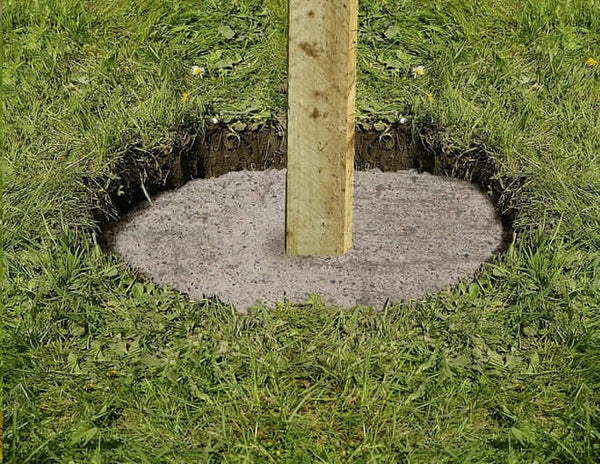
The weak point with timber posts is usually the ground-contact zone. That is where the post sits in damp soil, concrete or postmix, and where water can linger if the installation is poor.
That does not mean timber posts are bad. It means they need to be suitable for ground contact and installed properly.
- Use the right post size and length for the fence height and exposure.
- Choose timber posts suitable for ground contact.
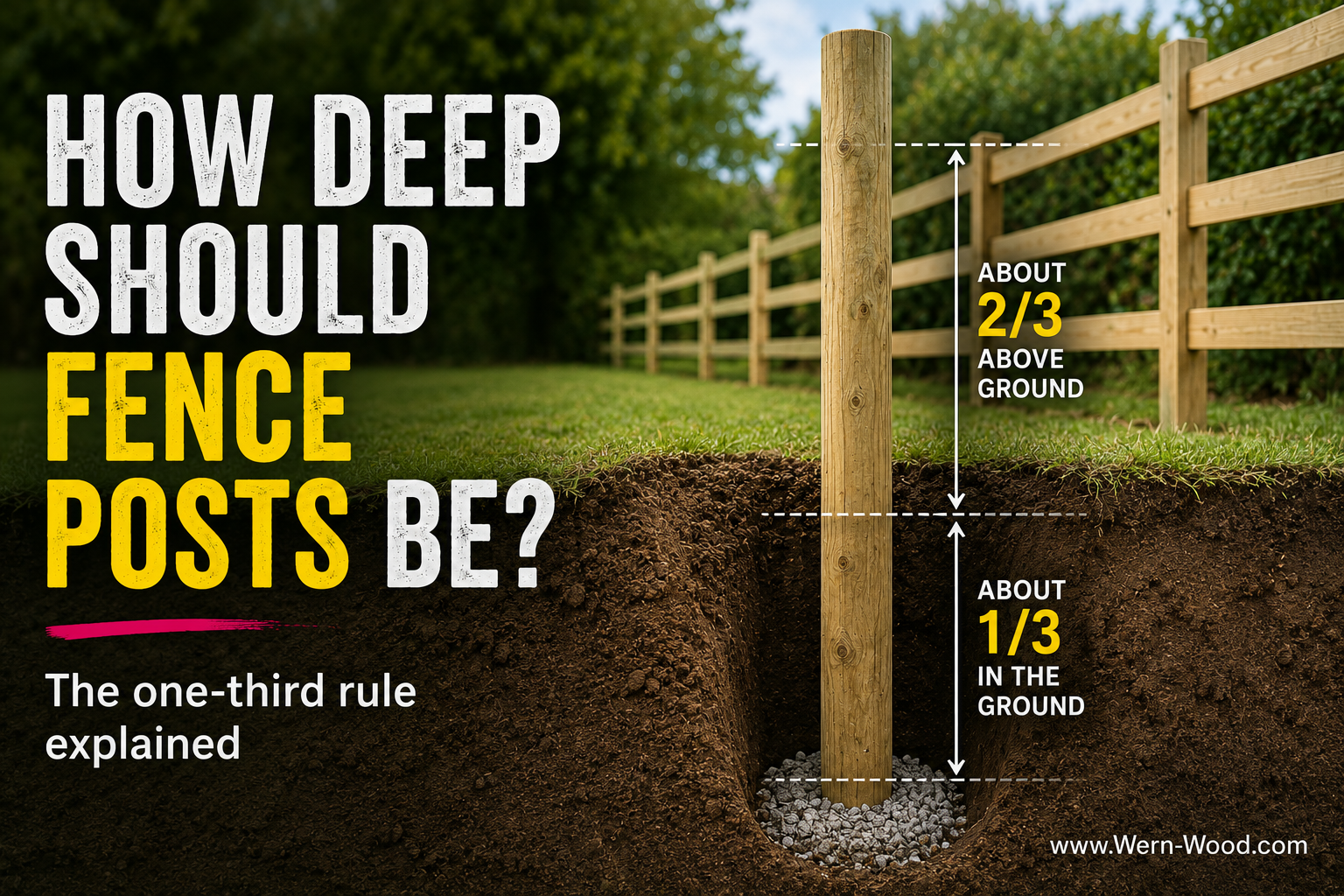
- Set the post deep enough for the fence height and ground conditions.
- Use suitable postmix or fixing method.
- Avoid trapping water unnecessarily around the post.
Not every treated timber product is suitable to be buried or used in ground contact. For timber posts going into the ground, check that the post is suitable for ground-contact use before fitting.
When concrete fence posts make sense
Concrete fence posts are the long-term, low-maintenance choice for many garden and boundary fences. They are especially common with panel fencing because panels can slot between posts, and damaged panels can often be replaced without replacing the posts.
Concrete posts make sense where you want:
- Low maintenance
- Rot resistance
- Stable panel support
- Wet-ground performance
- Longer-term boundary fencing
- Concrete gravel board compatibility
Wern-Wood’s concrete fencing range includes steel reinforced concrete fence posts and concrete gravel boards designed to work with timber fence panels. Concrete posts provide strength and resistance to rot, while concrete gravel boards help protect timber panels from ground contact. Browse Concrete Fencing.
The downside of concrete fence posts
Concrete posts are durable, but they are not always easier.
- They are heavy and usually harder to handle than timber.
- They are less forgiving if your setting out is wrong.
- You cannot cut or notch them easily to solve site problems.
- They may need more care during installation because alignment matters before the concrete or postmix sets.
- Some customers prefer the look of timber, especially in traditional gardens.
Concrete is often the better long-term answer for panel fencing, but it needs accurate setting out and safe handling.
Which is best for fence panels?
For standard garden fence panels, concrete posts are often the strongest long-term choice. Slotted concrete posts make it easier to replace panels later, and they avoid the timber-post rot issue at ground level.
That said, timber posts can still be used with panels where appearance, budget, or site flexibility matters more. The key is matching the post, panel, gravel board and fixing method together.
For panel fencing, browse Fence Panels, Concrete Fencing and Gravel Boards together before ordering.
Which is best for featheredge fencing?
For traditional featheredge or closeboard-style fencing, timber posts are often the most practical option because rails and boards are simple to fix to timber.
Concrete can also be used with some closeboard and featheredge systems, especially recessed concrete posts, but the system needs to be planned properly before ordering.
If you are building featheredge from components, start with Featheredge Boards, Fence Rails, suitable Fence Posts and Postmix & Fence Fixings.
Do gravel boards change the decision?
Yes. Gravel boards help protect the bottom of fence panels or boards from ground contact, splash-back and general wear at the base of the fence.
Timber gravel boards keep a more consistent timber appearance and are useful where flexibility matters. Concrete gravel boards are a low-maintenance option for longer-term installations where resistance to rot and ground moisture is a priority.
Wern-Wood’s gravel boards range includes timber and concrete gravel boards for garden and boundary fencing. Browse Gravel Boards.
Which should you choose?
Use this as a practical decision guide.
| Choose this | If your priority is | Watch out for |
|---|---|---|
| Wooden fence posts | Natural appearance, easier fixing, easier cutting, built fencing, featheredge, site flexibility. | Ground-contact suitability, post depth, rot risk and long-term maintenance. |
| Concrete fence posts | Longer-term durability, low maintenance, panel fencing, wet ground, rot resistance. | Weight, handling, accuracy, appearance and less flexibility on site. |
| Timber posts with gravel boards | A timber look with better protection at the base of the fence. | Still check post treatment and ground-contact installation. |
| Concrete posts with concrete gravel boards | A low-maintenance panel fencing system. | Heavier materials and accurate setting out. |
| Heavier timber or agricultural posts | Gates, rural boundaries, exposed areas or stronger timber construction. | Choose the post for the load, ground conditions and fixing method. |
Common mistakes when choosing fence posts
- Buying only on price — the cheapest starting point may not be the cheapest long term.
- Ignoring ground conditions — wet clay, soft ground and exposed gardens change the decision.
- Using timber that is not suitable for ground contact — this shortens service life.
- Choosing concrete but not planning handling — concrete posts are heavy and awkward.
- Forgetting gravel boards — panels or boards sitting near wet ground fail sooner.
- Mixing systems badly — panels, posts, gravel boards and fixings need to work together.
- Underestimating gates — gate posts do more work than ordinary intermediate posts.
Before you order fence posts
Before choosing timber or concrete, check the full job:
- Fence style — panels, featheredge, post-and-rail, gate or mixed system.
- Fence height — taller fences need more support.
- Post length — allow enough post below ground.
- Ground conditions — wet, soft or exposed sites need more care.
- Maintenance preference — timber needs more checking over time; concrete is lower maintenance.
- Handling — concrete posts may need two people or lifting care.
- Full material list — posts, panels or boards, rails, gravel boards, fixings and postmix.
FAQs
Are concrete fence posts better than wooden posts?
Concrete fence posts are usually better for long-term rot resistance and low maintenance. Wooden posts are better where you want easier cutting, fixing, a natural appearance and more flexibility during installation.
Do concrete fence posts last longer?
Concrete fence posts do not rot in the ground, so they generally offer a longer-lasting and lower-maintenance option than timber posts. They can still crack, move or be installed badly, so correct installation still matters.
Are wooden fence posts still worth using?
Yes. Wooden posts are still widely used because they are easier to work with, look more natural and suit built fencing such as featheredge, rails and some gate installations. The key is choosing a post suitable for ground contact and installing it properly.
Which posts are best for featheredge fencing?
Timber posts are commonly used for featheredge fencing because rails and boards can be fixed directly to timber. Some concrete systems can also work, but the system needs planning before ordering.
Which posts are best for fence panels?
Concrete posts are a popular long-term choice for fence panels because slotted posts support panels well and make future panel replacement simpler. Timber posts can still be used where appearance or flexibility is more important.
Do I need gravel boards with fence posts?
Gravel boards are strongly worth considering. They help keep fence panels and boards away from direct ground contact and splash-back, which protects the bottom of the fence line.
Summary: timber for flexibility, concrete for low maintenance
If you want the simple version: timber fence posts are easier to work with and suit traditional built fencing. Concrete fence posts are heavier and less flexible, but they offer rot resistance and lower maintenance for panel fencing and long-term boundary work.
There is no one best post for every garden. Choose the post around the fence style, ground conditions, exposure, handling, appearance and how much maintenance you want later.
Choosing fence posts for your next job?
Browse timber fence posts, concrete fence posts, agricultural posts, gate posts and post supports, then match them with the right panels, boards, gravel boards, postmix and fixings.
Shop Fence Posts → Order online or collect from our Briton Ferry yard. Yes, we deliver.This article is general fencing guidance only. Final post choice depends on fence design, height, exposure, ground conditions, installation quality and whether the post is being used for panels, featheredge, gates or agricultural fencing.