
How to Make a Ledge & Brace Garden Gate (Beginner-Friendly, Proven Build)
A practical, accurate step-by-step guide to building a traditional ledges + braces gate using readily available timber and fixings from Wern-Wood. Includes measuring, cut list logic, brace direction, and hanging tips.
Tip: Read the brace section first — getting the brace direction right is what keeps a gate working for years.

Overview
A ledge and brace gate is a classic outdoor gate built from vertical boards (the face), horizontal ledges (the structure), and diagonal braces (anti-sag). It’s simple, strong, and ideal for side gates and garden entrances — provided you use suitable exterior timber, exterior-rated fixings, and you brace it correctly.
If you’d rather buy a ready-made gate to match your fence, browse: Timber garden gates. This guide is for building your own to suit your opening.
Materials and tools
These are the closest matching Wern-Wood categories from the sitemap, so you can keep reading and click through when ready.
Gate face boards (verticals)
A common choice is featheredge boards (traditional look) or other exterior boards. Browse: Treated featheredge boards.
Ledges + braces (structural pieces)
Use straight, solid timber for the ledges and braces. Browse: Treated sawn timber or Planed PSE timber.
Fixings (exterior screws)
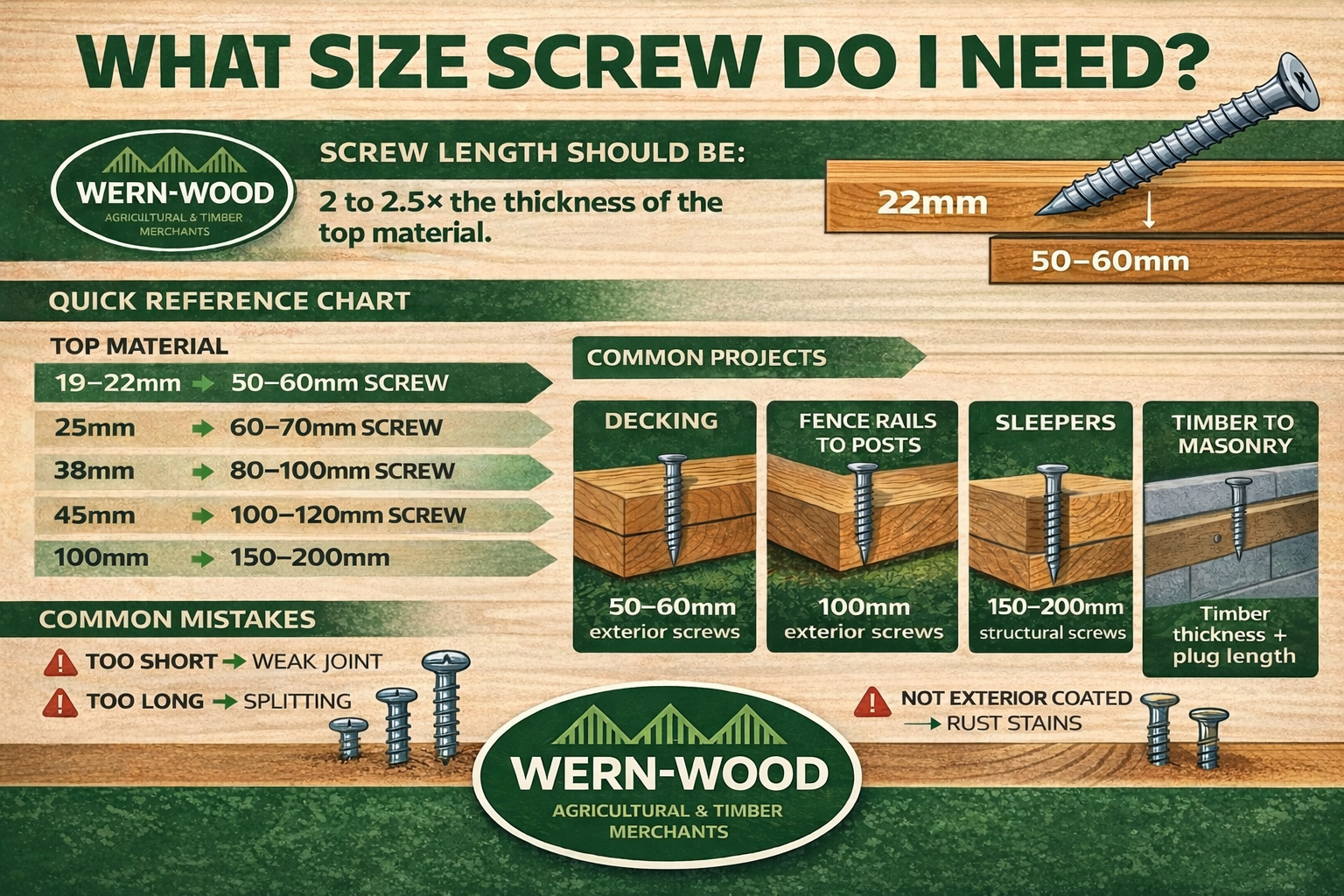
Use exterior-grade screws (galvanised / coated / stainless where appropriate). Browse: Timber fixings.
Hinges + latch
Tee/strap hinges and a latch/hasp depending on your setup. Browse: Ironmongery.
Posts + postmix (if you’re installing posts)
If your gate is new (or posts are tired), plan the posts first. Browse: Fence posts and Fixings & postmix.
Sealants/adhesives (optional)
Useful for detail sealing and outdoor jobs (where appropriate). Browse: Adhesives & sealants.
Basic tools needed
Tape measure, pencil, square, saw (circular saw is ideal), drill/driver + bits, clamps, spirit level, sanding block/plane, safety glasses and gloves.
Safety: Gate timber is heavy and awkward. Support long pieces when cutting, clamp work securely, and keep hands well clear of blades and bits.
Shop the build
Quick links to the categories used in this guide (open in a new tab if you prefer to keep reading).
Want to confirm lead times and delivery options before ordering? See: Delivery information.
Gate design decisions (do this before you cut timber)
1) Gate size and clearances
Measure the clear opening between posts (or walls), then decide your finished gate size. A practical target is:
- Hinge side gap: ~10mm (depends on hinge type and how plumb the post is)
- Latch side gap: ~10mm
- Bottom clearance: ~25–50mm (more if the ground rises or you expect debris)
- Top clearance: ~10mm
Rule of thumb: Gate width ≈ opening width minus ~20mm total side clearance (adjust to your hinges and posts).
2) Timber choice (what lasts outdoors)
For outdoor gates, use pressure treated timber and exterior-grade fixings. Your face boards can be featheredge for a traditional look; your ledges and braces should be straighter, stronger timber (treated sawn or planed PSE).
3) The “brace direction” that prevents sagging
The diagonal brace should be arranged so it works in compression to stop the gate dropping over time. In practical terms: the brace should run from the top latch-side area down towards the bottom hinge-side area (or said another way: it “points” down to the bottom hinge).
Common mistake: bracing the “wrong way” so the brace can’t support the gate in compression — the gate then sags and drags.
Cut list & sizing (metric, with proven layout)
Because openings vary, this section gives a reliable approach rather than pretending one set of numbers fits every gate.
Choose a common example size (edit to suit)
Example gate: 900mm wide × 1800mm high (a common side gate size). Adjust the width/height to your opening.
Recommended build sizes (practical and widely used)
| Part | Typical size | Notes |
|---|---|---|
| Vertical face boards | Featheredge boards (overlapping) | Overlap creates a solid face; you trim edges to finish. |
| Ledges (horizontal) | Typically 2 or 3 ledges (top/middle/bottom) | 3 ledges is better for taller gates and for fixing hinges/latch solidly. |
| Braces (diagonal) | 1 brace minimum, 2 braces common (top and bottom) | Brace must oppose sag: top latch-side down to bottom hinge-side. |
Example cut list (900mm × 1800mm gate)
| Qty | Part | Length | Notes |
|---|---|---|---|
| Face boards | Vertical boards | 1800mm | Quantity depends on coverage/overlap. Cut a couple extra if you want a clean finish on both edges. |
| 3 | Ledges (top/mid/bottom) | ~(gate width minus 2× face overhang strategy) | Most builders set ledges in from edges slightly so the face boards can finish neatly. |
| 1–2 | Diagonal brace(s) | Measure in place | Cut braces after the ledges are fixed, so you can scribe accurately. |
Proven build sequence: cut face boards to height → assemble ledges square → fit braces → then fix the face boards. This keeps everything tight and predictable.
Step-by-step build
Measure the opening and plan the finished gate size
- Measure the opening width at top, middle, and bottom (posts are often not perfectly parallel).
- Measure the opening height where the gate will swing (watch for slopes, gravel, paving lips, etc.).
- Pick your clearances (typical: ~10mm each side, ~25–50mm at the bottom, ~10mm at the top).
- Write down your target gate width and height before buying/cutting timber.
Beginner tip: If posts are out of plumb, solve that first — a perfect gate on a wonky post will still swing badly.
Choose and prep your timber (straightness matters)
- Select the straightest pieces for ledges and braces. Slightly twisted ledges = a gate that never sits flat.
- Cut all face boards to the same height (your gate height).
- Lightly sand/plane rough edges (especially where boards overlap) to reduce proud edges and improve finish.

Lay out the face boards (front) and clamp
- On a flat surface, lay your face boards down to form the gate front (use featheredge overlap consistently).
- Use a straight edge to keep the bottom aligned. Clamp across the boards so nothing shifts.
- Mark the positions for your ledges on the back (typical: top ledge ~150–200mm down, bottom ledge ~150–200mm up, middle centred).
Beginner tip: If your surface isn’t perfectly flat, use packers/shims under boards so the face stays in plane.
Fix the ledges to the back of the gate
- Place ledges onto the back of the clamped face boards at your marked positions.
- Pre-drill to reduce splitting (especially near timber ends).
- Fix each face board into each ledge using exterior screws (keep fixings consistent and tidy).
- Check for square as you go: measure diagonals corner-to-corner; adjust clamps if needed.
Don’t rush this: squaring here prevents a nightmare when hanging (binding, uneven gaps, latch misalignment).
Fit the diagonal brace(s) the correct way (anti-sag)
This is the core “proven” detail. The brace must oppose sag by acting in compression: from top latch side down to bottom hinge side.
- Offer the brace into place across the ledges, running from top latch-side down to bottom hinge-side.
- Mark where the brace intersects the ledges; cut the brace ends so it sits tight against ledges.
- Fix the brace into each ledge with exterior screws (pre-drill first).
- If using two braces, mirror the concept: each brace should resist the gate’s tendency to sag.

Shortcut that works: Fit braces after ledges are fixed, and cut braces “in place” for a tight fit.
Trim, tidy, and prep hinge/latch fixing zones
- Trim any proud face boards so the gate edges are clean and consistent.
- Decide hinge positions: typically top hinge near the top ledge, bottom hinge near the bottom ledge.
- Make sure hinges will screw into solid timber (a ledge), not only thin board edges.
- Mark the latch height (often around waist height) and ensure there’s solid timber backing where it fixes.
Hanging & adjustment (so it swings cleanly)
Set posts first (if applicable)
If you’re also fitting posts, set them plumb, at the right spacing, and let postmix cure properly. Posts that move are the #1 reason gates start binding and sagging.
Hang the gate
- Attach hinges to the gate first (strap/tee hinges usually span across ledges for strength).
- Pack the gate in the opening using shims/wedges to hold your clearances (sides/top/bottom).
- Mark hinge holes on the post, pre-drill, then fix hinges to the post.
- Test swing: it should move freely without scraping.
- Fit the latch/keeper and test closing. Adjust as required.
Hardware browsing: Ironmongery • Screws: Timber fixings
If the gate drops after hanging: double-check brace direction first, then check hinge screws are biting into solid timber, and confirm the post is still plumb.
Finishing & maintenance (what keeps it looking good)
Seal cuts and protect end grain
Any fresh cut ends are where moisture gets in first. If you’ve trimmed treated timber, follow best practice for protecting exposed end grain (e.g., a suitable end-grain sealer / preservative per the product you choose).
Keep it off the ground
Maintain sensible bottom clearance so the gate doesn’t sit in wet leaves, mud, or standing water. This single detail often decides whether a timber gate lasts “years” or “one winter”.
Annual checks
- Check hinge screws and latch fixings for movement.
- Confirm the post hasn’t leaned (especially after storms or very wet ground).
- Re-coat paint/stain as needed (especially on top edges and cut ends).
Doing more garden projects? Browse: Timber for garden builds.
Quick FAQs
Should I use 2 or 3 ledges?
For taller or heavier gates, 3 ledges is a safer choice because it stiffens the gate and gives better fixing points for hinges and latches. Two ledges can work on smaller, lighter gates, but three is more forgiving for beginners.
What’s the most important “proven” detail to stop sagging?
The brace must be oriented so it supports the gate in compression: from top latch side down to bottom hinge side. If braced the other way, the gate is much more likely to drop over time.
Do I need a diagonal brace if I’m using heavy hinges?
Yes. Hinges carry the load, but the brace stops the gate racking out of square. Heavy hinges alone don’t prevent sag if the gate twists or the fixings loosen.
Where can I browse ready-made gates instead?
Here: Timber garden gates.
Where can I check delivery before ordering?
See Delivery information.
Want to keep browsing without losing your place? Open links in a new tab, or jump back to top.