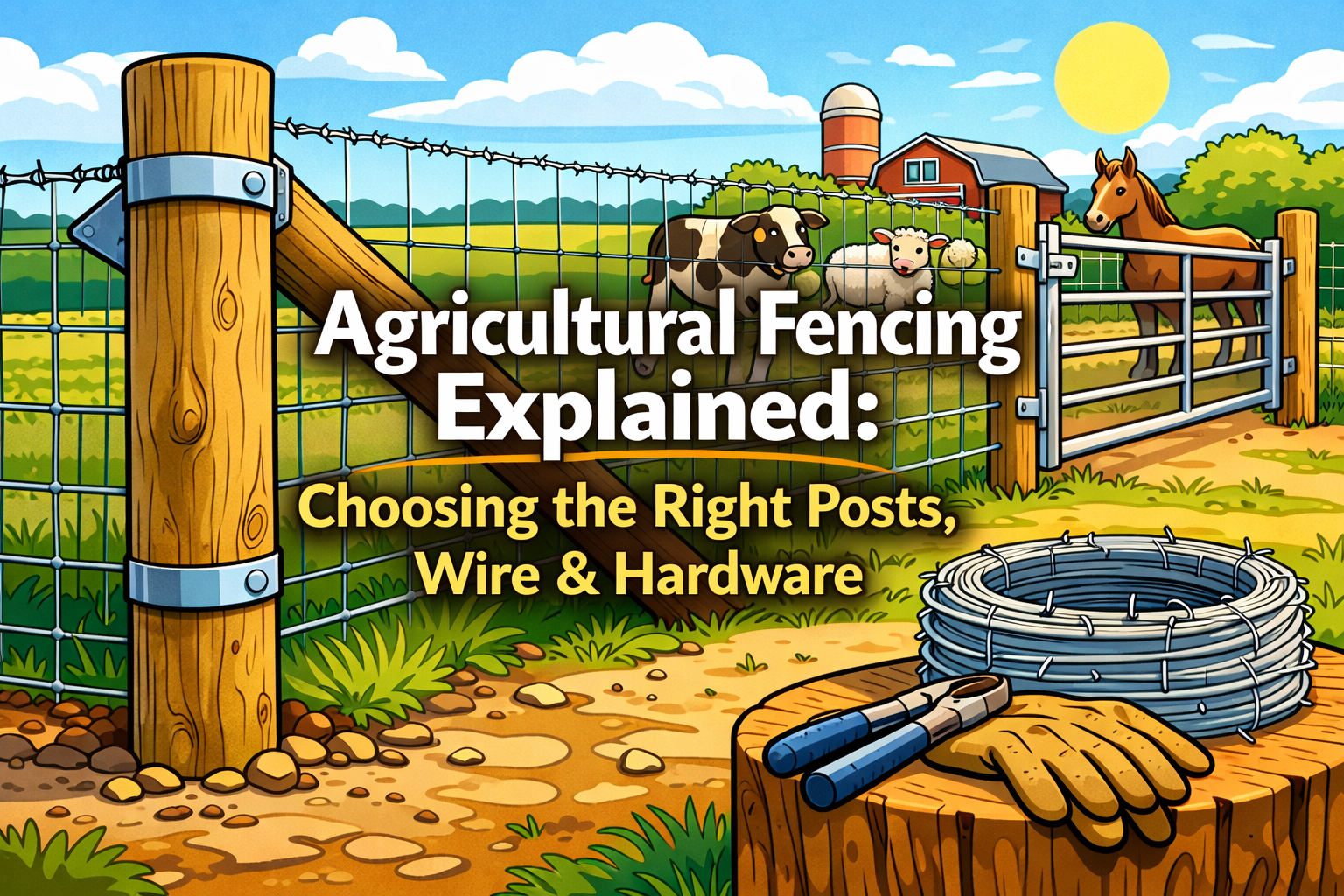
Agricultural fencing is built for real-world pressure: livestock, weather, soft ground, and constant use. This guide explains the main components—timber, wire, and ironmongery—so you can choose the right materials for a fence that lasts.
What makes agricultural fencing different?
Agricultural fencing isn’t about looks—it’s about longevity, repairability, and strength in demanding conditions. Compared to domestic fencing, it’s more likely to deal with uneven ground, wetter areas, heavier contact from animals, and repeated access for vehicles and machinery.
If you’re planning a boundary from scratch, start by browsing Agricultural Fencing and Agricultural Wire & Barb so you can price and plan the timber + wire together.
Fence posts, rails, and agricultural timber
Posts and rails form the structure of your fence. The right choice depends on ground conditions, livestock type, and whether the fence needs to handle repeated pressure at corners and gateways.
- Timber posts & rails for agricultural boundaries: Agricultural Fencing
- Browse agricultural timber options: Agricultural Fencing Timber
Practical approach: identify your “high-stress points” first (ends, corners, gateways), then plan intermediate posts and rails around those. Most fencing failures start where tension or movement wasn’t accounted for.
Stock wire, plain wire, and barbed wire
Wire choice matters. The right wire makes tensioning easier, reduces ongoing repairs, and helps maintain safe boundaries—especially where animals lean, rub, or test fences.
Browse Agricultural Wire & Barb for common fencing wire and barbed wire options used across rural and agricultural projects.
When planning, factor in wire height, strain points, and how you’ll maintain tension over time. A well-built fence is usually the one that’s easiest to re-tension and repair without starting again.
Hardware and ironmongery: the parts that keep it working
The fence can be perfect on paper, but day-to-day reliability often comes down to the hardware: the staples, fixings, and fittings that hold everything together. Using suitable ironmongery helps reduce failures and ongoing “patch jobs.”
See Ironmongery for practical hardware used across agricultural fencing, gates, and general maintenance.
Common agricultural fencing setups (simple examples)
1) Stock boundary fencing
Typically timber posts + stock wire, with extra reinforcement at corners and gateways. Plan for tensioning and future adjustments.
2) Paddock and equestrian boundaries
Often prioritises consistent lines and safe contact points, with maintenance access in mind. Pair timber structure with suitable wire and reliable fittings.
3) Quick repairs and replacements
Keep a basic yard stock of essentials so repairs don’t become urgent trips: wire / barb and ironmongery cover a large percentage of common fixes.
Where to start on Wern-Wood
If you’re pricing a job or building a shopping list, start with the main categories below and work outward into the specific items you need: