
Beginner’s Guide: Building a 6×8 ft (1.8×2.4 m) Wooden Garden Shed
Step-by-step instructions in metric for a simple shed build from scratch: no windows, no insulation, and a framed ledge-and-brace door.
Tip: Read the steps first, then come back and shop your materials with confidence.

Overview
This guide walks you through constructing a simple 6×8 ft (1.8×2.4 m) shed from scratch. Measurements are in metric throughout (imperial included only where useful for reference). The design is basic and practical: no windows, no insulation, and a framed ledge-and-brace door.
If you’re building other garden structures after this, browse: Timber for garden builds.
Materials and tools
These links point to the closest matching Wern-Wood categories, so you can keep reading and click through when ready.
Framing timber
Pressure-treated CLS (approx. 38×63 mm planed). For browsing: CLS timber / studwork & framing.
Floor & roof sheets
18mm exterior-grade sheets for floor + roof: OSB3 sheets.
Exterior cladding
Pressure-treated T&G shiplap: Timber cladding (Shiplap, Loglap & TGV).
Roof covering
Mineral felt + clout nails: Roofing membrane & felt.
Fixings
Exterior screws + nails: Timber fixings and nails.
Door hardware
Tee hinges + latch/hasp: Ironmongery.
Adhesives / sealant (optional)
Useful for minor sealing/detailing: Adhesives & sealants.
Roof edge trim (optional)
A neater roof edge: Fascia board.
Basic tools needed
Measuring tape, pencil, hand saw or circular saw, drill/driver + bits, hammer, spirit level, framing square, step ladder, safety gear. Clamps are helpful. A hand plane/sandpaper is useful for trimming the door.

Shop the build
Quick links to the categories used in this guide (open in a new tab if you prefer to keep reading).
Want to understand delivery options before you order? See: Delivery information.
Cut list (metric)
Best practice: cut as you build (especially rafters and braces) to fine-tune fit.
Floor frame (38×63mm)
| Qty | Length | Use |
|---|---|---|
| 2 | 2400 mm | Floor rim joists (front/rear) |
| 3 | ~1724 mm | Internal floor joists (~600mm centres; adjust to your true timber thickness) |
Wall plates (38×63mm)
| Qty | Length | Use |
|---|---|---|
| 4 | 2400 mm | Front/back: bottom plates + top plates |
| 4 | 1800 mm | Sides: bottom plates + top plates (top plates get angled/trimmed) |
| Optional | 2× 2400 mm | Double top plate (front/back) for corner tying |
Wall studs
| Wall | Studs | Notes |
|---|---|---|
| Front (door wall) | 2× 2100mm corners, 2× 2100mm door posts, plus intermediate studs as needed (~600mm centres) | Door opening ~750mm (adjust your clearances) |
| Back (low wall) | 2× 1800mm corners, 3× 1800mm intermediates | Space ~600mm centres |
| Each side | 1× 2100mm (front), 1× 1800mm (rear), 1× ~1950mm (middle) | Middle/top cuts get angled to match roof slope |
Door (38×63mm)
| Qty | Length | Use |
|---|---|---|
| 2 | ~1780 mm | Door stiles (verticals) |
| 3 | ~750 mm (cut to suit) | Door ledges (top/mid/bottom) |
| 2 | ~900 mm (cut to fit) | Diagonal braces (trim in place) |
| ~7 | ~1780 mm | T&G boards for door face (estimate; adjust to cover width) |
Pent roof (38×63mm)
| Qty | Length | Use |
|---|---|---|
| 6 | ~1900 mm | Rafters (allowing modest overhang; adjust to preference) |

Step-by-step construction
Prepare a level base (foundation)
A level base makes everything else easier: square walls, smoother door fit, and fewer headaches.
- Choose a firm, well-drained spot. Avoid areas where water pools.
- Use patio slabs/pavers, or treated timber skids on compacted gravel/blocks to keep timber off soil.
- Check level in multiple directions with a long spirit level and straight edge.
- Check squareness by measuring diagonals across the base area.
Beginner tip: Spend extra time here. If the base is off, the door is where you’ll feel it.
Build the floor frame
- Lay out the two 2400mm rim joists parallel.
- Fit three ~1724mm joists between them, spaced evenly (~600mm centres).
- Square the frame by matching diagonals.
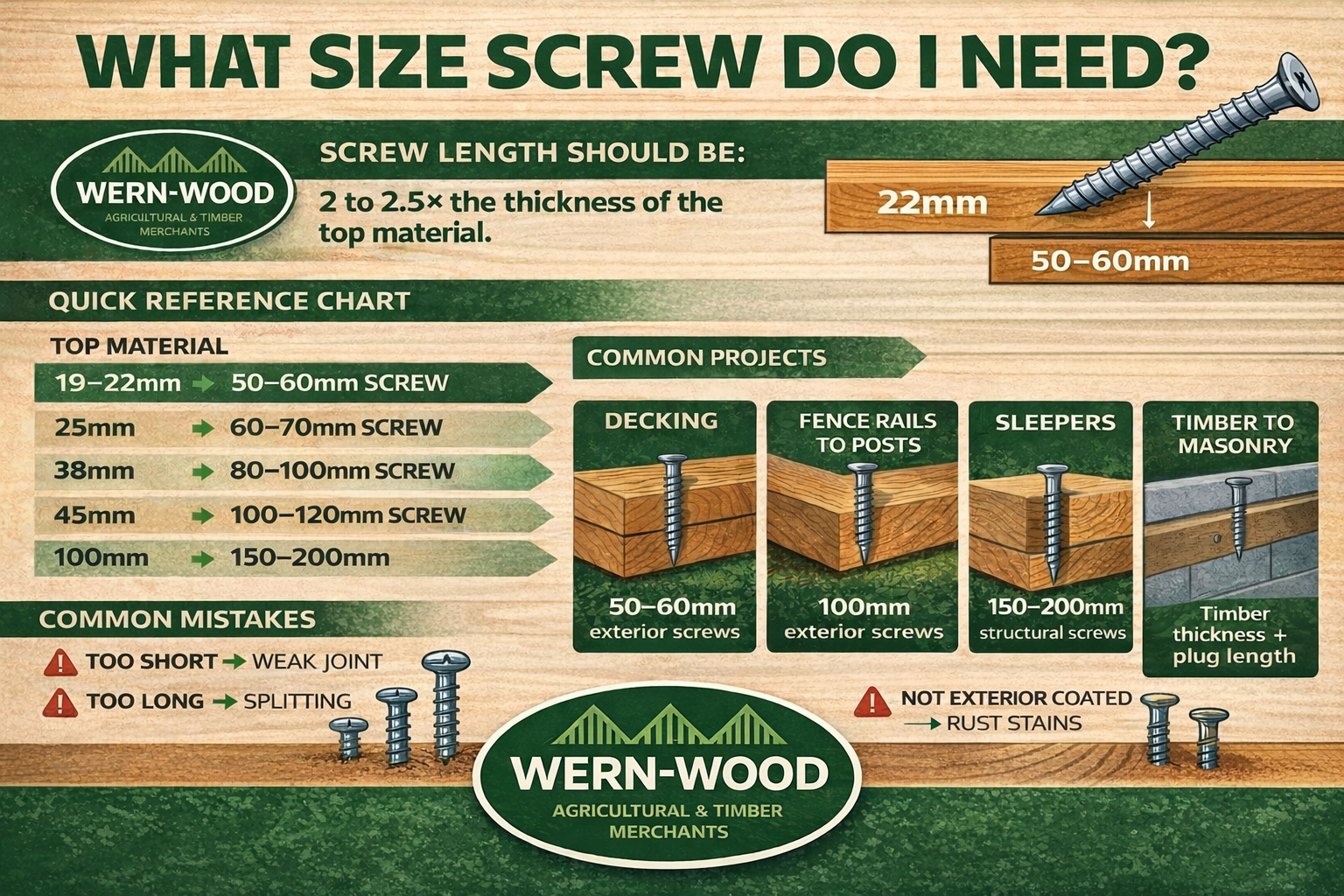
- Pre-drill and screw: two 80–100mm screws per joist end, staggered to avoid splitting.
- Set frame on the base/skids and check it doesn’t rock. Shim if needed.

Install floor decking
- Cut OSB3 to cover 2400×1800mm. Plan joints to land on joists.
- Leave ~2mm expansion gap between sheets.
- Fix with 50mm screws or ring-shank nails every 150–200mm along joists.
- Optional: treat underside edges/cut ends for extra moisture resistance.
Beginner tip: Mark joist lines on the sheet surface (pencil or chalk line) before fastening.
Frame the walls (front, back, sides)
4A. Front wall (door wall — high side)
- Build a 2400×2100mm frame with a centred door opening ~750mm wide.
- Add a header at ~1800mm door height (single 38×63 on edge is typically fine for a small shed).
- Double up studs around the door if you want extra stiffness.

4B. Back wall (low side)
- Build a 2400×1800mm wall with studs ~600mm centres (corner studs + 3 intermediates).
4C. Side walls (sloping tops)
- Each side slopes from 2100mm (front) down to 1800mm (rear).
- Build as a trapezoid: studs 2100 / ~1950 / 1800 and trim/angle the top to match the slope.

Keep checking square: Small errors here compound into roof and door fit problems later.
Erect and join the wall frames
- Raise back wall first, brace plumb.
- Raise side walls, snug into corners, brace as needed.
- Raise front wall last, align door opening square.
- Screw bottom plates to floor at ~600mm intervals.
- Screw corners together (2–3 long screws per corner from inside).
Roof framing (pent roof — simplest)
Pent roof slopes from high front wall to low back wall (approx 300mm drop across the span).
- Cut ~6 rafters at ~1900mm (adjust for overhang preferences).
- Place end rafters flush to outside edges, then space intermediates evenly (~400–600mm centres).
- Fix with screws + metal ties/angles (recommended for beginners).
- Check rafters are in-plane (no twist) before final tightening.

Optional finishing materials: Roofing battens & firrings and fascia board.
Sheath and weatherproof the roof
- Cut OSB3 roof sheets to suit overhangs; keep joins landing on rafters.
- Fix with 40–50mm screws/nails every ~150mm along rafter lines.
- Apply mineral felt starting at the low end; overlap strips ~100mm.
- Nail felt with clouts at ~100–150mm spacing along edges/overlaps.
- Fold felt over front/back edges where possible and nail down.

Build the framed ledge & brace door
- Make a rectangular door frame: 2 stiles + 3 ledges (top/mid/bottom).
- Square it (match diagonals) before adding braces.
- Fit two diagonal braces inside the frame.
- Important: braces should rise towards the hinge side to resist sagging.
- Fix T&G boards vertically to the outside face; trim edges flush.
- Test fit in the opening; aim for ~5mm gaps on sides/top and ~10mm at bottom.

Door fit is the make-or-break: trim gradually, and always test fit before hinges.
Hang the door and add hardware
- Fix tee hinges to the door (strap across ledges for solid fixing).
- Shim door in place to hold correct gaps, then mark hinge plate holes on frame.
- Pre-drill and screw/bolt hinges to frame.
- Fit latch/hasp at comfortable height; add a simple door stop if desired.
Need hinges/latches? Browse: Ironmongery.
Cladding and finishing touches
- Fix shiplap horizontally from bottom up. Keep groove facing down for weather shedding.
- Nail to each stud with galvanised nails (2 per stud for wider boards where needed).
- Cut side-wall top boards to the roof slope line.
- Add corner trims to protect joins and tidy the finish.
- Seal cut ends and apply a suitable exterior treatment/paint for long life.
Cladding category: Shiplap / T&G cladding.
Want to keep browsing without losing your place? Open links in a new tab, or jump back to top.
Tips for beginners
- Measure twice, cut once. Especially for roof angles and the door opening.
- Keep it square and plumb. Re-check diagonals after each major stage.
- Pre-drill near ends. Prevents splitting, especially with larger screws.
- Use temporary bracing. Keep walls from racking while assembling.
- Take your time with the door. Trim gradually; you can always remove more later.
- Build in good weather. If rain appears mid-build, tarp the roof deck quickly.
Quick FAQs
Can the shed sit directly on soil?
Not recommended. Use slabs/pavers or treated skids on compacted gravel/blocks to keep timber away from standing moisture.
Do I need insulation or a vapour barrier?
Not for this basic shed. If you later convert it into a workspace, you’d treat it like a small outbuilding with proper lining, ventilation, and insulation strategy.
How do I stop the door sagging?
Brace direction matters most: braces should rise towards the hinge side. Also ensure hinges bite into solid timber (ledges) and the frame is square before cladding the door.
Where can I check delivery before ordering?
See Delivery information.
Need something else? Contact Us for help with your next project